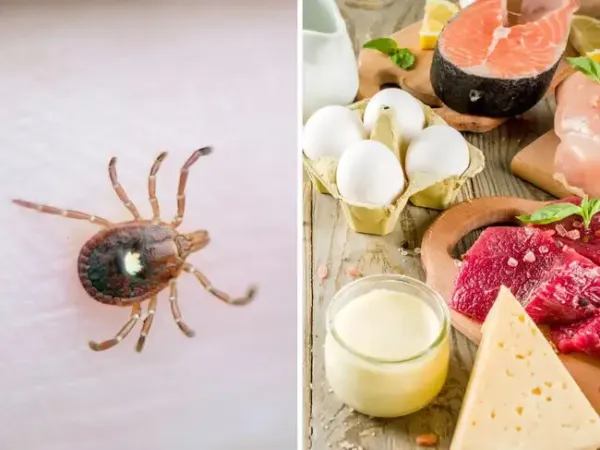
A tiny tick bite may sound harmless at first, but doctors are warning that one particular species found across the United States can trigger a bizarre and life-changing condition. Imagine eating a burger or drinking milk one day, only to suddenly develop severe allergic reactions to foods your body had tolerated your entire life. That unsettling reality is now drawing fresh attention online after a viral video reignited discussion around the lone star tick and the strange syndrome increasingly linked to its bite.
A video gained widespread attention after content creator Dan Alexander shared a viral video explaining why this particular tick terrifies many Americans. In the video, Alexander described the lone star tick as one of the “most aggressive ticks on planet earth,” explaining that, unlike many ticks that wait passively in grass for hosts, these ticks actively move toward prey. He also claimed they are highly resilient, calling them both water-resistant and hunger-resistant. But according to him, the real nightmare begins after the bite.
Alexander explained that the tick is linked to alpha-gal syndrome, a condition where the body suddenly develops allergic reactions to mammalian products such as red meat and dairy. He joked that people may not realise they have the syndrome until they eat red meat or dairy products later and experience an allergic reaction. His darkly humorous conclusion warned viewers not to touch the tick “unless you want to be vegan.”
However, one of the strangest conditions linked to the tick is something called Alpha-gal syndrome, a syndrome that can suddenly make people allergic to red meat and certain dairy products. According to the National Library of Medicine article, alpha-gal syndrome differs from traditional tick-borne illnesses because it is not caused by a virus, bacteria, or parasite directly infecting the body. Instead, the condition is triggered by an immune reaction.
What actually happens?
The lone star tick often feeds on mammals before biting humans. During this process, trace amounts of a sugar molecule known as galactose-alpha-1,3-galactose, commonly shortened to alpha-gal, can remain in the tick’s saliva.
When the tick later bites a human, that alpha-gal molecule can enter the bloodstream. For some individuals, the immune system mistakenly treats it as a dangerous foreign substance, triggering an allergic response. Doctors explain that symptoms can vary widely from person to person.
One of the most unsettling aspects of alpha-gal syndrome is that it can develop in people who previously consumed meat regularly without any issues. That means someone can eat meat their entire life and suddenly become allergic after a single sensitising tick bite.
The spread of the tick
According to researchers, the spread of lone star ticks across North America is also increasing due to changing climate patterns and shifts in land use. The National Library of Medicine article notes that the ticks are now among the most commonly encountered ticks in several US regions, including Delaware.
Experts continue urging people to take precautions outdoors, especially in wooded or grassy areas where ticks are common.
A video gained widespread attention after content creator Dan Alexander shared a viral video explaining why this particular tick terrifies many Americans. In the video, Alexander described the lone star tick as one of the “most aggressive ticks on planet earth,” explaining that, unlike many ticks that wait passively in grass for hosts, these ticks actively move toward prey. He also claimed they are highly resilient, calling them both water-resistant and hunger-resistant. But according to him, the real nightmare begins after the bite.
Alexander explained that the tick is linked to alpha-gal syndrome, a condition where the body suddenly develops allergic reactions to mammalian products such as red meat and dairy. He joked that people may not realise they have the syndrome until they eat red meat or dairy products later and experience an allergic reaction. His darkly humorous conclusion warned viewers not to touch the tick “unless you want to be vegan.”
Is this true?
Medical experts say the science behind the syndrome is very real. According to research submitted to the National Library of Medicine, the lone star tick, scientifically known as Amblyomma americanum, is not just an aggressive human-biting tick but also a confirmed carrier of several dangerous pathogens. Researchers note that these ticks are associated with multiple bacterial, viral, and protozoal diseases, including ehrlichiosis, tularemia, Heartland virus, Bourbon virus, Rocky Mountain spotted fever, and southern tick-associated rash illness.However, one of the strangest conditions linked to the tick is something called Alpha-gal syndrome, a syndrome that can suddenly make people allergic to red meat and certain dairy products. According to the National Library of Medicine article, alpha-gal syndrome differs from traditional tick-borne illnesses because it is not caused by a virus, bacteria, or parasite directly infecting the body. Instead, the condition is triggered by an immune reaction.
What actually happens?
The lone star tick often feeds on mammals before biting humans. During this process, trace amounts of a sugar molecule known as galactose-alpha-1,3-galactose, commonly shortened to alpha-gal, can remain in the tick’s saliva.When the tick later bites a human, that alpha-gal molecule can enter the bloodstream. For some individuals, the immune system mistakenly treats it as a dangerous foreign substance, triggering an allergic response. Doctors explain that symptoms can vary widely from person to person.
Symptoms
In mild cases, people may experience itching or skin irritation after eating red meat. More serious reactions can include stomach pain, nausea, vomiting, breathing difficulties, or even life-threatening anaphylaxis. Researchers also note that some patients become sensitive not only to meat but also to dairy products, gelatin-containing medicines, and other mammalian ingredients.One of the most unsettling aspects of alpha-gal syndrome is that it can develop in people who previously consumed meat regularly without any issues. That means someone can eat meat their entire life and suddenly become allergic after a single sensitising tick bite.
The spread of the tick
According to researchers, the spread of lone star ticks across North America is also increasing due to changing climate patterns and shifts in land use. The National Library of Medicine article notes that the ticks are now among the most commonly encountered ticks in several US regions, including Delaware.Experts continue urging people to take precautions outdoors, especially in wooded or grassy areas where ticks are common.