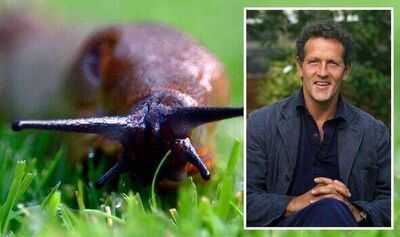
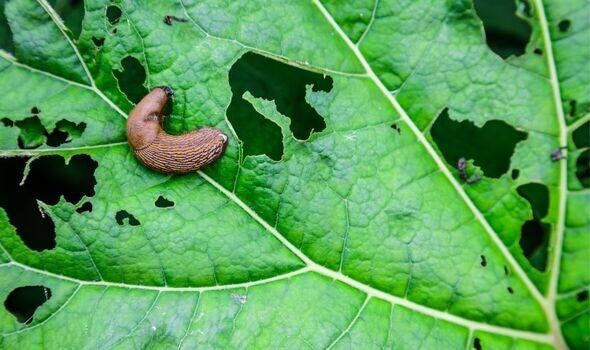
Slugs and snails can wreak absolute havoc in the garden, particularly throughout the spring and summer months, decimating plants and crops alike.
The destruction doesn't end with foliage either, as these troublesome pests also target fruits such as strawberries and tomatoes, leaving gardeners facing total crop losses.
Fortunately, Monty Don has revealed a range of wildlife-friendly methods to keep them at bay.
Writing in a blog post, Monty said: "Slugs and snails are widely regarded as the gardeners' public enemy number one.
"But they are superb at recycling waste vegetative matter but do not discriminate between a fallen leaf and a delicious young seedling.

"Slugs live largely underground in the soil and like damp conditions. Snails live above the ground and love dark nooks and crannies such as old brickwork or a nice dry yew hedge, as well as clustering around the base of containers."
According to the gardening expert, there are over 30 species of slug across the UK, with four principal garden varieties - and notably, the largest don't always inflict the most damage.
So what steps can gardeners take to shield their plants from slug damage outdoors?
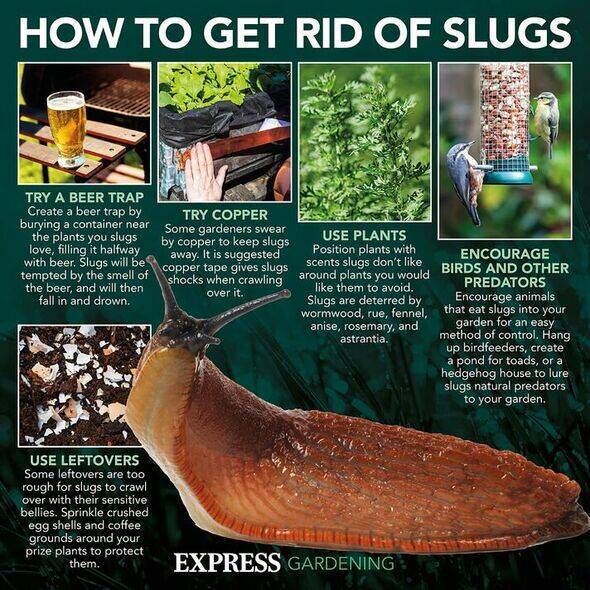
Monty said: "Avoid slug pellets as they are chemicals that can harm other wildlife. Instead have a small slug-free cold frame or tape where you can raise tender young plants and check for slugs daily.
"Do not feed plants any more than is absolutely necessary and always feed the soil, not the plant.
"This will avoid a spurt of soft, sappy growth that slugs love. Without stressing them with sudden temperatures or cultivation changes, grow your plants as hard as possible which means do not mollycoddle them.
"Finally, encourage a wide range of predators into the garden. I have masses of thrushes, frogs, toads, beetles, centipedes, shrews and a few hedgehogs."
All of these creatures relish feasting on slugs and snails, making attracting them to your garden a brilliant solution for frustrated gardeners.
Slugs and snails also struggle to navigate sharp or coarse surfaces, meaning a layer of crushed eggshells or gravel around the base of plants can serve as an effective barrier.
This helps prevent the pests from climbing up the sides of pots, while crops such as tomatoes and strawberries can alternatively be cultivated in hanging baskets.
Eggshells only function as a deterrent when completely clean and dry, so it is essential to remove them during wet weather.
When preparing an egg, attempt to peel away the inner membrane and rinse where necessary.
Shannen Godwin, a gardening expert at J Parker's, said: "The good news is that slugs won't attack all of your plants.
"In fact, many plants can deter slugs. These are typically the plants with strongly scented leaves or textured leaves that are particularly glossy, leathery or hairy.
"Some slug-resistant plants include roses, ferns, hydrangeas and grasses.
"It can also help to combine some slug-resistant plants alongside your seedlings, known as companion planting.
"Aromatic herbs are usually great to plant next to your vegetables and seedlings to avoid slugs.
"For example, mint and chives can be helpful for companion planting between rows of vegetables."
-
'Things Happen On The Field': Sanju Samson & Heinrich Klaasen Exchange Heartwarming Messages After Heated Clash During CSK vs SRH IPL 2026 Match

-
IPL 2026: RCB Opener Phil Salt Set To Return After Month-Long Injury Layoff

-
CHSE Odisha Plus Two Result 2026: Science Records Highest Pass Percentage At 88.80%, Commerce At 88.07%, Arts At 84.50%

-
CHSE Odisha Plus Two Result 2026 Declared At results.odisha.gov.in; Direct Link Active At 1 PM

-
‘Discipline Is The Root Of Freedom’: Nirvaan Birla On Balancing Ambition And Peace