Radioactive stardust left behind by ancient stellar explosions has been discovered trapped in Antarctic ice. Researchers say these cosmic remnants act as valuable clues, helping scientists piece together the early history of our solar system.
Across the universe, enormous interstellar clouds made of dust particles, plasma, and gas drift between the stars. Our solar system is reportedly moving through one such cloud named the Local Interstellar Cloud. And, as these clouds travel through space, they can gather matter, some of which may eventually reach Earth.
In a new study, researchers examined some of this material and discovered a radioactive form of iron known as iron-60, a byproduct of ancient supernova explosions, that had become trapped in the cloud and ended up embedded deep within Antarctic ice.
“We found supernova-produced 60 Fe in Antarctic ice,” lead author Dominik Koll, from the Institute of Ion Beam Physics and Materials Research at HZDR, told Space.com.
The researcher Dominik Koll was with the part of the team which detected the 60Fe atoms in the Antarctic snow. “We didn’t know where it came from,” he said. “So we continued working on it tracing the influx back … and we got the answer that it is to the local interstellar cloud,” he noted.
“We looked for single atoms of the radioactive isotope 60Fe,” Koll noted.
Reportedly, the researchers analysed around 300 kg of Antarctic ice dating back between 40,000 and 80,000 years. They identified individual atoms of iron-60 within the samples using accelerator mass spectrometry.
Koll said the team believes the isotope is linked to the local interstellar cloud, which may contain remnants from past stellar explosions. The researchers now plan to examine even older Antarctic ice samples to further investigate the origins of the radioactive stardust and the history of our solar system.
-
Eshan Malinga’s quiet consistency powers Sunrisers Hyderabad’s IPL revival

-
Josh Inglis: Josh Inglis took out the bowling of Rajasthan Royals bowlers, also scored 4 consecutive centuries.

-
Ethanol: How is ethanol prepared from sugarcane? Preparation to mix petrol up to 30 percent

-
India Heatwave Alert: Health Ministry’s new advisory, these instructions issued to avoid heat wave and extreme heat, read safety tips

-
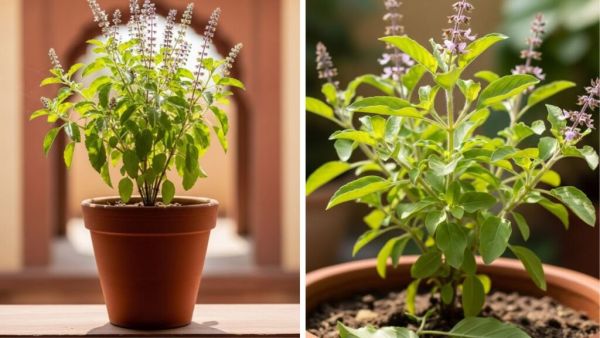
Why is it important to have a Tulsi tree in the house? Behind this lies not only faith, but scientific reason; Know the benefits