So much has the world’s attention focused on Iran lately that it’s been easy to lose track of what’s going on in the much larger war in Ukraine. A great deal has changed there since the start of the year, demanding some new approaches from Kyiv’s European allies.
After a brutal winter, Ukraine has managed to stabilize the front over the last few months, on occasion even making net territorial gains. Overall, the nature of the battlefield has changed in ways that blunt Russia’s overwhelming advantages in manpower, artillery and armor — and all this, just as distractions in Iran have stalled the US-led peace process.
Also read: PM Modi calls for early end to conflicts in West Asia and Ukraine
Aerial and ground drones have become so dominant that having troops in forward positions — the so-called zero line — no longer serves a military purpose for Ukraine’s defense, because they cannot move above ground without being killed and are virtually impossible to rotate or supply, Mykola Bielieskov, a research fellow at Kyiv’s National Institute for Security Studies, told me.
In fact, drones have changed the nature of armed conflict to the point that the zero line may no longer be where the war is likely to be won or lost. There are now as few as three Ukrainian soldiers per kilometer in those most forward positions and they have become a liability, Bielieskov said. Their emaciated, bearded images when they finally emerge from their foxholes serve only to cause outrage and discourage enlistment back home.
This would be catastrophic, were it not for the fact that Moscow faces the same challenges — made worse by the fact that, as the invading force, its troops have no choice but to expose themselves more to this merciless, drone-saturated environment. They are, as a result, taking casualties at a far higher rate than Ukraine.
The more impactful part of the war is now being fought in a band that now stretches up to 300 kilometers behind zero line, with each side using mid-range drones and missiles to destroy the other’s logistical chains and efforts to concentrate forces. Beyond this extended zone, long-range strikes are gaining importance as each side tries to undermine popular support for the other’s war effort. This part of the war was for a long time a one-way affair. But Ukraine is now able to match Russia in long-range drone strikes, even though it still lacks the means to compete with harder-to-defeat ballistic missiles.
Strikes on Russian oil storage and export facilities are among the factors wiping out the gains Moscow made after President Donald Trump eased sanctions at the start of the war in Iran. Russia’s economy is under growing stress. On May 12, the government downgraded its 2026 growth forecast to 0.4% from 1.3%.
The Ukrainian strikes also are having a psychological impact, making it harder for Russians to ignore the fact they’re at war. Overnight on Sunday, Ukraine launched almost 600 drones at targets in Russia, including in and around Moscow, killing at least four people. President Vladimir Putin’s poll ratings are slipping, even if his political position remains strong. With the United Arab Emirates abandoning OPEC, an oil glut looms once the conflict in Iran ends, raising the prospect of further growth downgrades.
It’s likely because of this darkening outlook that Putin recently said he thought the war was “coming to an end.” I’m not sure he believes that any more than Trump does when he says — again and again — that the Iranians are about to “cry uncle” and the war there is won. But Putin clearly now thinks that’s what Russians want to hear.
According to a recent report in The Financial Times, Putin has given up hope that Trump will force Kyiv into capitulation and is digging in for more war, persuaded by his generals that they can take the rest of the Donbas by autumn — and then demand more territory in exchange for a ceasefire. While the calculations involved in such a quick victory border on delusional, the account of current attitudes in the Kremlin rings true.
Also read: Russia hits Ukraine's Odesa, Dnipro with drones and missiles overnight
It’s in the war for hearts and minds that Putin has some cause for optimism. Ukrainian domestic politics look increasingly combustible amid revelations of corruption in President Volodymyr Zelenskiy’s inner circle. Anti-corruption bodies in Kyiv this week launched a formal money-laundering investigation into his former chief of staff Andriy Yermak.
Putin, of course, faces no such threat because he’s made sure Russia has no independent prosecutors or courts. In the same way, Russia’s state-controlled media is far more obedient in suppressing bad news from the front than is Ukraine’s. The result is that Kyiv’s difficulties with recruitment and desertion continue apace. Technology helps, but as Yermak’s replacement, Kyrylo Budanov, said in an interview with local media last month, this is a “huge, enormous problem,” because “wars are not won without people.”
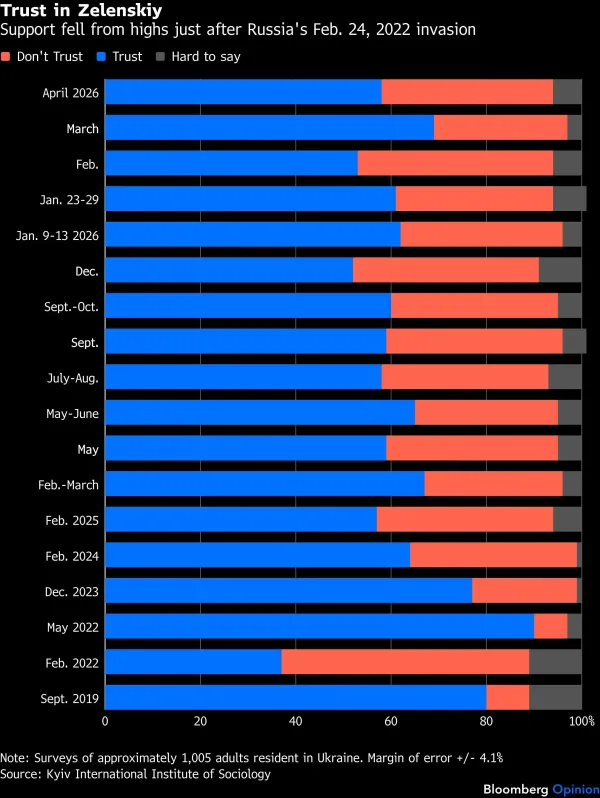
That doesn’t mean Kyiv will or should fold first, because this is for Ukrainians a fight for survival, where for Russians it remains an invasion of choice. Yet it does shape the challenge for Ukraine’s remaining allies, because its people and fighters are exhausted. Europe needs to develop a strategy for Ukraine that no longer depends on Washington or its commitment to the North Atlantic Treaty Organization. This strategy must boost both Kyiv's military and societal defenses, by persuading Ukrainians they have a future worth fighting for.
The commitment of $90 billion in European financing for Ukraine was a critical start; the replacement of former Prime Minister Viktor Orban in Hungary has opened that and other doors. Now the bloc must agree a new non-US framework for peace talks, and give Ukrainians hope by creating a bespoke path to their integration into the European Union and Western security arrangements. This policy should move quickly to deliver concrete results, but also set a realistic time frame and process for eventual, full EU membership.
The good news is that most of Europe’s leaders by now recognize that integrating Ukraine’s large military and drone industry offers their own best security guarantee against a revisionist Kremlin, absent a reliable US partner. This understanding of Kyiv as a security provider should be their starting point for everything they do.
Less encouraging is that this war has become a contest of narratives and confidence, as much as a fight over land, so Ukraine’s allies must regroup and respond accordingly. For their own sakes, they need to find a new mediator to replace the US and ensure that Kyiv survives what feels very much like Moscow’s last throw of the military dice this summer.
(Disclaimer: Opinions expressed in this piece are those of Bloomberg's; they don't represent the views of EconomicTimes.com)
After a brutal winter, Ukraine has managed to stabilize the front over the last few months, on occasion even making net territorial gains. Overall, the nature of the battlefield has changed in ways that blunt Russia’s overwhelming advantages in manpower, artillery and armor — and all this, just as distractions in Iran have stalled the US-led peace process.
Also read: PM Modi calls for early end to conflicts in West Asia and Ukraine
Aerial and ground drones have become so dominant that having troops in forward positions — the so-called zero line — no longer serves a military purpose for Ukraine’s defense, because they cannot move above ground without being killed and are virtually impossible to rotate or supply, Mykola Bielieskov, a research fellow at Kyiv’s National Institute for Security Studies, told me.
In fact, drones have changed the nature of armed conflict to the point that the zero line may no longer be where the war is likely to be won or lost. There are now as few as three Ukrainian soldiers per kilometer in those most forward positions and they have become a liability, Bielieskov said. Their emaciated, bearded images when they finally emerge from their foxholes serve only to cause outrage and discourage enlistment back home.
This would be catastrophic, were it not for the fact that Moscow faces the same challenges — made worse by the fact that, as the invading force, its troops have no choice but to expose themselves more to this merciless, drone-saturated environment. They are, as a result, taking casualties at a far higher rate than Ukraine.
The more impactful part of the war is now being fought in a band that now stretches up to 300 kilometers behind zero line, with each side using mid-range drones and missiles to destroy the other’s logistical chains and efforts to concentrate forces. Beyond this extended zone, long-range strikes are gaining importance as each side tries to undermine popular support for the other’s war effort. This part of the war was for a long time a one-way affair. But Ukraine is now able to match Russia in long-range drone strikes, even though it still lacks the means to compete with harder-to-defeat ballistic missiles.
Strikes on Russian oil storage and export facilities are among the factors wiping out the gains Moscow made after President Donald Trump eased sanctions at the start of the war in Iran. Russia’s economy is under growing stress. On May 12, the government downgraded its 2026 growth forecast to 0.4% from 1.3%.
The Ukrainian strikes also are having a psychological impact, making it harder for Russians to ignore the fact they’re at war. Overnight on Sunday, Ukraine launched almost 600 drones at targets in Russia, including in and around Moscow, killing at least four people. President Vladimir Putin’s poll ratings are slipping, even if his political position remains strong. With the United Arab Emirates abandoning OPEC, an oil glut looms once the conflict in Iran ends, raising the prospect of further growth downgrades.
It’s likely because of this darkening outlook that Putin recently said he thought the war was “coming to an end.” I’m not sure he believes that any more than Trump does when he says — again and again — that the Iranians are about to “cry uncle” and the war there is won. But Putin clearly now thinks that’s what Russians want to hear.
According to a recent report in The Financial Times, Putin has given up hope that Trump will force Kyiv into capitulation and is digging in for more war, persuaded by his generals that they can take the rest of the Donbas by autumn — and then demand more territory in exchange for a ceasefire. While the calculations involved in such a quick victory border on delusional, the account of current attitudes in the Kremlin rings true.
Also read: Russia hits Ukraine's Odesa, Dnipro with drones and missiles overnight
It’s in the war for hearts and minds that Putin has some cause for optimism. Ukrainian domestic politics look increasingly combustible amid revelations of corruption in President Volodymyr Zelenskiy’s inner circle. Anti-corruption bodies in Kyiv this week launched a formal money-laundering investigation into his former chief of staff Andriy Yermak.
Putin, of course, faces no such threat because he’s made sure Russia has no independent prosecutors or courts. In the same way, Russia’s state-controlled media is far more obedient in suppressing bad news from the front than is Ukraine’s. The result is that Kyiv’s difficulties with recruitment and desertion continue apace. Technology helps, but as Yermak’s replacement, Kyrylo Budanov, said in an interview with local media last month, this is a “huge, enormous problem,” because “wars are not won without people.”
That doesn’t mean Kyiv will or should fold first, because this is for Ukrainians a fight for survival, where for Russians it remains an invasion of choice. Yet it does shape the challenge for Ukraine’s remaining allies, because its people and fighters are exhausted. Europe needs to develop a strategy for Ukraine that no longer depends on Washington or its commitment to the North Atlantic Treaty Organization. This strategy must boost both Kyiv's military and societal defenses, by persuading Ukrainians they have a future worth fighting for.
The commitment of $90 billion in European financing for Ukraine was a critical start; the replacement of former Prime Minister Viktor Orban in Hungary has opened that and other doors. Now the bloc must agree a new non-US framework for peace talks, and give Ukrainians hope by creating a bespoke path to their integration into the European Union and Western security arrangements. This policy should move quickly to deliver concrete results, but also set a realistic time frame and process for eventual, full EU membership.
The good news is that most of Europe’s leaders by now recognize that integrating Ukraine’s large military and drone industry offers their own best security guarantee against a revisionist Kremlin, absent a reliable US partner. This understanding of Kyiv as a security provider should be their starting point for everything they do.
Less encouraging is that this war has become a contest of narratives and confidence, as much as a fight over land, so Ukraine’s allies must regroup and respond accordingly. For their own sakes, they need to find a new mediator to replace the US and ensure that Kyiv survives what feels very much like Moscow’s last throw of the military dice this summer.
(Disclaimer: Opinions expressed in this piece are those of Bloomberg's; they don't represent the views of EconomicTimes.com)