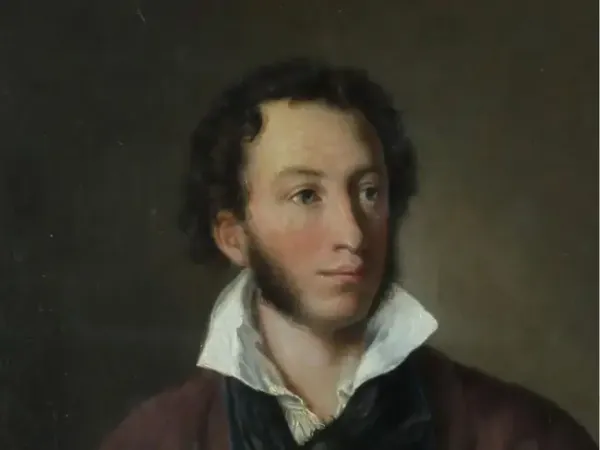
Not all of us are fortunate enough to have the luxury to cling steadfastly to our beliefs and principles. While a lot of people are idealistic or have their own set of personal values in their youth, life often makes them abandon their principles in a bid to be pragmatic. Few are lucky enough to live their life as per their values and never have to stray from them. Russian literary icon Alexander Pushkin once wrote on men who are lucky or privileged enough to live by their ideals.
Pushkin On The Luxury Of Being An Idealist
In his seminal work Eugene Onegin, the author wrote: “It's a lucky man, a very lucky man, who is committed to what he believes, who has stifled intellectual detachment and can relax in the luxury of his emotions - like a tipsy traveller resting for the night at wayside inn…”
Deeper Meaning Behind This Quote
Through this quote the writer expresses envy for people who are privileged enough to retain blind faith and emotions rather than succumbing to intellectual detachment.
Relevance Of This Quote
Pushkin’s quote remains very relevant in today’s world which is oversaturated with information and ruled by cynical detachment. In such an environment being steadfast to one’s values is rare. In such a world intellectual aloofness is a curse and true peace comes from surrendering the mind to the luxury of genuine emotion.
Who Was Alexander Pushkin?
Considered by many to be the greatest Russian poet and founder of modern Russian literature, Alexander Pushkin was one of the most celebrated writers of the Romantic Era.
Hailed as a literary prodigy, Pushkin published his first poem at the tender age of 15, the poet-author became a known figure in literary circles by the time he graduated from Tsarskoye Selo Lyceum. However, his anti monarchist poem Ode To Liberty attracted the ire of the royalty and led to him being exiled by emperor Alexander I.
During this period of surveillance and isolation, Pushkin composed his celebrated historical drama Boris Godunov. The play explored power, ambition, guilt, and political instability in Russia’s past, while also subtly reflecting the tensions of Pushkin’s own era. Although censorship prevented its immediate publication and performance, the work later came to be regarded as one of the foundations of Russian drama.
It was also during this period he wrote and published his seminal work - the novel Eugene Onegin. Serialized between 1825 and 1832, the novel was a romantic satire of contemporary Russian society.
Pushkin was killed in a duel with with his wife's rumoured lover Georges-Charles de Heeckeren d'Anthès, also known as Dantes-Gekkern, a French officer employed by the Russian Chevalier Guard Regiment.
Pushkin On The Luxury Of Being An Idealist
In his seminal work Eugene Onegin, the author wrote: “It's a lucky man, a very lucky man, who is committed to what he believes, who has stifled intellectual detachment and can relax in the luxury of his emotions - like a tipsy traveller resting for the night at wayside inn…”Deeper Meaning Behind This Quote
Through this quote the writer expresses envy for people who are privileged enough to retain blind faith and emotions rather than succumbing to intellectual detachment.Relevance Of This Quote
Pushkin’s quote remains very relevant in today’s world which is oversaturated with information and ruled by cynical detachment. In such an environment being steadfast to one’s values is rare. In such a world intellectual aloofness is a curse and true peace comes from surrendering the mind to the luxury of genuine emotion.Who Was Alexander Pushkin?
Considered by many to be the greatest Russian poet and founder of modern Russian literature, Alexander Pushkin was one of the most celebrated writers of the Romantic Era. Hailed as a literary prodigy, Pushkin published his first poem at the tender age of 15, the poet-author became a known figure in literary circles by the time he graduated from Tsarskoye Selo Lyceum. However, his anti monarchist poem Ode To Liberty attracted the ire of the royalty and led to him being exiled by emperor Alexander I.
During this period of surveillance and isolation, Pushkin composed his celebrated historical drama Boris Godunov. The play explored power, ambition, guilt, and political instability in Russia’s past, while also subtly reflecting the tensions of Pushkin’s own era. Although censorship prevented its immediate publication and performance, the work later came to be regarded as one of the foundations of Russian drama.
It was also during this period he wrote and published his seminal work - the novel Eugene Onegin. Serialized between 1825 and 1832, the novel was a romantic satire of contemporary Russian society.
Pushkin was killed in a duel with with his wife's rumoured lover Georges-Charles de Heeckeren d'Anthès, also known as Dantes-Gekkern, a French officer employed by the Russian Chevalier Guard Regiment.