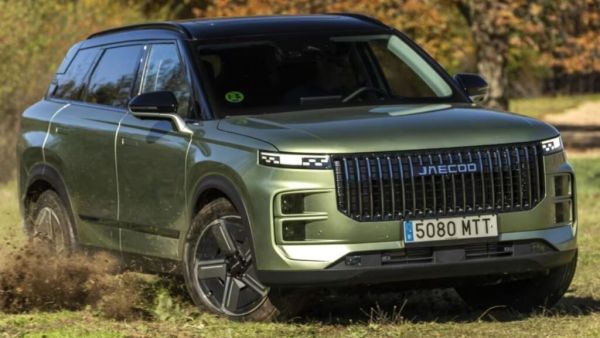
The UK car market has a new surprise leader, and it comes from a brand that barely existed in the country a year ago. The Jaecoo 7 has exploded in popularity, becoming one of Britain’s top-selling vehicles after posting remarkable registration numbers in March.
A total of 10,064 examples of the crossover were registered during the month, comfortably ahead of established rivals like the Ford Puma, Nissan Qashqai, and Kia Sportage. The achievement is even more significant because March is traditionally the biggest sales month of the year in the UK, driven by buyers waiting for the latest registration plate change.
That momentum has pushed the Jaecoo 7 into second place overall for 2026 registrations so far, with 15,569 units sold. It now trails the Puma by only a small margin, showing just how quickly consumer attitudes are shifting toward new Chinese automotive brands.
A New Brand Making a Massive Impact
What makes the Jaecoo story remarkable is the speed of its rise. The brand, owned by Chinese automotive giant Cheryonly officially entered the UK market in January 2025. In little over a year, it has already managed to outperform several long-established manufacturers, including Citroën, Mazda and Mini.
Industry analysts believe the Jaecoo 7’s rapid success comes down to aggressive pricing, high equipment levels and growing buyer confidence in Chinese-built vehicles. The SUV’s premium styling and technology-heavy cabin have also helped it attract younger buyers looking for value without sacrificing features.
The rise of brands like Jaecoo reflects a broader transformation happening across the UK automotive market, where traditional loyalty is beginning to weaken as affordability becomes more important.
EV Sales Reach New Record Despite Market Pressure
March also delivered a record-breaking performance for electric vehicles. A total of 86,120 EVs were registered during the month, highlighting growing consumer interest in electrified mobility.
Despite the milestone, electric cars still remain below the UK government’s ambitious zero-emission vehicle target for 2026. EVs currently account for 22.4% of the market, still some distance away from the 33% goal outlined under the ZEV mandate.
Mike Hawes warned that global instability could create fresh challenges for the automotive sector. He noted that much of March’s performance reflected orders placed before tensions escalated in Iran, a conflict now contributing to rising fuel and living costs across Europe.
Fuel Prices Could Push More Buyers Toward EVs
Ironically, the same geopolitical tensions hurting consumer confidence may end up accelerating EV adoption. With petrol and diesel prices climbing sharply in recent weeks, dealers across the UK are already reporting a noticeable increase in demand for used electric vehicles.
If fuel costs continue to rise, experts believe many buyers could fast-track their transition toward EVs and hybrids as a way to reduce long-term running expenses.
Hybrid and plug-in hybrid models are also seeing strong momentum. Plug-in hybrid registrations jumped by 46.9% year-on-year to 49,671 units, showing that many buyers still prefer a middle ground between combustion and full-electric power.
Meanwhile, traditional petrol and diesel-only vehicles continue to lose ground, with registrations falling by 6.1% and 11.4% respectively.
For the UK automotive industry, March may prove to be a defining moment — not just because of the Jaecoo 7’s unexpected breakthrough, but because it signals how quickly the market is evolving in response to pricing pressures, technology shifts and global uncertainty.
-
NEET aspirant ends life in Kalaburagi, family suspects exam stress

-
Telangana inter exam rescheduled due to holiday for Bakrid festival

-
Bengaluru techie takes grand mother to Microsoft Office, netizens react

-
West Bengal: Counting Underway For Falta Assembly Repoll Amid Tight Security

-
George Russell Seals Last-Gasp Canadian GP Pole In Mercedes Front-Row Lockout