Politician Who Promised To Legalize Car Modifications Becomes CM: Enthusiasts Want Promise Fulfilled
Sandy Verma | May 15, 2026 3:24 PM CST
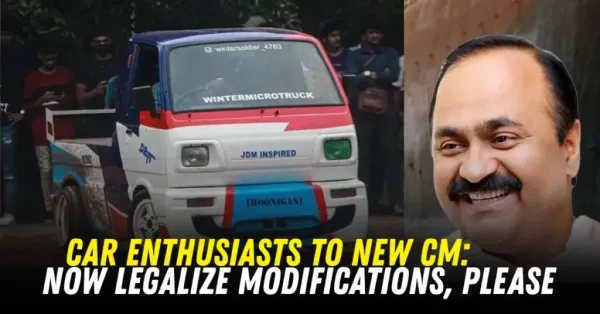
The United Democratic Front (UDF) has come to power in Kerala. After days of high-level discussions, the South Indian state has now got V. D. Satheesan as its Chief Minister (CM). If you remember, he is the same politician who had promised to legalize safe car modifications if elected to power, during campaigns. The enthusiast community now wants this promise fulfilled. What started as a political commitment during the campaign has now become a major talking point among them.
The United Democratic Front (UDF) has had a huge victory in Kerala. Their manifesto this time promised to legalise vehicle modifications that are safe for the public and for other vehicles. It said that the party, if elected to power, will change the way modification is perceived in the state. Under the previous government, Kerala had a zero-tolerance policy toward ‘ illegal’ modifications.
The authorities were very strict with enforcement as well. The state had witnessed several strict crackdowns on modified vehicles by various enforcement agencies. In many cases, even harmless alterations were reportedly considered illegal and penalised. The new government is expected to change this.
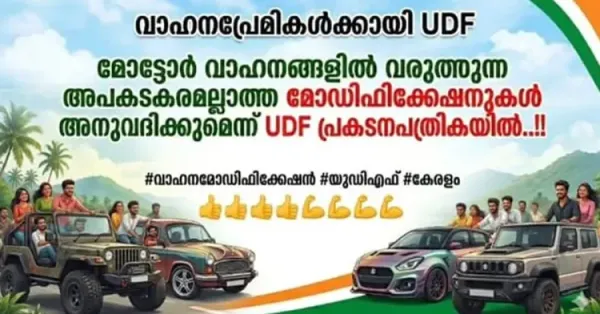
During the campaigns, we even saw V.D. Satheesan confirm the promise on video. He said that the youth in the state are passionate about personalising their vehicles and it is not a crime to modify a vehicle in a safe way.
He reiterated that dangerous modifications will be prohibited and safer ones will be allowed, if his party is elected to power. It signalled a more balanced approach that could support the state’s car culture while maintaining road safety. Now, the same politician has become the CM, and enthusiasts are more than excited.
Turning this promise into policy will, however, not be straightforward. The biggest challenge is in defining what qualifies as a safe modification. Any ambiguity could lead to misuse, with individuals exploiting loopholes to justify unsafe alterations. This makes it essential for the government to draft detailed guidelines backed by technical expertise. Inputs from automotive engineers, industry insiders, and regulatory bodies will be critical in shaping a practical and enforceable framework.
Soon after the election results surfaced, content creators started making videos requesting a quick fulfillment of this promise. Creators like Siddharth S Nair, widely known as That Car Guy and Ajith Thankachan (known on social media as Dr. Chrome) were among the first to share videos on the topic. The comments section showed that the requests had huge backing.
Since the ban on vehicle modifications has to do with the central motor vehicle laws, legalising them is more complicated than we think. But, it is definitely possible. Legal educator and corporate lawyer Navaneeth P has explained the exact process in a video shared on his channel.
The Central Motor Vehicles Act 1988, particularly Section 52, prohibits vehicle modifications. However, the Indian Constitution provides a pathway for states to introduce their own amendments if necessary. These, if approved, will apply within the respective state limits. Entry 35 of the Concurrent List in the Indian Constitution allows state governments to amend the Central Motor Vehicle Rules.
Article 254(1), however, states that if a conflict arises between central and state laws, the former will prevail. To bypass this, the state assembly can pass an amendment bill under Article 254 (2) and get it approved by the president of India. If that goes through, the state will be able to have its own rules that permit vehicle modifications, overriding the current central rules.
READ NEXT
-
Iran-Trained Operative Accused Of Plotting To Kill Donald Trump's Daughter Ivanka: Report
-
SRH Vs RCB: Sunrisers Thrash RCB In Hyderabad; Patidar & Co Still Secure Top 2 Finish
-
Aishwarya Rai Bachchan Returns To Cannes Film Festival 2026 Red Carpet In Dupatta-Style Gown Which Took '1500 Hours' To Create
-
Vashu Bhagnani Claims Coolie No. 1 Caused Rs 27 Crore Loss; Says Varun Dhawan 'Never Bothered To Check'
-
Anusha Dandekar Shares New 'Kindness Hurting' Post After Clarifying Cryptic Note Linked To Karan Kundrra-Tejasswi Prakash