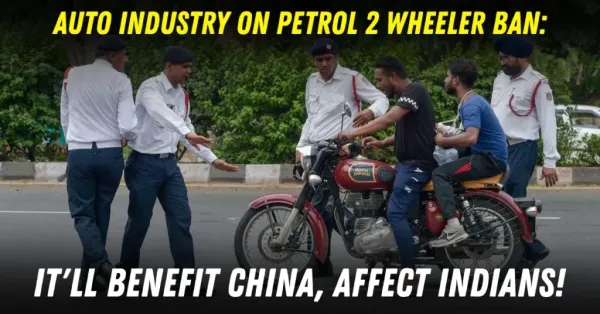
The auto industry has submitted fresh concerns to the Delhi government over its draft EV policy 2.0, and the arguments go beyond the economics of the transition. The most pointed charge is this: a hard ban on petrol two-wheelers from April 2028 would make the market significantly more dependent on Chinese battery and component imports, not less.
At a time when supply chain self-reliance is a stated national priority, a state-level policy mandate that accelerates Chinese raw material dependency is a paradox the industry wants on record. The two-wheeler industry’s communication to the government flags two structural problems.
First, there are currently no viable electric motorcycles in the market at volumes or price points comparable to the ICE models they would need to replace. Electric scooters have achieved a degree of scale and choice. Electric motorcycles have not.
The segment that commuters, delivery workers, and daily highway users depend on, 125cc to 250cc petrol motorcycles, has no electric equivalent that is production-ready at mass-market pricing. A ban that applies uniformly to all ICE two-wheelers, scooters and motorcycles together, forces a category that does not yet have workable alternatives.
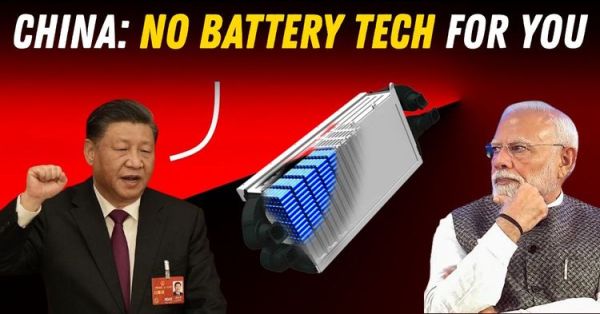
Electric two-wheeler cells, battery management systems, power electronics, and rare earth materials used in motor manufacturing are predominantly sourced from China. Domestic cell manufacturing capacity, under the PLI scheme for ACC batteries, is being built but will not be at meaningful volume by April 2028.
Even the most optimistic projections from approved PLI beneficiaries, including Ola Electric’s Punajanur Gigafactory, put full-scale domestic production several years out.
Industry sources put the number at 65 percent of prospective buyers at risk if the ban proceeds as drafted. These are not luxury buyers who have alternatives. These are buyers in the Rs 60,000 to Rs 1.20 lakh price bracket, for whom a petrol two-wheeler is the only financially viable personal transport option.
Their forced migration to electric vehicles at current pricing, even with the draft policy’s incentive of Rs 10,000 per kWh capped at Rs 30,000, does not bridge the cost gap fully.
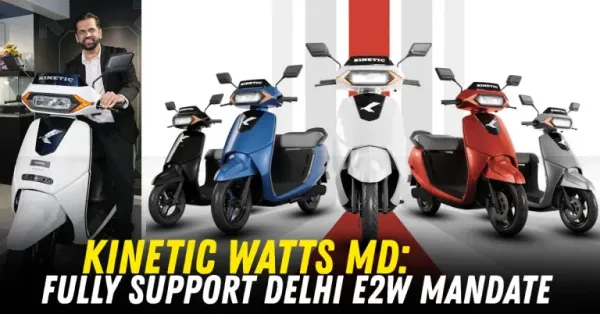
The draft does include purchase support. Electric two-wheelers priced up to Rs 2.25 lakh ex-factory are eligible for incentives of Rs 10,000 per kWh in Year 1, capped at Rs 30,000. This steps down to Rs 20,000 in Year 2 and Rs 10,000 in Year 3.
A scrappage bonus of Rs 10,000 is available for buyers who trade in a BS-IV or older two-wheeler from Delhi’s registration books. Road tax and registration fee exemptions continue for the policy period.
These are decent numbers, but they do not offset the full price differential for the segment most affected. A Rs 75,000 petrol scooter buyer receiving Rs 30,000 in incentives still faces an effective price of Rs 90,000 to Rs 1.10 lakh for a comparable electric alternative after incentives, in a segment where every Rs 5,000 matters.
Industry estimates suggest that Delhi’s EV Policy 2.0 could add 6 lakh electric two-wheelers to national sales by 2029, which is a positive volume effect. But it also implies 65 percent of current buyers in Delhi face a forced and potentially unaffordable transition.
The industry’s ask is a phased, engine-size-based approach rather than a blanket ban. No official response from the Delhi government has been issued yet.
Via ET
-
Vietnamese tourists vexed by China flight cancelations during peak summer season

-
Vietnamese tourists vexed by China flight cancelations during peak summer season

-
Parenting Tips: 5 practical ways parents can rebuild trust in children after conflict or discipline

-
International Cat Day 2026: History, Importance, Celebration Ideas & FAQs

-
Blurred Lips Step by Step Tutorial: Get Soft and Natural Korean Lip Look at Home