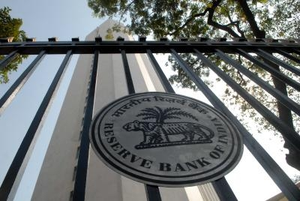
Delhi, According to a report released by SBI Research on Wednesday, the Reserve Bank of India (RBI) has recently amended its priority sector lending (PSL) guidelines, which should help the economy grow more quickly and fine-tune the fundamental components of the factors of production, primarily MSMEs, agri and related sectors, housing and exports, etc.
In order to better allocate bank loans to the economy’s core sectors, the RBI released updated PSL rules this week. The revised rules will take effect on April 1.
The research states that in order to improve PSL coverage and expand the range of uses for which loans may be categorized as “Renewable Energy,” the updated PSL standards support raising a number of loan restrictions, including housing loans.
The overall PSL objective for urban cooperative banks (UCBs) has also been revised to 60% of CEBSE (Credit Equivalent of Off-Balance Sheet Exposures) or Adjusted Net Bank Credit (ANBC), whichever is greater.
Given the spike in demand for own/individual housing following the pandemic, the report stated that “the higher limits set in the housing segment should give a fillip to low cost/affordable housing across various population cohort, in particular tier-IV/V/VI cities where the banks, along with non-bank players, can find their next gold mine.”
According to the SBI report, the PSL framework’s explicit recognition and prioritization of renewable energy has reduced credit constraints, increasing the proportion of non-conventional energy credit to total energy credit and promoting credit flows to the NCE sector, which also saw significant policy interventions.
According to the report, “all infrastructure loans given to road projects, ports, railways, airports, Energy Sector Highways, etc. would be a prudent move to include them either as priority sector status or be exempt from calculation of ANBC for PSL achievement in line with infra bonds raised towards funding of infrastructure and affordable housing, as big banks continue to face difficulties in achieving PSL targets.”
In the updated circular, the RBI has also raised the lending ceiling for the restoration of damaged residential units.
According to the report, this creates a significant market for credit offtake by giving FIs new opportunities for credit disbursement in one of the most secure niche areas. It also relieves the burden on homeowners who are looking for liquidity to carry over the necessary repairs of their needy dwelling units.
India has started one of the largest expansions of renewable energy in the world with its 500 GW non-fossil fuel installed capacity goal for 2030 and Net Zero aim for 2070.
The RBI broadened the scope of PSL regulations on July 1, 2015, to include loans to borrowers up to Rs 15 crore for non-conventional energy (NCE)-based public utilities, solar and biomass-based power producers, and micro-hydel plants.
On September 4, 2020, the cap was later increased to Rs 30 crore per borrower.
The maximum was increased to Rs 35 crore per borrower in the most recent guidelines. The maximum credit amount for individual families would remain at Rs 10 lakh per borrower.
“The small policy interventions will definitely go a long way, for the NCE sector to achieve dual objectives of clean energy and PSL by boosting lending to the sector,” the SBI report stated, even though the Rs 5 crore increase seems insignificant when compared to the revision made in 2020 (a five-year period).
-
The 37 MPs calling on Keir Starmer to step down after election humiliation

-
Banish black mould from washing machine seals in 15 minutes

-
Trump Mobile T1 Smartphone Delays Frustrate Supporters

-
Elizabeth Smart Expresses Hope for Missing Nancy Guthrie's Survival

-
Tomato soup will taste 'so so good' if you add 1 simple ingredient