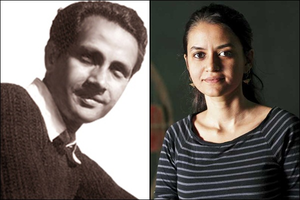
The 77th edition of the world’s most anticipated festival of international film, which will start on the French Riviera on Tuesday, has a history as ancient as India.
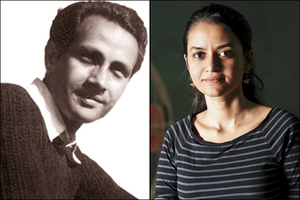
In 1946, the festival’s first year, Chetan Anand’s “Neecha Nagar” took home the top honor at the time, the Grand Prix du Festival International du Film. The brutal movie and David Lean’s “Brief Encounters” were nominated together.
A little over five years later, two films were nominated for the Grand Prix: Raj Kapoor’s classic ‘Awaara’ (1953) and V. Shantaram’s ‘Amar Bhoopali’ (1952), a Marathi biopic on the poet and musician Honaji Balai in the early 19th century. Shantaram’s film won an award for best sound recording.
Following these near-misses, four consecutive trophies were awarded to Indian films that were selected for the Cannes competition: the International Prize went to Bimal Roy’s 1954 film “Do Bigha Zameen”; Baby Naaz, who produced Raj Kapoor’s 1955 film “Boot Polish,” received a Special Mention for Child Artiste; the Palme d’Or went to Satyajit Ray’s debut film “Pather Panchali” for Best Human Document; and finally, in 1957, Rajbans Khanna’s “Gotama Buddha” earned him a Special Mention (Short Film) as Director (Hrishikesh Mukherjee was the film’s editor).
After a protracted dry spell, M.S. Sathyu’s ‘Garam Hawa’ (1974), which had been nominated for the Grand Prix, succeeded Satyajit Ray’s ‘Parash Pathar’ (1958) and ‘Devi’ (1962) in receiving nominations for the Palme d’Or.
With his 1983 picture “Kharij,” Mrinal Sen put an end to this protracted wait; yet, despite being nominated for a Palm d’Or, he had to settle for the Jury Prize. Satyajit Ray’s film “Ghare Baire,” which was based on Rabindranath Tagore’s book, received a nomination for the Palme d’Or the following year, but the master had to come away empty-handed.
Indian films have been making an impact ever since, even if not all of them have made headlines.
‘Salaam Bombay!’, Mira Nair’s 1988 Caméra d’Or Audience Award-winning film. For his critically praised Malayalam film ‘Piravi’ (1989), directed by Shaji N. Karun, he was given a Caméra d’Or Special Mention. The film was about Prof. T.V. Eachara Warrier, whose son, who was a college student, was slain in police custody during the emergency.
‘Sam & Me’, directed by Deepa Mehta, received a Caméra d’Or Special Mention in 1991, despite being identified as a Canadian production. After Aribam Syam Sharma’s Meitei film “Ishanou” was nominated for the festival’s Un Certain Regard section’s top prize, that year became doubly significant for India. It was the first North-East Indian film ever.
Then 1994’s double dose of wonderful news arrived. The Palme d’Or nomination for “Swaham,” directed by Malayalam filmmaker Shaji N. Karun, came to Payal Kapadia thirty years later. The Bengali film “Uttaran,” directed by Sandip Ray, son of Satyajit Ray, has been nominated for an Un Certain Regard Award. Nevertheless, none of the nominated films won the prize for which they were intended.
Murali Nair’s 1999 Malayalam film “Marana Simhasanam,” which tells the story of India’s first electric chair execution, took home the Camera d’Or, which is given to the greatest debut feature film, at the close of a barren 1990s.
In the early 2000s, there were a number of smaller-scale but nevertheless noteworthy prizes. These were for the following: Ritesh Batra’s well-known Irrfan Khan-starring film “The Lunchbox” (2013; Grand Rail d’Or Audience Award); Gitanjali Rao’s animated feature “Printed Rainbow” (2006; Grand Rail d’Or Audience Award); and Manish Jha’s “A Very Very Silent Film” (2002; Short feature Jury Prize).
The four-film collection commemorating 100 years of Indian cinema, “Ajeeb Dastaan Hai Yeh (Bombay Talkies),” directed by Karan Johar, was nominated for the 2015 Queer Palm without winning.
2014 saw Kanu Behl’s neo-noir criminal thriller “Titli” get a nomination for the Camera D’Or, but it did not win. The next year, 2015, saw the release of Neeraj Ghaywan’s highly regarded film “Masaan,” which starred Richa Chadha and Vicky Kaushal in his feature film debut. It was awarded the FIPRESCI Prize in the Un Certain Regard category.
Nandita Das (‘Manto’; 2018) and Gurvinder Singh (‘Chauthi Koot’; 2015) were nominated, but they did not win the Un Certain Regard Award.
A Night of Knowing Nothing, a documentary by Payal Kapadia, won the Golden Eye in 2021. The following year, Delhi’s Shaunak Sen won the same prize for his film “All That Breathes,” which also made it to the Oscars shortlist. This year, Payal Kapadia is vying for the Palme d’Or for her debut feature film, “All We Imagine is Light.”
All eyes will be on Kapadia’s film when the curtains open at Cannes, which is about two nurses who are tormented by their relationships and what happens to them when they take a road trip to a beach for vacation. Thirty years have passed since an Indian movie was chosen to compete in the Palme d’Or. 1994 was not a fruitful year for Shaji Karun. In 2024, will Payal Kapadia write the history?
-
Weight Loss Tips: Want to reduce stomach circumference? ‘These’ healthy drinks will be a boon, cravings will also be controlled

-
WhatsApp Update: Users’ privacy will be stronger! The company came up with a new feature, AI chats are now completely secure

-
Instagram Tips- The style of photo sharing on Instagram will change, Instants app launched

-
IPL 2026: Here’s why Akeal Hosein is not playing against LSG in today’s match. Read
-
Netherlands’ De Ligt to miss World Cup after back surgery