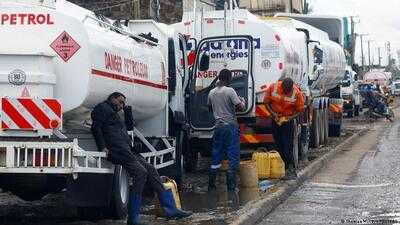
A potential US-Iran agreement could lower energy-, fertilizer- and food prices in Africa if the Strait of Hormuz fully reopens. Oil exporters such as Nigeria and Angola might have to cope with less revenue, experts say.The prospect of a peace agreementbetween the United States andIran is fueling optimism across global financial and commodity markets. At the center of attention is the Strait of Hormuz—one of the world's most important shipping routes and a critical artery for global oil flows. A large share of traded crude passes through the narrow corridor between the Persian Gulf and the Gulf of Oman. Any disruption pushes energy prices higher, while easing tensions typically stabilizes markets. If the agreement announced by US President Donald Trump were to materialize and shipping were to fully resume through the Strait, Africa could be among the main indirect beneficiaries. Lower oil prices, reduced freight costs and smoother trade flows would bring relief to economies heavily exposed to imported inflation — particularly in energy, fertilizers and food. A potential US‑Iran deal could therefore act as a broad stimulus and food security package for many African countries. The greatest gains would likely accrue in energy- and fertilizer-import-dependent economies in East Africa, North Africa and the Sahel. By contrast, oil producers such as Nigeria, Angola and Algeria would benefit less. The 'best news' for Africa in a long time Hopes are especially high in East Africa, where policymakers and businesses are closely watching developments. "This is the best news for Africa in a long time," Samuel Nyandemo, an economics professor at the University of Nairobi, told DW. For Nyandemo, the impact would extend well beyond energy markets. "Once the route is opened, we expect smooth mobility of goods and services," he said, noting that exports to Europe and Asia could again flow without costly detours, stabilizing supply chains and cutting transport expenses. Recent disruptions have significantly impacted freight costs. "Because of the disruption of this route, transport costs have increased significantly, as we now have to take much longer detours." According to Nyandemo, countries in eastern Africa have been hardest hit by tensions in the Gulf. "While west African countries and South Africa can rely on alternative routes, we in east Africa are mainly dependent on this route," he explained, stressing the region's dependence, especially for energy, fertilizers and some food imports. The reliance is substantial. Roughly 26% of Kenya's fertilizer imports pass through the Strait of Hormuz. In Sudan, the share exceeds 50%. Globally, about one-third of seaborne fertilizer trade flows through the region. The agricultural sector has been particularly affected. In Kenya, exporters of flowers, vegetables and other horticultural goods have faced rising costs. "We have suffered major losses in the horticulture sector," Nyandemo said. At the same time, higher import prices have driven broader inflation. "When fuel prices fall, inflation slows, whether in transport, production or food." Energy is a central driver of inflation across many African economies. Higher diesel and petrol prices push up transport, electricity generation and agricultural costs simultaneously, meaning that falling oil prices could translate into lower consumer prices. Kenya: Political pressure due to higher energy prices In Kenya, rising fuel costs have already had political consequences. "People are suffering, and the president is also suffering politically," Nyandemo said. Subsidies have strained public finances while increasing public frustration. Export sectors, including tea, coffee and cut flowers, have also come under pressure as rerouted shipping drives up logistics costs. Despite optimism, Nyandemo urged caution: "We will only be reassured once the agreement is officially signed." Key details remain uncertain. For Africa's oil-producing nations, the picture is more complex. Lower global oil prices would generally reduce state revenues. "If the Strait of Hormuz were truly reopened, imports would become cheaper, which would be positive for consumers and businesses," Heitor de Carvalho of Lusiada University in Luanda told DW. Lower inflation would benefit households, but the fiscal impact could be negative in the near term. "In Angola's case, it is mainly about oil export revenues," de Carvalho said. Even if imports become cheaper, governments often benefit more immediately from high oil prices. "Therefore, the overall effect of reopening the Strait of Hormuz would be rather negative in the short term." For millions of African consumers, the stakes go beyond geopolitics. The outcome could directly shape the affordability of fuel, bread, maize flour and fertilizer in the months ahead. Diversifying from crude dependence Over time, however, de Carvalho sees potential benefits for oil-producing nations, too. "Our main problem is the overly large role of oil revenues," he said, noting that high prices of crude oil can delay reform and entrench structural imbalances. This reflects a broader "resource paradox" affecting many African economies, where reliance on commodities supports short-term growth but hinders diversification. "Over the long term, we should reduce the weight of oil in our economy in favor of other sectors," he said, adding that in the long term, a peace agreement and the reopening of the Strait of Hormuz would also be very welcome for Angola's economy. For most African countries, the economic logic is simple. Lower oil prices reduce transport and production costs, make fertilizers more affordable and ease pressure on food prices. The effects would ripple across multiple sectors, especially in countries heavily dependent on Gulf supply chains. Nations in East Africa, the Horn of Africa and parts of the Sahel are particularly vulnerable to disruptions. Energy-importing countries such as Kenya, Ethiopia and Senegal would likely benefit, alongside many in North Africa. However, the Memorandum of Understanding between the US and Iran remains uncertain, and it is unclear whether diplomatic momentum will translate into a binding peace deal. Edited by: Chrispin Mwakideu
-
Centre bans sale of cough syrups without doctor's prescription

-
Retirement Plan: A new source of income, where and how to distribute ₹50 lakh after retirement, so that life is set.

-
A miracle in 15 days! Find out which stocks turned your fortunes around and made investors rich.

-
Tata Sierra EV vs Toyota Urban Cruiser Ebella: Battle of Two Long-Range Electric SUVs With Over 500km Range

-
ANAX Developments breaks ground on ELLE Residences Dubai Islands and unveils ANAX 2.0