Good news for travellers planning to travel between Denmark and Germany. The distance between the two countries could soon be reduced to just 7 minutes by train from the current 45-minute ferry voyage! In a remarkable infrastructure feat, engineers have successfully placed a massive 73,000-tonne tunnel element into the Baltic Sea in Europe as part of the under-construction Fehmarnbelt Tunnel . It is a major breakthrough and an engineering achievement for the project. When completed, the project is expected to become the world’s longest immersed road and rail tunnel.
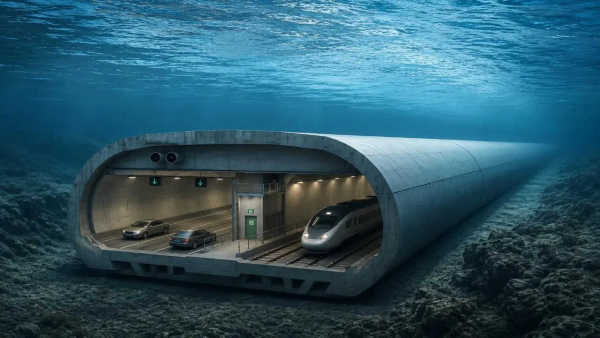
The tunnel is being built using enormous prefabricated concrete sections manufactured on land, floated out to sea, and lowered with care into a dredged trench on the seabed.
More about this stunning tunnel
The tunnel is around 18 kilometres beneath the Fehmarn Belt strait. It will connect Rødbyhavn in Denmark with Puttgarden in Germany. Each standard tunnel element measures roughly 217 metres in length and weighs approximately 73,000 tonnes. The project will comprise 79 standard elements and 10 special sections housing technical installations.
What it means for travellers
For travellers, the tunnel means dramatically transforming cross-border journeys. As of now, many passengers depend on ferries operating across the Fehmarn Belt, a crossing that takes around 45 minutes. Once the tunnel becomes operational, the same trip is expected to take less than 10 minutes by car and roughly seven minutes by train.
More about Fehmarnbelt Tunnel
The Fehmarnbelt Tunnel is designed with four motorway lanes and two electrified railway tracks. This technique here involves dredging a trench on the seabed, lowering prefabricated sections into place and sealing them together.
The project is expected to change tourism across Northern Europe. We could see more road trips linking Germany, Denmark, and improved rail connectivity.
Construction has required years of planning and environmental assessments. Work includes extensive dredging, specialised manufacturing facilities, and purpose-built marine equipment capable of positioning the enormous concrete elements with millimetre-level accuracy.
Though timelines have evolved due to technical and regulatory challenges, the successful installation of another 73,000-tonne section signals towards completion. For travellers and engineering enthusiasts alike, the Fehmarnbelt Tunnel represents more than just an infrastructure project. It is so much more than that!
-
Ruben Amorim appointed as new AC Milan head coach after Manchester United exit

-
TVRI Morning Broadcast Schedule: Argentina vs Algeria World Cup 2026 Match and South Kalimantan Viewing Spots

-
Which Nation Has the Tallest Squad at the World Cup?

-
Goalless Draw Against Cape Verde Leaves La Furia Roja Frustrated

-
Tragic Helicopter Crash Claims Lives of Oliver Tree and Five Others in Brazil