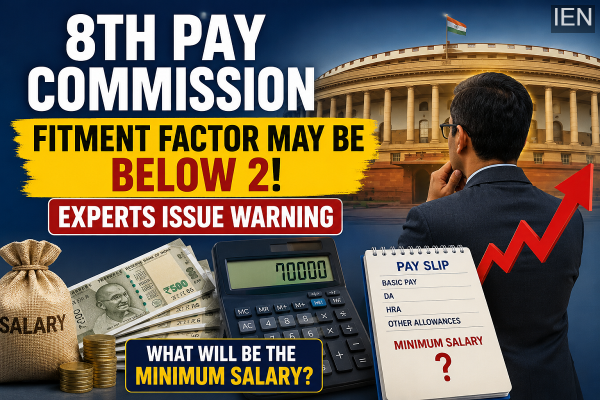
Millions of central government employees and pensioners across India are closely tracking every update related to the 8th Pay Commission. While many workers were expecting a major jump in salaries and pensions, fresh discussions surrounding the fitment factor have sparked concern among employee groups. According to recent expert observations, the fitment factor may remain below expectations, and some analysts are even warning that it could stay under the mark of 2 in certain scenarios.
The debate has intensified as employees wait for clarity on revised pay scales, pension benefits, and the timeline for implementation of the next pay commission. At the same time, several employee unions continue demanding a much higher fitment factor, arguing that rising inflation and increasing living expenses require substantial salary corrections.
8th Pay Commission Work Moving Ahead Rapidly
Discussions around the 8th Pay Commission are gaining momentum as meetings and consultations continue in different states. According to reports shared during recent conversations among experts and employee representatives, the commission is actively gathering feedback and studying salary structures before preparing its recommendations.
There is growing optimism that the commission could submit its report to the central government by December 2026. If the process moves smoothly, revised salaries and pension benefits may begin reaching employees sometime around March or April 2027.
For lakhs of government staff members, this timeline is crucial because many are already calculating their future salary structures based on possible fitment factor revisions.
Why the Fitment Factor Matters So Much
The fitment factor plays the most important role in deciding how much an employee’s basic salary will increase under a pay commission. It acts as a multiplier that converts the existing basic pay into a revised salary structure.
Under the 7th Pay Commission, the government implemented a fitment factor of 2.57. That revision significantly increased minimum salaries for central government employees and became one of the biggest highlights of the pay panel.
Now, with the 8th Pay Commission discussions underway, employee unions are reportedly demanding a fitment factor as high as 3.83. If such a proposal is accepted, the minimum basic salary of government employees could rise close to ₹70,000 per month.
However, experts believe that such a steep increase may place a heavy financial burden on the government.
Experts Warn Against Unrealistic Expectations
Several financial analysts and policy observers have suggested that expectations around the fitment factor may currently be too high. According to discussions emerging from employee forums and pension-related consultations, some experts feel the final multiplier could remain far below the demanded level.
In fact, warnings have surfaced that the effective fitment structure may remain below 2 in practical terms if the government chooses a more cautious approach toward expenditure management.
Such a move could disappoint employees who are expecting massive salary revisions similar to or larger than the previous pay commission benefits.
At the same time, no official confirmation has yet been issued by the government regarding the final fitment factor. Therefore, all current estimates remain speculative until formal recommendations are released.
What Could Be the New Minimum Salary?
The biggest question among employees remains the revised minimum salary figure under the 8th Pay Commission.
If the government accepts a higher fitment factor close to employee demands, the minimum basic pay could reportedly touch nearly ₹70,000. However, if the fitment factor remains conservative, the salary increase may be much lower than expected.
Experts believe the final decision will depend on several factors, including:
- Inflation trends across the country
- Government revenue and fiscal pressure
- Pension liabilities
- Economic growth conditions
- Recommendations from employee unions and finance experts
Because of these factors, the government may attempt to strike a balance between employee expectations and financial sustainability.
OPS, NPS and UPS Discussions Continue
The conversation surrounding the 8th Pay Commission is not limited to salary hikes alone. Employee groups are also actively debating retirement security and pension reforms.
Recent discussions included major concerns regarding:
- Old Pension Scheme (OPS)
- National Pension System (NPS)
- Unified Pension Scheme (UPS)
Employee organizations argue that government staff should receive a secure and dignified life after retirement. Many unions believe pension structures must be strengthened because inflation continues to impact household expenses and healthcare costs.
There is also pressure on the government to ensure long-term financial protection for pensioners rather than focusing only on monthly salary revisions.
Possibility of Interim Relief Before Final Report
Another important point emerging from current discussions is the possibility of interim relief if the implementation of the 8th Pay Commission gets delayed.
According to employee representatives, the government may consider merging Dearness Allowance (DA) into the basic salary temporarily. Such a step could provide immediate financial support to employees and pensioners while the commission finalizes its recommendations.
This proposal is being seen as a temporary solution that could help offset inflation-related pressure before the full salary revision takes effect.
Government Employees Waiting for Final Clarity
At present, central government employees and pensioners remain hopeful but cautious. While discussions about a major salary jump continue, uncertainty over the fitment factor has created mixed reactions among workers.
The coming months are expected to be extremely important as the commission progresses toward its final recommendations. Until then, speculation regarding salary hikes, pension revisions, and fitment factors is likely to continue dominating discussions among government employees across the country.
For millions of workers and retirees, the 8th Pay Commission is not just about numbers — it represents future financial stability, retirement security, and protection against rising living costs.
-
1, 2, 3, 4, or 5... How many credit cards can become the root of your troubles? Find out before applying for a new card..

-
Investment Tips: Have You Inadvertently Parked Your Money in the Wrong Place? Check the Health of Your Investments Using These 5 Points..

-
Credit Card: What is APR on a Credit Card? How does it impact your wallet? know..

-
Gratuity Rules: Just One Mistake Could Cost You Your Hard-Earned Gratuity—Find Out When a Company Can Withhold Your Funds..

-
Harsh Dubey Dismisses Ravindra Jadeja Replacement Talks After Maiden India Call-Up
