
Food packs still don't tell the full story: Firms make selective label changes as FSSAI rules gather dust
New Delhi: After lagging on front-pack-labelling to declare salt, sugar and saturated fats for over eight years and amid national food safety regulator Food Safety & Standards Authority of India (FSSAI)'s still-pending regulation on the same, select packaged foods makers have started making incremental changes to limited packs, declaring information on front packs such as "sugar, salt and protein content, no preservatives or no artificial colours".
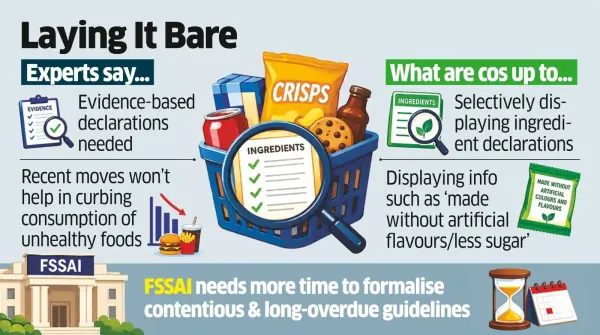
In the absence of guidelines by FSSAI, though, the voluntary declarations being made by companies are very selective, leading to health experts saying that unless the front labels declare salt, sugar and fat content across all packs in a standardised manner, such moves will not help in curbing consumption of unhealthy foods. The development comes amid heightened consumer awareness and social media scrutiny on transparent ingredient declarations.
Also read: Taali joins hands with Pokémon to enter India’s evolving snack market
PepsiCo, ITC, Nestle and iD Fresh Food are among those which are now displaying voluntary ingredient declarations on limited front-of-pack labels. PepsiCo has now begun rolling out packs across its foods' portfolio declaring "made without artificial colours and flavours" on front labels. Saakshi Verma Menon, chief marketing officer at PepsiCo India Foods, said the move reflects "a broader shift in how brands are communicating." iD Fresh Food, which sells fresh breakfast batters, recently made changes on its front packs to declare that its batters have "no added preservatives, no soda and are mildly salted."
On the other hand, Nestle declares fat, sugar and sodium content on front-labels of large packs of Maggi noodles and Milky Bar, while some ITC brands such as Aashirvaad atta and Sunfeast Farmlite biscuits now declare front-pack information on sodium, added sugar, trans fats and protein.
But health advocates called the moves "very limited in scope", amid lack of notified guidelines. "What is needed is evidence-backed front-pack declarations about warning labels clearly telling consumers about sugar, salt, and fat content," Arun Gupta, convener at health advocacy think tank Nutrition Advocacy in Public Interest (NAPi), said. "It is this messaging that will reduce consumption of unhealthy foods."
Also read: Dietary balance remains missing as India continues to gorge on cereals
FSSAI's over eight-year-old discussions with food companies to make it mandatory to declare details about fat, sugar, salt and saturated fat content on front packs, continues to hang in balance. In March this year, the regulator sought more time from the Supreme Court to formalise the contentious and long-overdue guidelines.
The regulator had responded to the Supreme Court directing FSSAI to introduce the mandatory front-of-pack warning labels to declare sugar, salt and saturated fats to rein in consumption of unhealthy foods.
In the absence of guidelines by FSSAI, though, the voluntary declarations being made by companies are very selective, leading to health experts saying that unless the front labels declare salt, sugar and fat content across all packs in a standardised manner, such moves will not help in curbing consumption of unhealthy foods. The development comes amid heightened consumer awareness and social media scrutiny on transparent ingredient declarations.
Also read: Taali joins hands with Pokémon to enter India’s evolving snack market
PepsiCo, ITC, Nestle and iD Fresh Food are among those which are now displaying voluntary ingredient declarations on limited front-of-pack labels. PepsiCo has now begun rolling out packs across its foods' portfolio declaring "made without artificial colours and flavours" on front labels. Saakshi Verma Menon, chief marketing officer at PepsiCo India Foods, said the move reflects "a broader shift in how brands are communicating." iD Fresh Food, which sells fresh breakfast batters, recently made changes on its front packs to declare that its batters have "no added preservatives, no soda and are mildly salted."
Voluntary declarations on front of the packs need to be standardised across all packs: Experts
On the other hand, Nestle declares fat, sugar and sodium content on front-labels of large packs of Maggi noodles and Milky Bar, while some ITC brands such as Aashirvaad atta and Sunfeast Farmlite biscuits now declare front-pack information on sodium, added sugar, trans fats and protein.
But health advocates called the moves "very limited in scope", amid lack of notified guidelines. "What is needed is evidence-backed front-pack declarations about warning labels clearly telling consumers about sugar, salt, and fat content," Arun Gupta, convener at health advocacy think tank Nutrition Advocacy in Public Interest (NAPi), said. "It is this messaging that will reduce consumption of unhealthy foods."
Also read: Dietary balance remains missing as India continues to gorge on cereals
FSSAI's over eight-year-old discussions with food companies to make it mandatory to declare details about fat, sugar, salt and saturated fat content on front packs, continues to hang in balance. In March this year, the regulator sought more time from the Supreme Court to formalise the contentious and long-overdue guidelines.
The regulator had responded to the Supreme Court directing FSSAI to introduce the mandatory front-of-pack warning labels to declare sugar, salt and saturated fats to rein in consumption of unhealthy foods.