
A stone tool from 1.04 million year ago. | M.W. Moore/University of New England
The discovery of just a few stone flakes on the island of Sulawesi, Indonesia, has had an enormous impact on how archaeologists view the movement of early humans throughout island Southeast Asia. The seven pieces of flaked stone discovered at the Calio site were found within layers of fossils dating back at least 1.04 million years, while other models suggest these layers might date even further back, to 1.48 million years ago, which represents an almost million-year difference compared with earlier discoveries from the island of Sulawesi.
Prior to the Calio site, the earliest signs of hominins on the island were found at the Talepu site, estimated at around 194,000 years old. This implied that humans arrived at Sulawesi in the Middle Pleistocene; however, the new dating of the Calio site shifts everything to an entirely new level. First of all, the importance of the discovery lies not only in terms of Sulawesi but also goes beyond it since the island belongs to the zone of Wallacea, which means that it is cut off from other regions by deep water, making it impossible for early humans to walk across even during lower sea levels. According to PubMed, the Calio research shows that hominins likely migrated to the island around the same time that many other islands in Southeast Asia were colonized.
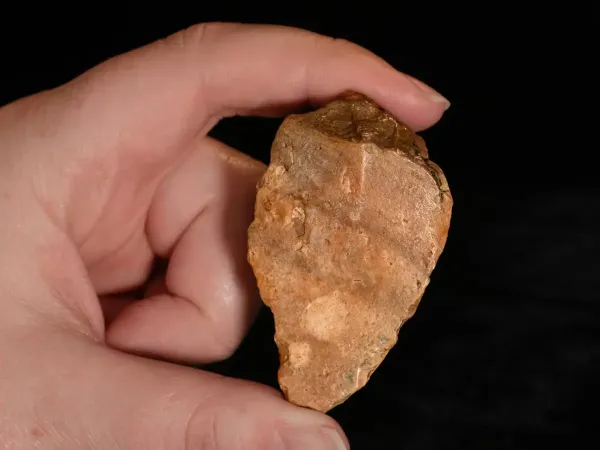
Flaked cobbles made of chert, retouched flakes, and evidence of core rotation were noted as part of the manufacture of stone tools, and such observations have transformed this archaeological discovery from a geological one to one that involves human behavior. Through the stone flakes, there is proof that whoever arrived on Sulawesi purposely selected materials and deliberately made tools using knapping techniques. According to Nature News, another implication of this discovery is that ancient humans crossed large water bodies much earlier than previously thought necessary for Wallacea.

It is still unclear whether any specific hominin species managed to reach the island, let alone the frequency of such crossings. However, the Calio findings do not suggest any evidence of sophisticated navigation techniques either. What the Calio findings have done is reveal the early entry of humans into complex island environments at an even earlier time frame than previously established by Sulawesi chronology, and this far-reaching conclusion may be regarded as the main contribution of this discovery after all. Today, it is clear to archaeologists that early hominins' movements throughout Wallacea were not a matter of occasional migrations but rather involved a variety of processes. Namely, crossing islands, adapting to new environments, and settling there can be considered typical of early human behavior. Despite the tiny size of the artifacts found, they make a significant contribution to chronology, as they have enabled researchers to extend the timeline of human presence on Sulawesi by hundreds of thousands of years.
Prior to the Calio site, the earliest signs of hominins on the island were found at the Talepu site, estimated at around 194,000 years old. This implied that humans arrived at Sulawesi in the Middle Pleistocene; however, the new dating of the Calio site shifts everything to an entirely new level. First of all, the importance of the discovery lies not only in terms of Sulawesi but also goes beyond it since the island belongs to the zone of Wallacea, which means that it is cut off from other regions by deep water, making it impossible for early humans to walk across even during lower sea levels. According to PubMed, the Calio research shows that hominins likely migrated to the island around the same time that many other islands in Southeast Asia were colonized.
A stone tool from 1.04 million year ago. | M.W. Moore/University of New England
Multiple dating methods strengthened confidence in the discovery
One reason Calio was immediately recognized after its discovery was that the estimate of its age did not rely on a single dating method. The scientists used a combination of paleomagnetism, uranium-series dating, and electron-spin resonance dating on tooth fossils found in the same sedimentary strata. According to a peer-reviewed version of the paper available via PubMed Central, the strata exhibited a reverse polarity characteristic of geological formations older than the Brunhes-Matuyama reversal event, indicating an Early Pleistocene age.Flaked cobbles made of chert, retouched flakes, and evidence of core rotation were noted as part of the manufacture of stone tools, and such observations have transformed this archaeological discovery from a geological one to one that involves human behavior. Through the stone flakes, there is proof that whoever arrived on Sulawesi purposely selected materials and deliberately made tools using knapping techniques. According to Nature News, another implication of this discovery is that ancient humans crossed large water bodies much earlier than previously thought necessary for Wallacea.
Island of Sulewasi | Image Credit: Wikimedia Commons
The discovery changes how researchers think about early island movement
In contrast to locations such as Flores, Sulawesi was regarded as one of the more recent chapters in the history of early island colonization for quite some time due to evidence of ancient hominin activity which had been dated much further back in time on other islands within the region. Calio has shifted that paradigm drastically. As indicated by previous archaeological reviews in PubMed Central, Sulawesi had been seen as younger than other islands with respect to their archaeological records.It is still unclear whether any specific hominin species managed to reach the island, let alone the frequency of such crossings. However, the Calio findings do not suggest any evidence of sophisticated navigation techniques either. What the Calio findings have done is reveal the early entry of humans into complex island environments at an even earlier time frame than previously established by Sulawesi chronology, and this far-reaching conclusion may be regarded as the main contribution of this discovery after all. Today, it is clear to archaeologists that early hominins' movements throughout Wallacea were not a matter of occasional migrations but rather involved a variety of processes. Namely, crossing islands, adapting to new environments, and settling there can be considered typical of early human behavior. Despite the tiny size of the artifacts found, they make a significant contribution to chronology, as they have enabled researchers to extend the timeline of human presence on Sulawesi by hundreds of thousands of years.