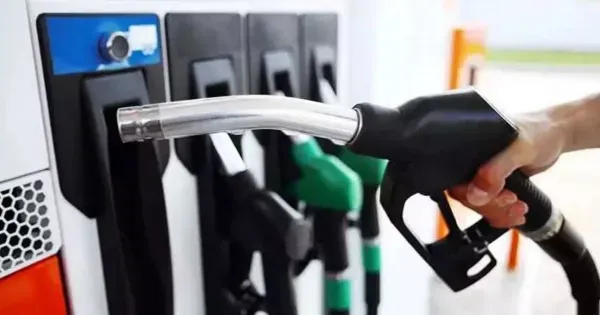
New Delhi: The prices of petrol and diesel in the country were increased from Rs 2.61 to Rs 2.71 per liter on Monday. This is the fourth increase in less than two weeks. Public sector oil marketing companies are passing on the impact of rising crude oil prices in the international market to consumers.
After this latest increase, the prices of petrol and diesel have increased by a total of about Rs 7.5 per liter under the revision which started from May 15 after the prices remained stable for a long time. Due to this, fears of inflationary pressure in the economy and increase in transportation costs have intensified. According to industry sources, in this latest revision in prices, petrol has become costlier by Rs 2.61 per liter and diesel by Rs 2.71 per liter. After this, the price of petrol in Delhi has increased from Rs 99.51 to Rs 102.12 per liter and diesel from Rs 92.49 to Rs 95.20 per liter.
This continuous increase in fuel prices is due to higher crude oil prices in the global market, reduced refining margins and weakening of the rupee, which has led to a huge increase in import costs. Earlier, on May 15, petrol and diesel were increased by Rs 3 per liter each, on May 19 by 90 paise per liter and on May 23, petrol and diesel were increased by 87 paise and diesel by 91 paise per liter. After this latest increase, petrol in Mumbai has become Rs 111.21 and diesel Rs 97.83 per liter, in Kolkata it has become Rs 113.51 and Rs 99.82 per liter, while in Chennai it has become Rs 107.77 and Rs 99.55 per liter.
The difference in fuel prices in the country is seen due to the state-wise tax structure. Public sector oil companies Indian Oil Corporation (IOC), Bharat Petroleum Corporation Limited (BPCL) and Hindustan Petroleum Corporation Limited (HPCL) together control about 90 percent of the country’s fuel market. According to experts, global crude oil prices have increased by more than 50 percent since the end of February. The reason for this is tension in West Asia and the possibility of supply disruption through the Strait of Hormuz. In the first two and a half months of the conflict, oil companies kept retail prices stable despite rising costs.
The government had called it a move to protect consumers from inflation, while opposition parties had accused the government of postponing the price hike due to key state assembly elections. This price rise started on May 15, when the ruling Bharatiya Janata Party (BJP) won three out of five state/union territory elections, including West Bengal. Soon after the public companies increased the prices, private oil companies like Nayara Energy also increased the prices by the same proportion.
Earlier in March, Naira Energy had increased the price of petrol by Rs 5 and diesel by Rs 3 and Shell had increased the price of petrol by Rs 7.41 and diesel by Rs 25 per liter from April 1. However, Jio-BP, a joint venture between Reliance Industries and BP Plc, has increased its rates in line with public sector companies. The prices of petrol and diesel in the country have now reached their highest level since May 2022.
-
This Traditional Indian Superfood Is Taking Over Summer Diets — Here’s Why Everyone’s Talking About Sattu

-
US Trade Team To Visit India From June 1 To Finalise Interim Trade Agreement
-
The Top 20 Left-Wingers in World Football Ranked

-
Arrowhead Stadium: Capacity, Location, and World Cup 2026 Fixtures – All You Need to Know

-
Tyler Adams Leads the Way, but Will There Be Any Surprises? Projecting USMNT’s World Cup Starting XI