
Listen to this article in summarized format
Loading...
××
Subscribe to

Unlock AI Briefing and Premium Content
New Year Offer 24 Hours Left
Subscribe NowAlready a member? Sign In
What's Included
- Exclusive Stories
- Daily ePaper Access
- Smart Market Tools
- Curated Investment Ideas
- Ad-lite Experience
Subscription

Few policy choices illustrate trade-offs between development and environmental stewardship as decisions concerning hydropower projects in the ecologically sensitive Himalayan region. Last week, GoI informed the Supreme Court that no new hydroelectric projects should be permitted in the upper reaches of the Ganga in Uttarakhand, apart from the 7 commissioned or substantially completed. The decision is welcome and should mark the first step towards a more ecologically sound approach to development.
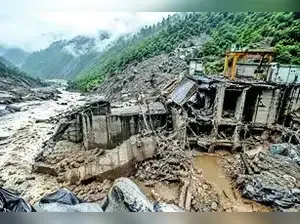
It has taken more than a decade since the 2013 Kedarnath cloudburst and numerous other disasters for the ministries of power, environment and water resources to reach a consensus on hydel projects. GoI must now ensure that projects under construction comply with safeguards aimed at mitigating life-cycle impacts while also implementing environmental and socio-economic remedial measures. The consequences of these projects, along with economic and non-economic costs incurred during years of policy indecision over the region's hydropower potential, cannot be overlooked.
Focus must now shift to restoration. The extensive body of submissions, expert reports and depositions should provide the foundation for a framework to assess the suitability of hydel and other infra projects in fragile ecosystems. Equally important is the creation of mechanisms for compliance with statutory safeguards and continuous oversight to ensure that projects do not undermine ecological stability or ecosystem services. The decision should also encourage a more rigorous accounting of the long-term environmental costs of development. Such costs, together with mitigation and remediation measures, must become integral to the appraisal and approval of all development projects.
It has taken more than a decade since the 2013 Kedarnath cloudburst and numerous other disasters for the ministries of power, environment and water resources to reach a consensus on hydel projects. GoI must now ensure that projects under construction comply with safeguards aimed at mitigating life-cycle impacts while also implementing environmental and socio-economic remedial measures. The consequences of these projects, along with economic and non-economic costs incurred during years of policy indecision over the region's hydropower potential, cannot be overlooked.
Focus must now shift to restoration. The extensive body of submissions, expert reports and depositions should provide the foundation for a framework to assess the suitability of hydel and other infra projects in fragile ecosystems. Equally important is the creation of mechanisms for compliance with statutory safeguards and continuous oversight to ensure that projects do not undermine ecological stability or ecosystem services. The decision should also encourage a more rigorous accounting of the long-term environmental costs of development. Such costs, together with mitigation and remediation measures, must become integral to the appraisal and approval of all development projects.