Oil Shock & India’s Urban Mobility
The ongoing crude oil crisis is testing the limits of India’s ride-hailing economy. The rising fuel costs are squeezing driver margins and hiking commuter fares, driving urban Indians to shared mobility and electric vehicles. Amid this, it seems that India’s mobility space is bracing for a reset
Ripples Of Oil Crisis: The first crack is already visible among drivers, who are demanding fare hikes as operating costs continue to climb. Since fuel accounts for as much as 40% of a driver’s expenses, prolonged crude inflation could compress margins. This would especially hamper the drivers who have acquired their vehicles on loans.
Who Absorbs The Shock? In the short term, drivers could take the biggest hit. However, over time, platforms and fleet operators could be forced to respond with higher fares and revised pricing structures, shifting more of the burden onto commuters. The industry’s challenge right now is that price increase risks weakening demand, even as holding fares flat can hurt supply.
The Bending Demand? Executives believe that the bigger danger from price hike won’t be demand collapse, but behaviour change. Price-sensitive users, especially office commuters and riders in tier-II and III cities, may begin cutting back on cabs and move to metros, buses, bike taxis or pooled rides.
Shared Mobility Pivot: If fare inflation crosses a certain threshold, shared mobility could emerge as the biggest winner. Enterprise transport providers are already looking at route optimisation, pooled employee commuting and shift consolidation to control costs. Consumer ride-hailing, too, may see more carpooling and ride-sharing if fuel prices continue to stay elevated.
The Silent Winner: Besides shared mobility, electric mobility is likely to benefit most from the oil shock, particularly in commercial fleets and two-wheelers where operating economics are already favourable. But even here, bottlenecks to supply, charging and financing remain.
As India stares at a new model of urban mobility, will ride-hailing stay affordable enough to absorb the oil shock? Let’s find out…
From The Editor’s Desk
 Cashfree’s Profitability Puzzle
- In the past two years, RBI has granted payment aggregator licences to over 55 players. Yet, according to Cashfree, licences are not a competitive moat as the market share is still highly concentrated among three or four players.
- The fintech major is now betting on technology, compliance depth and category-specific product stacks to carve a niche in the PA space. It is also pursuing mid-tier SMEs, no-code onboarding, WhatsApp integration and instant settlements to woo clients.
- Cross-border payments, trade settlements and outward investment flows are the next frontiers for Cashfree as these products bring higher volumes and better margins. It also claims to be resisting the agentic commerce hype that rivals are pushing right now.
Hottest New Job In AI Realm
- As AI agents see rapid adoption, enterprises are hitting a bottleneck – making these agents behave properly inside fragmented legacy systems and bespoke workflows. This gap is driving the demand for forward‑deployed engineers (FDEs).
- FDEs sit directly inside client sites, customise deployments, tackle edge cases and help startups turn generic AI tools into mission‑critical systems. Data shows India currently has roughly 230 FDE openings, jumping almost 800% in the past year.
- For AI startups, these engineers act as revenue accelerators. They guide onboarding, build the first agent workflows alongside the client, and feed customer‑driven features directly into the roadmap.
![📉]() Weekly Startup Funding Tanks
Weekly Startup Funding Tanks
- Indian startups managed to raise a mere $92.2 Mn across 17 deals last week, down 70% from $303 Mn bagged by 15 startups in the preceding week. Scapia and Myhtik took home the biggest cheques at $63 Mn and $5 Mn, respectively.
- In terms of deal count, ecommerce retained the top spot as six startups raised funds last week. Meanwhile, fintech emerged as the most funded sector.
- Seed stage startups bagged $7.6 Mn, up multifolds from $2.6 Mn raised in the previous week. Info Edge Ventures emerged as the most active investor last week, backing Anscer Robotics and Trackk.
Mixed Week For Startup Stocks
- Investor sentiment towards new-age tech stocks remained mixed last week as 31 out of the 57 new-age tech stocks under Inc42’s coverage gained in a range of 0.11% to nearly 18% this week. The remaining 26 fell in a range of 0.01% to over 15%.
- Recently listed Kissht and RateGain were the biggest gainers last week, while MapmyIndia and TAC Infosec emerged as the biggest losers.
- Despite persistent Rupee weakness and mixed global cues, Indian equities showed resilience on the back of sustained buying by domestic investors. Global macroeconomic developments and policy commentary will decide the market trajectory next week.
![💰]() StrainX Bioworks Bags $13 Mn
StrainX Bioworks Bags $13 Mn
- Emerging out of stealth mode, the biotech startup has raised around ₹124 Cr in a round led by Prime Venture Partners and Leo Capital to expand capacity at its Bhopal bio-manufacturing unit, commence commercial-scale production and ramp up hiring.
- Founded in 2023, StrainX uses synthetic biology and precision fermentation to manufacture alternative proteins at scale. Its Bhopal facility currently has a 10,000 litre capacity and caters to use cases across food, nutrition, materials, and cosmetics.
- Going forward, the biotech startup plans to double its headcount to 200 by FY27-end and expand into new science verticals. It operates in the broader Indian biotech sector, which is projected to become a $300 Bn market opportunity by 2030.
Inc42 Markets
Inc42 Startup Spotlight
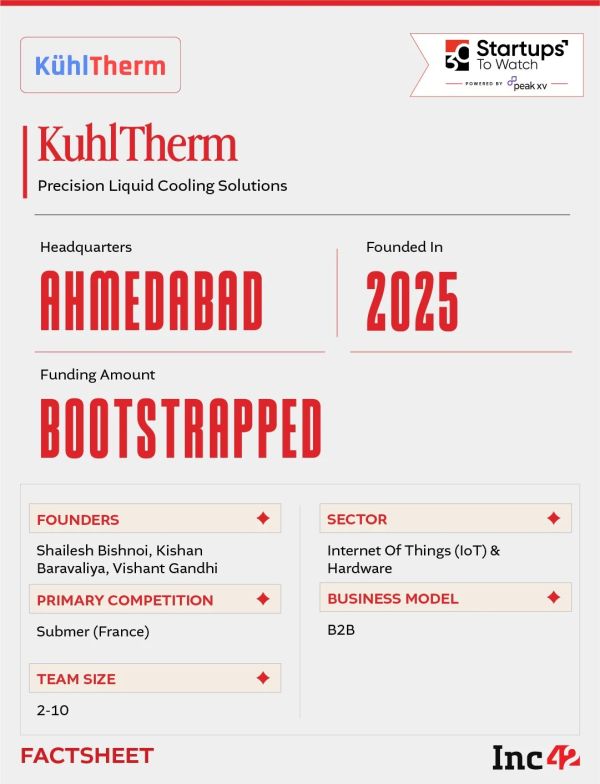
Can KuhlTherm Be The Cool Factor In AI Boom?
AI-heavy workloads are pushing server density beyond what traditional air cooling can handle. This creates a bottleneck for energy use, sustainability and performance. KuhlTherm is trying to solve this problem with its liquid cooling systems.
The Cool Compute: Founded in 2025, KuhlTherm is a deeptech startup that is focused on high-efficiency cooling for data centres and EV infrastructure. Its core idea is to move beyond conventional air cooling and use liquid-based systems built for the realities of AI and GPU-driven workloads.
KuhlTherm’s Immersion Stack: The startup’s product portfolio includes heat exchangers, immersion cooling modules and control systems. Its rear-door heat exchanger replaces the rack door with a liquid-cooled panel that absorbs heat directly from the server exhaust, allowing cooler air to flow out without requiring hardware changes inside the rack.
Built For AI Workloads: KuhlTherm claims that its system can handle up to 100 kW of heat per rack and support server densities up to 200 kW. That makes it especially relevant for AI infrastructure, where heat management is becoming one of the biggest constraints on scale, efficiency and uptime.
With the global data centre cooling market expected to cross $54.2 Bn by 2034, can KuhlTherm become the thermal backbone of AI data centres?
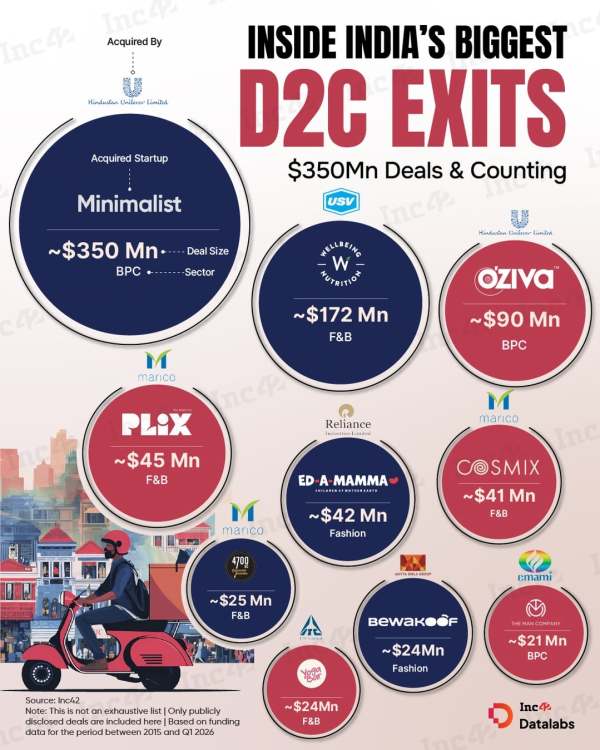
Infographic Of The Day
India’s D2C ecosystem is entering its acquisition era. Legacy giants are aggressively buying digitally native brands instead of building them from scratch. Here is all about it…
-
Ranveer Singh To Make A Cameo In Shah Rukh Khan’s King: Report

-
Inside Armenia: Where Ancient Monasteries And Daily Life Become One Living Faith

-
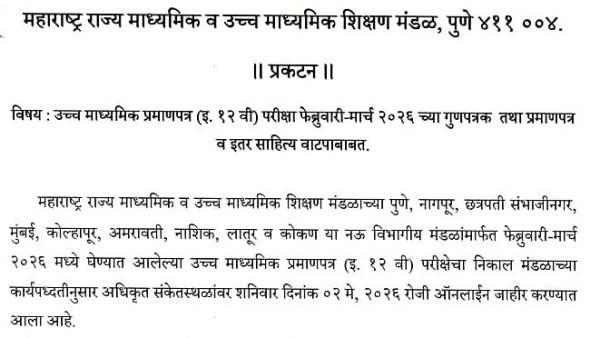
Maharashtra Board Begins Offline Distribution Of HSC Marksheet 2026 And Certificates From Today; Check Official Notice Here
-
Hacked Or Deleted? Salman Khan's Instagram Account Disappears Suddenly; Fans Express Concern

-
Hera Pheri 3 Controversy: Director Priyadarshan Breaks Silence On Paresh Rawal's Exit Again