A new language policy introduced by the Central Board of Secondary Education has triggered concern among parents, students and school leaders across Delhi, particularly among those who have spent years studying foreign languages such as German and French.
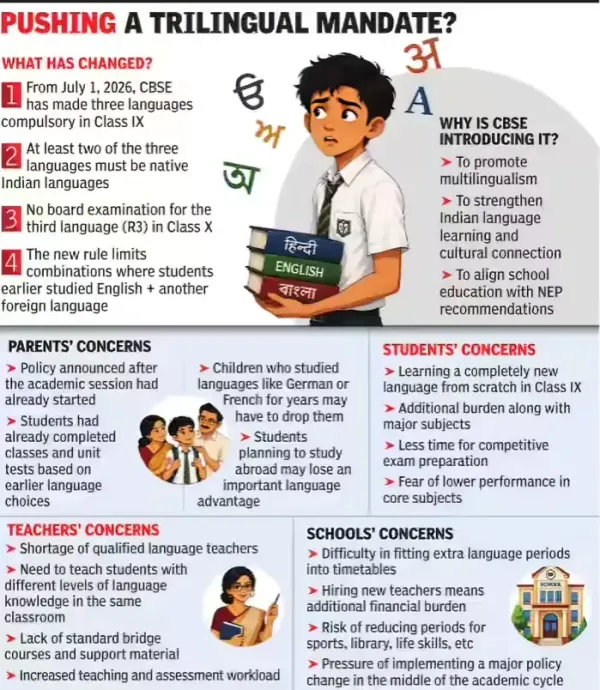
Under the revised framework, which will come into effect from the 2026–27 academic session, students entering Class IX will have to study three languages, with at least two being native Indian languages. While foreign languages can still be taken as an optional fourth subject, many parents say the sudden shift could derail long-term academic and career plans.
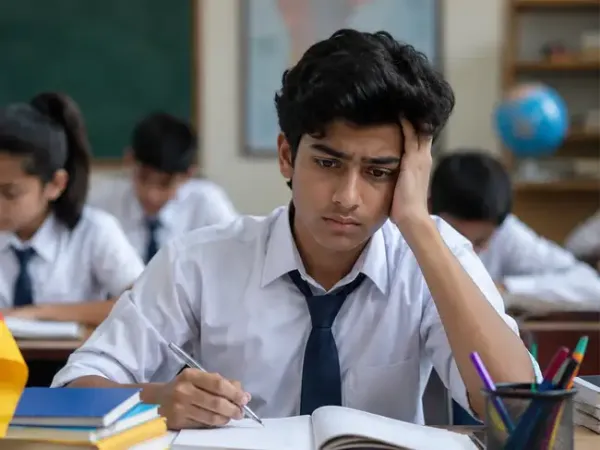
For one Delhi family, the change has come as a major setback. A Class IX student at a private school had spent the last three years learning German with the hope of eventually studying engineering in Germany and working in the country’s renowned automobile sector.
“His dream was to study at a German university and work in one of the top automobile companies there. That’s why he started learning German from Class VI,” the student’s father told The Times of India (TOI). “Now we are being told he may have to switch to Sanskrit from scratch in Class IX. It feels unfair and disruptive.”
Foreign language students caught in the middle
Several parents say the issue is not multilingualism itself, but the timing of the rollout. Many students have already invested years in learning foreign languages, completed assessments and built future plans around them.
Roopa, whose son studies in Class IX, said the new policy may force him to give up French altogether.
“He should be focusing on his core subjects at this stage, not struggling to pick up an entirely new language,” she said, according to TOI. “Learning languages is much easier when introduced at a younger age.”
Parents argue that introducing additional Indian languages earlier in primary school would have made the transition smoother. Many believe implementing the rule midway through secondary education places unnecessary academic pressure on students already preparing for board examinations and competitive entrance tests.
Another parent, Abhilasha, questioned how students who have consistently studied foreign languages are expected to suddenly shift direction.
“My daughter has already been learning German for the last three years. Now schools are asking what second Indian language she should take,” she said.
Schools face staffing and timetable challenges
The policy debate has also exposed practical concerns inside schools.
Administrators say accommodating an extra language could require six to seven additional teaching periods every week, potentially affecting sports, library sessions and co-curricular activities.
One principal, speaking anonymously to TOI, said many schools simply do not have qualified teachers for multiple regional languages and may end up making Sanskrit compulsory by default.
Pallavi Sharma, principal of Mamta Modern School, said staffing remains a serious concern.
“Schools are already struggling with timetable adjustments, recruitment and uncertainty around assessment patterns,” she explained. “Students from different linguistic backgrounds may also find it difficult to adapt, which could impact performance in subjects like science and mathematics.”
Rooma Pathak, principal of MM Public School in Pitampura, echoed similar concerns. She noted that many students entering Class IX have had little or no prior exposure to Sanskrit or another Indian language.
“They now face a steep learning curve involving script, grammar and literature alongside their major academic subjects,” she said.
Legal challenge reaches Supreme Court
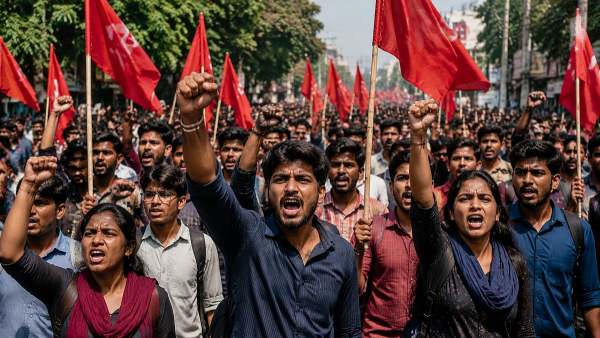
The controversy has now moved beyond classrooms and parent groups. A Public Interest Litigation (PIL) challenging the three-language policy has reportedly been filed in the Supreme Court of India, with more petitions expected as concerns over implementation continue to grow.
Many parents also question whether the policy aligns with students’ global aspirations in an increasingly international education system.
“How exactly will Sanskrit help with future employment opportunities?” one parent asked, reflecting a wider debate around balancing cultural education with global competitiveness.
Multilingualism welcomed, but transition questioned
The policy forms part of the broader goals outlined in the National Education Policy 2020, which promotes multilingual learning and stronger engagement with Indian languages and culture.
However, educators say successful implementation will require flexibility, bridge courses and better planning rather than abrupt changes at the secondary-school level.
Some schools are already seeing increased interest in alternative boards such as International Baccalaureate and Cambridge Assessment International Education, where foreign-language programmes remain more established.
For many families, the concern is simple: students who have spent years building skills in one direction are now being asked to change course midway through the journey.
Under the revised framework, which will come into effect from the 2026–27 academic session, students entering Class IX will have to study three languages, with at least two being native Indian languages. While foreign languages can still be taken as an optional fourth subject, many parents say the sudden shift could derail long-term academic and career plans.
For one Delhi family, the change has come as a major setback. A Class IX student at a private school had spent the last three years learning German with the hope of eventually studying engineering in Germany and working in the country’s renowned automobile sector.
“His dream was to study at a German university and work in one of the top automobile companies there. That’s why he started learning German from Class VI,” the student’s father told The Times of India (TOI). “Now we are being told he may have to switch to Sanskrit from scratch in Class IX. It feels unfair and disruptive.”
Foreign language students caught in the middle
Several parents say the issue is not multilingualism itself, but the timing of the rollout. Many students have already invested years in learning foreign languages, completed assessments and built future plans around them.Roopa, whose son studies in Class IX, said the new policy may force him to give up French altogether.
“He should be focusing on his core subjects at this stage, not struggling to pick up an entirely new language,” she said, according to TOI. “Learning languages is much easier when introduced at a younger age.”
Parents argue that introducing additional Indian languages earlier in primary school would have made the transition smoother. Many believe implementing the rule midway through secondary education places unnecessary academic pressure on students already preparing for board examinations and competitive entrance tests.
Another parent, Abhilasha, questioned how students who have consistently studied foreign languages are expected to suddenly shift direction.
“My daughter has already been learning German for the last three years. Now schools are asking what second Indian language she should take,” she said.
Schools face staffing and timetable challenges
The policy debate has also exposed practical concerns inside schools.Administrators say accommodating an extra language could require six to seven additional teaching periods every week, potentially affecting sports, library sessions and co-curricular activities.
One principal, speaking anonymously to TOI, said many schools simply do not have qualified teachers for multiple regional languages and may end up making Sanskrit compulsory by default.
Pallavi Sharma, principal of Mamta Modern School, said staffing remains a serious concern.
“Schools are already struggling with timetable adjustments, recruitment and uncertainty around assessment patterns,” she explained. “Students from different linguistic backgrounds may also find it difficult to adapt, which could impact performance in subjects like science and mathematics.”
Rooma Pathak, principal of MM Public School in Pitampura, echoed similar concerns. She noted that many students entering Class IX have had little or no prior exposure to Sanskrit or another Indian language.
“They now face a steep learning curve involving script, grammar and literature alongside their major academic subjects,” she said.
Legal challenge reaches Supreme Court
The controversy has now moved beyond classrooms and parent groups. A Public Interest Litigation (PIL) challenging the three-language policy has reportedly been filed in the Supreme Court of India, with more petitions expected as concerns over implementation continue to grow.Many parents also question whether the policy aligns with students’ global aspirations in an increasingly international education system.
“How exactly will Sanskrit help with future employment opportunities?” one parent asked, reflecting a wider debate around balancing cultural education with global competitiveness.
Multilingualism welcomed, but transition questioned
The policy forms part of the broader goals outlined in the National Education Policy 2020, which promotes multilingual learning and stronger engagement with Indian languages and culture.However, educators say successful implementation will require flexibility, bridge courses and better planning rather than abrupt changes at the secondary-school level.
Some schools are already seeing increased interest in alternative boards such as International Baccalaureate and Cambridge Assessment International Education, where foreign-language programmes remain more established.
For many families, the concern is simple: students who have spent years building skills in one direction are now being asked to change course midway through the journey.