When the Suez Canal closed in 1967 after war broke out between Egypt and Israel, 15 ships got trapped inside the waterway. They dropped anchor to wait for the hostilities to stop. The conflict ended quickly. Aptly, it was called the Six-Day War, but the canal remained closed for eight years. When the ships were finally allowed to leave, in 1975, only two remained seaworthy. The rest were so rusted they became known as the Yellow Fleet.
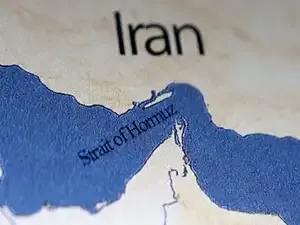
History doesn’t repeat, but it rhymes. So what if something similar were to happen in the Strait of Hormuz? It’s a nightmare few contemplate, and it’s certainly not my own base case. But nearly 90 days since the US-Israeli war on Iran all but closed the oil-and-gas sea route, it’s worth considering what seems unthinkable but has happened elsewhere. Call it historical science fiction.
Also Read: Crude oil prices could hit $200 per barrel if Strait of Hormuz remains closed: Report
Perhaps it won’t come to this. Washington and Tehran are talking, via Pakistani mediators, about ending the conflict and reopening the chokepoint. But what if a deal was limited initially to a one-page long memorandum of understanding? Would that clear the strait fully?
Tellingly, the United Arab Emirates has accelerated plans for a second pipeline bypassing the strait, which it hopes to put into service in 2027. This is prudent worst-case scenario planning — and a strong signal that Abu Dhabi thinks the waterway could remain imperiled far longer than many others believe.
The industry consensus on the reopening is less apocalyptic. Asking my contacts in the commodity and financial world, most seem to think Hormuz will reopen next month, at worst in July. Why? Mostly because the consequences of the opposite happening — much higher energy prices and serious economic damage — are too painful to consider. In the 1980s, American economist Herbert Stein made a famous observation: “If something cannot go on forever, it will stop.” Today, Wall Street is leaning on a slightly tweaked version of Stein’s Law: “The Strait of Hormuz cannot be closed forever because it will cause too much economic damage. Therefore, it will reopen.”
The problem is the closure is yet to do enough economic harm to either side to force a compromise. For US President Donald Trump, the war has been relatively cheap so far, at least in terms of what he cares about most: financial markets. The S&P500 index is hovering close to an all-time high, up nearly 10% since the war began. Gasoline prices have risen but they’re below their 2022 record peak. And the American economy is galloping, with the estimate for second-quarter growth currently above 4%.
Equally, Iran hasn’t yet suffered the economic meltdown that would force its hardline leaders to drop their negotiating red lines. Unemployment is rising, food inflation is rampant and the currency is in free fall. Unable to export because of the US Navy blockade, the regime has started curtailing oil output. But the Islamic Republic has demonstrated many times before its huge capacity to absorb pain, more so when the threat is existential.
With both sides dug in, the best hope is for any kind of deal to emerge, however imperfect. If not, we’re back to waiting until the economic toll becomes unbearable. On Friday a senior UAE diplomat put the odds of an immediate deal at “50-50.” US Secretary of State Marco Rubio said there was “slight progress” in the talks. “I don’t want to exaggerate it, but there’s been a little bit of movement, and that’s good.” Pakistani mediators have been shuttling between Islamabad and Tehran.
Also Read: Iran's newly-created strait authority discloses 'controlled maritime zone' at Hormuz
If the US negotiators want a little extra motivation for getting on with things, they could do worse than look at that Suez Canal example from 1967 to 1975. Of course, Hormuz isn’t Suez. The canal can be bypassed with ease. But it’s a working example of just how long a blockade can drag on.
From the early days of this war, I have argued that the Hormuz closure wasn’t yet an energy crisis because it had been short-lived. The market had enormous buffers to cushion a disruption, large as it is, for a while. With every passing day, however, the world’s tank gets emptier.
Until now, the energy industry has managed to cope with the disappearance of about 20 million barrels that passed through Hormuz. Fortunately, the market was oversupplied going into the war. Riyadh and the UAE have been able to use their bypass pipelines to keep some Persian Gulf oil flowing. Rich nations have tapped strategic petroleum reserves and the US has exported some of its SPR overseas. China, meanwhile, has somehow managed to massively reduce its oil imports. And finally, demand has contracted as prices have moved beyond the reach of poorer nations.
If the strait is closed much longer, we’ll need a lot more demand destruction — where politicians use emergency tools to curb energy use or sky-high prices force consumers to stop buying (a serious economic blow). Other buffers, including strategic stockpiles and commercial inventories, will run out, although rich nations hold enough crude for at least another major release.
Without a reopening, prices would clearly have to go much higher. Trader predictions early in the war of $200 oil were proved wrong. But what if Hormuz stayed shut until late 2026, or into 2027? Or if the strait only opens partially, with Iran still exercising significant control over its use? I don’t see how oil prices would remain at current levels in that case. Still, the market has remained more sanguine than even my sanguine early views.
Alternatively, either side can resume the war to break the stalemate. But neither appears to have the appetite. Iran probably reckons it can outlast a Washington that’s under pressure from allies to avoid more fighting. But Trump isn’t feeling enough economic discomfort to admit defeat. This stalemate is why the closure could continue.
Could the world live forever without the 10%-15% or so of its oil supply that Hormuz represents? Yes, but at vast cost. To cut consumption permanently by so much would most likely mean a global recession, as in the 1973 and 1979 oil crises. New bypass pipelines will be built and production beyond the Middle East would increase. But that takes years. By 2027 the UAE will probably double its export capacity avoiding the strait. The Saudis would likely need longer to do the same. Kuwait and Iraq would require more time still. Qatar doesn’t have a realistic way to export liquefied natural gas other than the strait.
Hormuz’s long-term closure is so economically ruinous to contemplate that hardly anyone dares consider it. Ultimately, a fudged short-term deal that everyone can live with, is likelier. Still, considering the regional precedents, it’s fair to ponder traumatic “what if” scenarios. They are not pretty.
(This is a Bloomberg Opinion column. The views expressed are personal.)
History doesn’t repeat, but it rhymes. So what if something similar were to happen in the Strait of Hormuz? It’s a nightmare few contemplate, and it’s certainly not my own base case. But nearly 90 days since the US-Israeli war on Iran all but closed the oil-and-gas sea route, it’s worth considering what seems unthinkable but has happened elsewhere. Call it historical science fiction.
Also Read: Crude oil prices could hit $200 per barrel if Strait of Hormuz remains closed: Report
Perhaps it won’t come to this. Washington and Tehran are talking, via Pakistani mediators, about ending the conflict and reopening the chokepoint. But what if a deal was limited initially to a one-page long memorandum of understanding? Would that clear the strait fully?
Tellingly, the United Arab Emirates has accelerated plans for a second pipeline bypassing the strait, which it hopes to put into service in 2027. This is prudent worst-case scenario planning — and a strong signal that Abu Dhabi thinks the waterway could remain imperiled far longer than many others believe.
The problem is the closure is yet to do enough economic harm to either side to force a compromise. For US President Donald Trump, the war has been relatively cheap so far, at least in terms of what he cares about most: financial markets. The S&P500 index is hovering close to an all-time high, up nearly 10% since the war began. Gasoline prices have risen but they’re below their 2022 record peak. And the American economy is galloping, with the estimate for second-quarter growth currently above 4%.
Equally, Iran hasn’t yet suffered the economic meltdown that would force its hardline leaders to drop their negotiating red lines. Unemployment is rising, food inflation is rampant and the currency is in free fall. Unable to export because of the US Navy blockade, the regime has started curtailing oil output. But the Islamic Republic has demonstrated many times before its huge capacity to absorb pain, more so when the threat is existential.
With both sides dug in, the best hope is for any kind of deal to emerge, however imperfect. If not, we’re back to waiting until the economic toll becomes unbearable. On Friday a senior UAE diplomat put the odds of an immediate deal at “50-50.” US Secretary of State Marco Rubio said there was “slight progress” in the talks. “I don’t want to exaggerate it, but there’s been a little bit of movement, and that’s good.” Pakistani mediators have been shuttling between Islamabad and Tehran.
Also Read: Iran's newly-created strait authority discloses 'controlled maritime zone' at Hormuz
If the US negotiators want a little extra motivation for getting on with things, they could do worse than look at that Suez Canal example from 1967 to 1975. Of course, Hormuz isn’t Suez. The canal can be bypassed with ease. But it’s a working example of just how long a blockade can drag on.
From the early days of this war, I have argued that the Hormuz closure wasn’t yet an energy crisis because it had been short-lived. The market had enormous buffers to cushion a disruption, large as it is, for a while. With every passing day, however, the world’s tank gets emptier.
Until now, the energy industry has managed to cope with the disappearance of about 20 million barrels that passed through Hormuz. Fortunately, the market was oversupplied going into the war. Riyadh and the UAE have been able to use their bypass pipelines to keep some Persian Gulf oil flowing. Rich nations have tapped strategic petroleum reserves and the US has exported some of its SPR overseas. China, meanwhile, has somehow managed to massively reduce its oil imports. And finally, demand has contracted as prices have moved beyond the reach of poorer nations.
Without a reopening, prices would clearly have to go much higher. Trader predictions early in the war of $200 oil were proved wrong. But what if Hormuz stayed shut until late 2026, or into 2027? Or if the strait only opens partially, with Iran still exercising significant control over its use? I don’t see how oil prices would remain at current levels in that case. Still, the market has remained more sanguine than even my sanguine early views.
Alternatively, either side can resume the war to break the stalemate. But neither appears to have the appetite. Iran probably reckons it can outlast a Washington that’s under pressure from allies to avoid more fighting. But Trump isn’t feeling enough economic discomfort to admit defeat. This stalemate is why the closure could continue.
Could the world live forever without the 10%-15% or so of its oil supply that Hormuz represents? Yes, but at vast cost. To cut consumption permanently by so much would most likely mean a global recession, as in the 1973 and 1979 oil crises. New bypass pipelines will be built and production beyond the Middle East would increase. But that takes years. By 2027 the UAE will probably double its export capacity avoiding the strait. The Saudis would likely need longer to do the same. Kuwait and Iraq would require more time still. Qatar doesn’t have a realistic way to export liquefied natural gas other than the strait.
Hormuz’s long-term closure is so economically ruinous to contemplate that hardly anyone dares consider it. Ultimately, a fudged short-term deal that everyone can live with, is likelier. Still, considering the regional precedents, it’s fair to ponder traumatic “what if” scenarios. They are not pretty.
(This is a Bloomberg Opinion column. The views expressed are personal.)