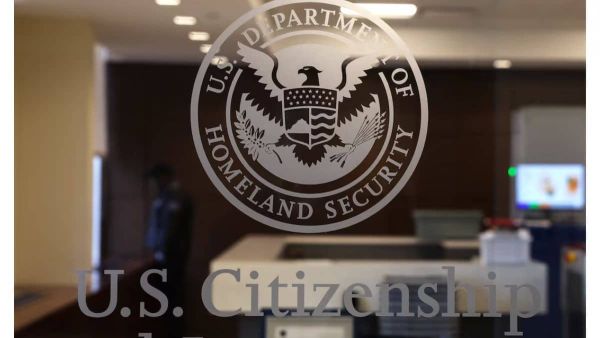
The United States government has changed how it reviews permanent residency applications. It removes the long-held certainty that following immigration rules guarantees a Green Card.
According to a fresh policy memo issued by US Citizenship and Immigration Services (USCIS), domestic "Adjustment of Status" is being categorized as an "extraordinary form of relief" and a matter of administrative grace. The directive orders immigration officers to heavily scrutinize applications on a case-by-case basis. The law also clarifies that meeting all statutory eligibility requirements is no longer enough to secure a domestic Green Card.
No Automatic Approvals
For decades, the legal immigration framework operated on a predictable baseline. If an applicant secured a corporate or family sponsorship, maintained legal status, and passed background checks, their permanent residency approval in the US was assured. The new USCIS memo completely dismantles this, with the administration leaning into older legal precedents to assert that changing status within US borders is an exception to the regular rule, which requires applying from an overseas consulate.
The chnage introduces an unpredictable layer of subjectivity to the review process. Officers are now required to weigh positive factors, such as long-term tax history and community ties, against negative factors like brief administrative status gaps or unauthorized employment technicalities.
The policy update carries severe implications for high-skilled foreign workers, particularly the massive community of Indian professionals living in the US on H-1B and L-1 visas.
While these specific visa categories are legally designated as dual-intent, meaning holders can actively seek permanent residency, the new memo also states that merely maintaining a valid dual-intent status is not sufficient, on its own, to warrant a favorable exercise of discretion.
As a result, an IT professional with a completely clean legal record could still face denial if an officer determines that their application does not show enough merit. Because a recent US Supreme Court ruling heavily limits judicial review over discretionary immigration decisions, these denials will be difficult to challenge in court.
Longer Timelines, More Scrutiny
A surge in Requests for Evidence (RFEs) as officers demand extensive documentation to prove an applicant deserves a favorable exercise of discretion is expected.
For applicants with minor compliance marks on their records, the domestic route may now carry too much risk. Many corporate immigration departments may bypass domestic filings entirely, choosing to route their employees through traditional consular processing back in their home countries instead.
-
Aluminum Foil In Oven: How safe is it to use foil in the oven? Know what experts say
-
Aluminum Foil In Oven: How safe is it to use foil in the oven? Know what experts say
-
Bakrid Mehndi Designs: From Arabic to minimal, apply these latest mehndi designs on Bakrid.

-
Bakrid Mehndi Designs: From Arabic to minimal, apply these latest mehndi designs on Bakrid.
-
Tata Tiago EV Facelift Interior Revealed: Dual Floating DIsplay, Redesigned Cabin And Upgraded Comfort Features, Check All Features And Launch Date