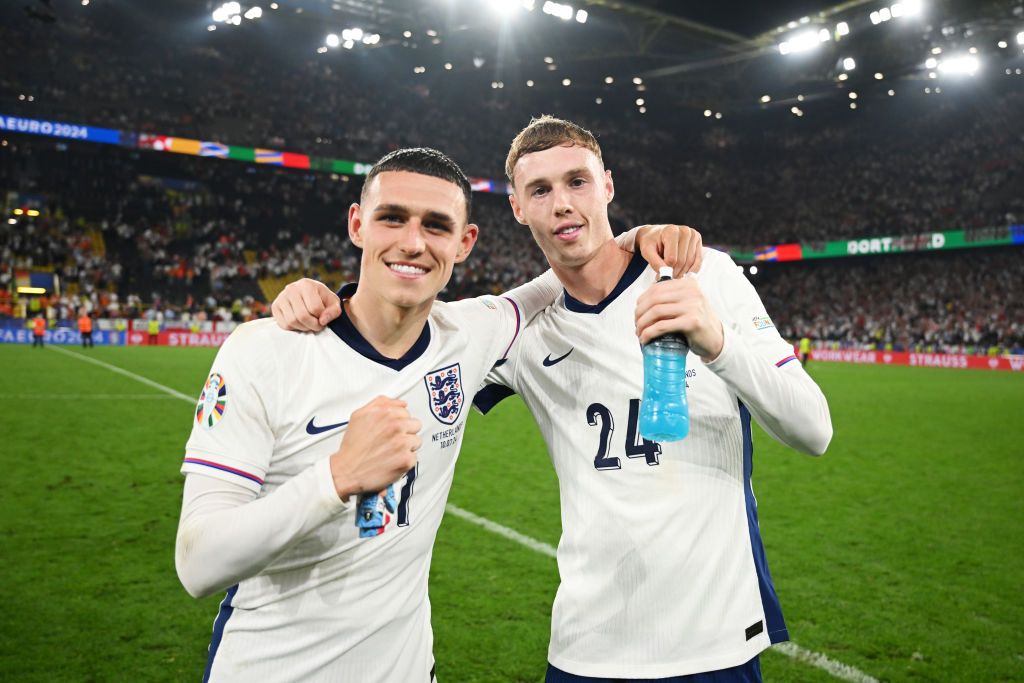
Two of England’s brightest footballers will not be travelling to the 2026 World Cup. So, what exactly is Thomas Tuchel’s reasoning behind these bold calls?
The finalised England World Cup squad has now been released, though the reactions started pouring in as soon as the list began circulating in the media on Thursday night.
The biggest talking points were the exclusions of Phil Foden and Cole Palmer – and to a lesser degree, Trent Alexander-Arnold, whose absence was largely expected, though it still took some by surprise given his stature in English football.
Has Thomas Tuchel made the right calls? It’s too early to say for certain. Only the performances this summer will provide definitive answers. But from the current perspective, his decisions appear well thought out and defensible.
During Euro 2024, debates became rather unrealistic when several pundits seriously suggested Gareth Southgate should somehow fit Foden, Palmer, Bukayo Saka, Jude Bellingham, Anthony Gordon, Eberechi Eze, and Harry Kane all into the same lineup.
A similar sentiment surrounded the Lionesses’ Euro 2025 success, with calls for Chloe Kelly and Michelle Agyemang to move from impact players to starting roles alongside Lauren James, Beth Mead, and Lauren Hemp.
That line of thinking is clearly impractical — every strong team must be capable of defending at some stage of a major tournament.
However, this tendency is partly a result of how tournament squads are structured, especially with 26-man rosters that often lean heavily towards attacking options.
In reality, international squads require at most two players per position, with three goalkeepers being compulsory. Adding too many defensive players can be redundant since those positions tend to remain stable throughout a tournament.
Thus, managers often prefer to use the extra slots for attacking depth, to prepare for tactical needs or possible injuries and suspensions.
Tuchel’s World Cup selection follows that logic. He has chosen three central playmakers (no.10s), three strikers, and four wingers for the trip to North America.
The so-called ‘controversial’ inclusions and omissions are debatable but not unreasonable.
Are Palmer and Foden technically superior to Noni Madueke? Probably yes. But they play very different roles. Tuchel’s choice of Madueke, alongside Saka, Gordon, and Marcus Rashford, clearly signals his intent to use pace and direct wing play to stretch defences and supply his strikers. Forcing in players who don’t fit that setup would disrupt his tactical plan.
Foden has long been tried in wide positions for England but has yet to shine. Palmer may have had a better shot at making that work — he featured off the right side at Euro 2024 — yet he has played just once under Tuchel, nearly a year ago, against minnows Andorra.
In that game, Palmer started as the no.10 but failed to make much of an impact and was substituted after 65 minutes. England scraped a 1-0 win, with Harry Kane scoring the winner, set up by Madueke.
Both Foden and Palmer were given chances in the March friendlies against Uruguay and Japan, but England underperformed in both matches.
Between those friendlies, England completed an immaculate qualification campaign — winning 5-0 twice, 3-0 once, and 2-0 three times. Across those matches, Palmer and Foden featured for just 53 minutes combined — all from Foden.
Tuchel’s selections during last autumn’s qualifiers already hinted at this squad composition. The manager was visibly impressed by the team that secured the emphatic 5-0 victory over Serbia — the game where his England side truly clicked. He largely kept that core intact in the following months, experimented slightly in March, and has now opted to stick with what works best.
Of the 23 players from that Serbia matchday squad, only Ruben Loftus-Cheek and Morgan Gibbs-White miss out on the World Cup trip. Their places have effectively gone to Kobbie Mainoo and Jude Bellingham — a switch that’s hard to dispute.
Other selections can still be debated — Jordan Henderson over Adam Wharton, Djed Spence over Alexander-Arnold, Jarrell Quansah over Harry Maguire, or Ivan Toney preferred to Dominic Calvert-Lewin.
Yet, even these are decisions concerning backup options rather than first-choice players. Considering that, Tuchel’s approach of trusting the players and tactical structure that have already proven effective seems entirely reasonable.
-
Make south style medu vada at home easily, read easy recipe

-
Gond Katira Benefits:What are the benefits of eating Gond Katira in the summer season? Know and try it

-
Aishwarya Rai’s stunning look at Cannes Film Festival: Mother-daughter duo created a stir

-
Cockroach Janta Party: What is the difference between ‘Withheld’ and ‘Suspend’ on Social Media Platform X? Know in detail

-
Now there will be no fear of phone theft, even after the big controversy, this phone will already come with Sanchar Saathi app.