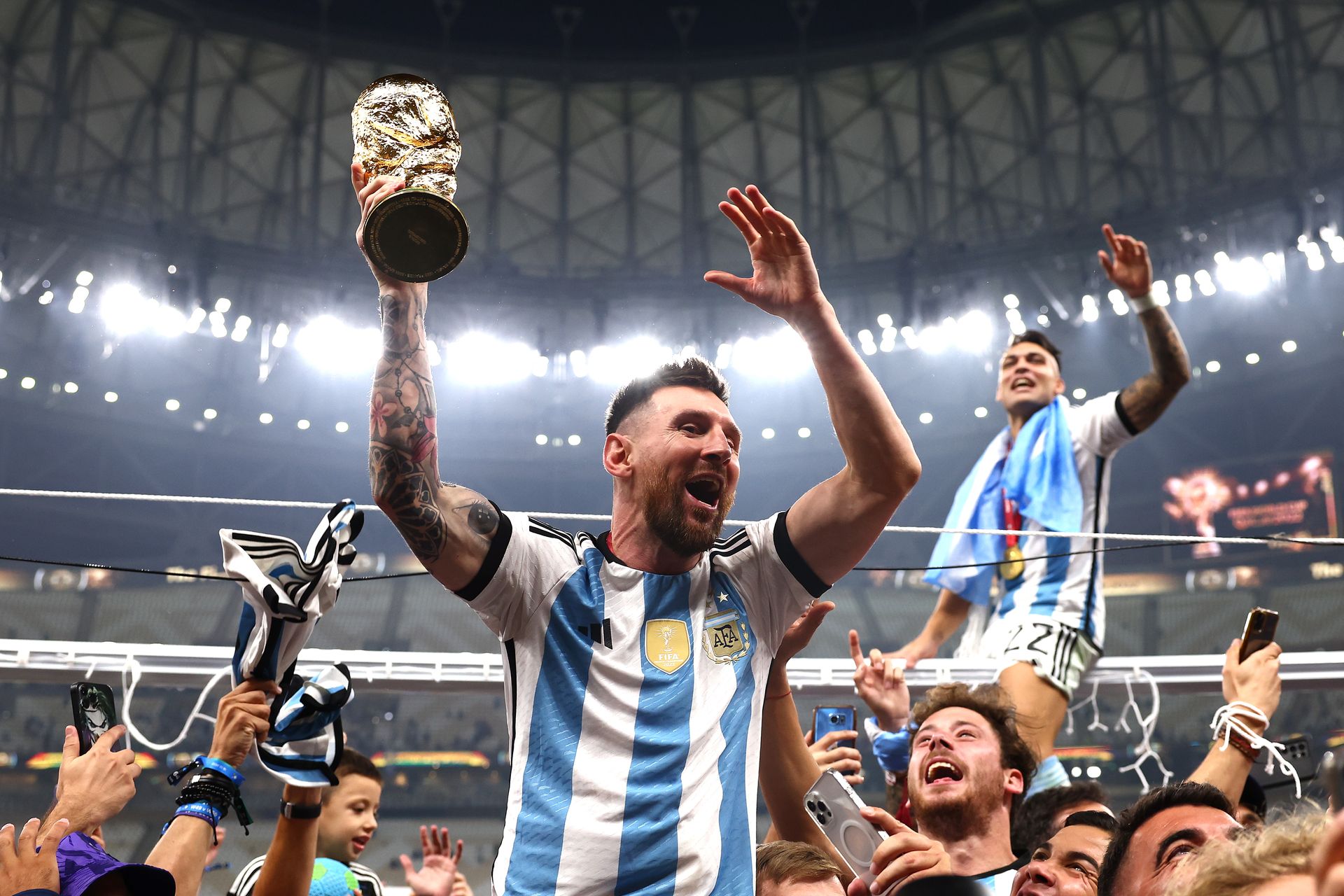
The World Cup is fast approaching and anticipation is building across the globe.
The 2026 edition of the World Cup will begin on Thursday, June 11, marking the start of a packed summer of football action across the United States, Canada, and Mexico.
Argentina will aim to defend their title after their thrilling penalty shootout victory over France in the 2022 final. But how are the main contenders shaping up as the next tournament draws closer? FourFourTwo assesses the biggest teams in the competition.
With several traditional heavyweights missing out on qualification this time, the stage is set for others to make an impact in what will be a bumper tournament featuring 104 matches across June and July.
Belgium have often struggled to deliver on their promise at major tournaments, and with their golden generation nearing its end, expectations are mixed. However, the Red Devils have issued a timely reminder of their threat ahead of World Cup 2026.
Although European teams winning on other continents is never a given, Belgium’s emphatic friendly victory against co-hosts the United States in March showcased their continued strength and quality at the highest level.
Counting the Netherlands among the favourites is always a gamble, but they’ve once again demonstrated their pedigree by qualifying comfortably ahead of Poland and maintaining their status as consistent semi-finalists in major events.
Two years ago, they reached the semi-finals of the European Championship despite an inconsistent group stage. However, manager Ronald Koeman still lacks a truly prolific striker, and the strength of Group F raises minor concerns. The Dutch are expected to advance past Sweden, Japan, and Tunisia, but their unpredictable nature always makes them intriguing to watch.
Uruguay, who lifted the World Cup in 1930 and 1950, endured a disappointing group stage exit in Qatar 2022. Their semi-final run in 2010 remains the highlight of their modern era, a testament to the nation’s overachievement despite its small population.
Under Marcelo Bielsa, appointed in 2023, Uruguay have rediscovered some of their fight, beating Brazil en route to the Copa America 2024 semi-finals. If they can find a more consistent goal threat, Bielsa’s disciplined and tactically sharp side could cause major upsets once again.
There’s an unspoken rule in football: when the World Cup is held in the Americas, Brazil are always contenders. This time, they are led by one of football’s most decorated managers, Carlo Ancelotti. His unparalleled success at club level now extends to his first international assignment.
Despite a disappointing Copa America 2024 and a shaky qualification campaign, Brazil once again did enough to make it through. With Ancelotti guiding stars like Vinicius Jr, Endrick, and Raphinha, the Selecao will always command attention.
Portugal, meanwhile, find themselves in a favourable group following the December draw. Their qualification campaign was relatively smooth, though Cristiano Ronaldo’s suspension after a red card against the Republic of Ireland added some drama.
At 41, Ronaldo remains Portugal’s focal point, but a deep run in the tournament will require immense collective effort. With Rafael Leao, Joao Neves, Nuno Mendes, and Vitinha providing support, they have an exciting mix of youth and experience.
England breezed through qualification under new manager Thomas Tuchel, winning every game without conceding a goal. However, the campaign revealed little about the true identity of Tuchel’s team. While they handled competitive fixtures well, friendly defeats to Senegal and Japan raised questions.
Still, the Three Lions possess one of the world’s most lethal strikers in captain Harry Kane, who has been scoring at over a goal per game in both the Bundesliga and the Champions League this season.
Germany, World Cup winners in 2014, continue to embody tournament pedigree. Their quarter-final exit to eventual champions Spain at Euro 2024 was a disappointing finish, but the Mannschaft have since undergone a generational shift.
With veterans like Manuel Neuer, Ilkay Gundogan, Toni Kroos, and Thomas Muller making way, the likes of Jamal Musiala and Florian Wirtz now lead the next era under head coach Julian Nagelsmann. They’ll face Ivory Coast, Ecuador, and Curacao in Group E.
France manager Didier Deschamps will step down after the World Cup, ending an era that began in 2012 and yielded immense success. Under his leadership, Les Bleus reached the last two World Cup finals — winning in 2018 and narrowly losing to Argentina on penalties in 2022.
France’s power lies in their depth and the brilliance of captain Kylian Mbappe, whose World Cup record speaks volumes. Once again, they enter the tournament with arguably the strongest squad, and Deschamps will be eager to conclude his tenure with another trophy.
Spain, the reigning European champions, are also among the frontrunners. Their Euro 2024 triumph was a result of balance — attacking flair combined with tactical discipline. Manager Luis de la Fuente has since encouraged his side to play with greater attacking intent.
Spain netted 21 goals in six qualifiers, not the highest in Europe but a sign of their creative arsenal. With a group featuring Cape Verde, South Africa, and Uruguay, progression should be straightforward. As continental champions, they’ll see themselves as genuine contenders to lift another major trophy.
Finally, reigning champions Argentina once again top many pre-tournament lists. Three and a half years after their Qatar triumph, they qualified comfortably for 2026 with Lionel Messi and coach Lionel Scaloni still at the helm.
With world-class talent across the field and group matches against Algeria, Austria, and Jordan, Argentina should ease through early stages. Beyond that, their experience and champion’s mentality could carry them deep into the knockout rounds once more.
-
Patna HC Stenographer Score Card 2026: Patna High Court Stenographer Scorecard Released..

-
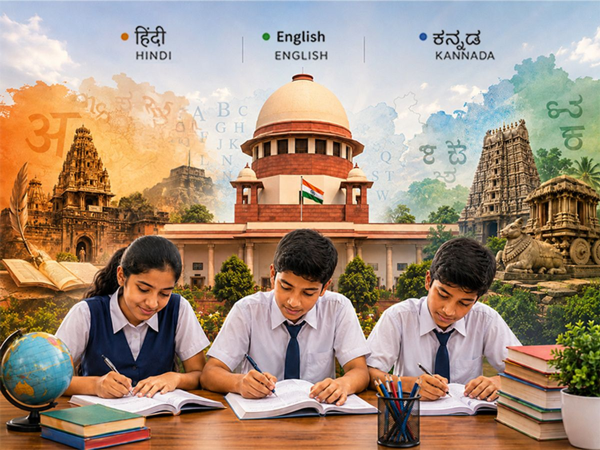
Parents and Teachers Express Resentment Over CBSE's Three-Language Formula; Order Issued for Implementation from July 1..
-
NTA NCHM JEE Result 2026: NCHM JEE Results Released—Download Directly Here..

-
Bihar Compartment Result 2026 OUT: Bihar Board Class 10th and 12th Compartment Results Released..

-
RRB ALP Revised Vacancy 2026: RRB Releases Revised ALP Vacancy Notification; Recruitment to Now Take Place for This Many Posts..