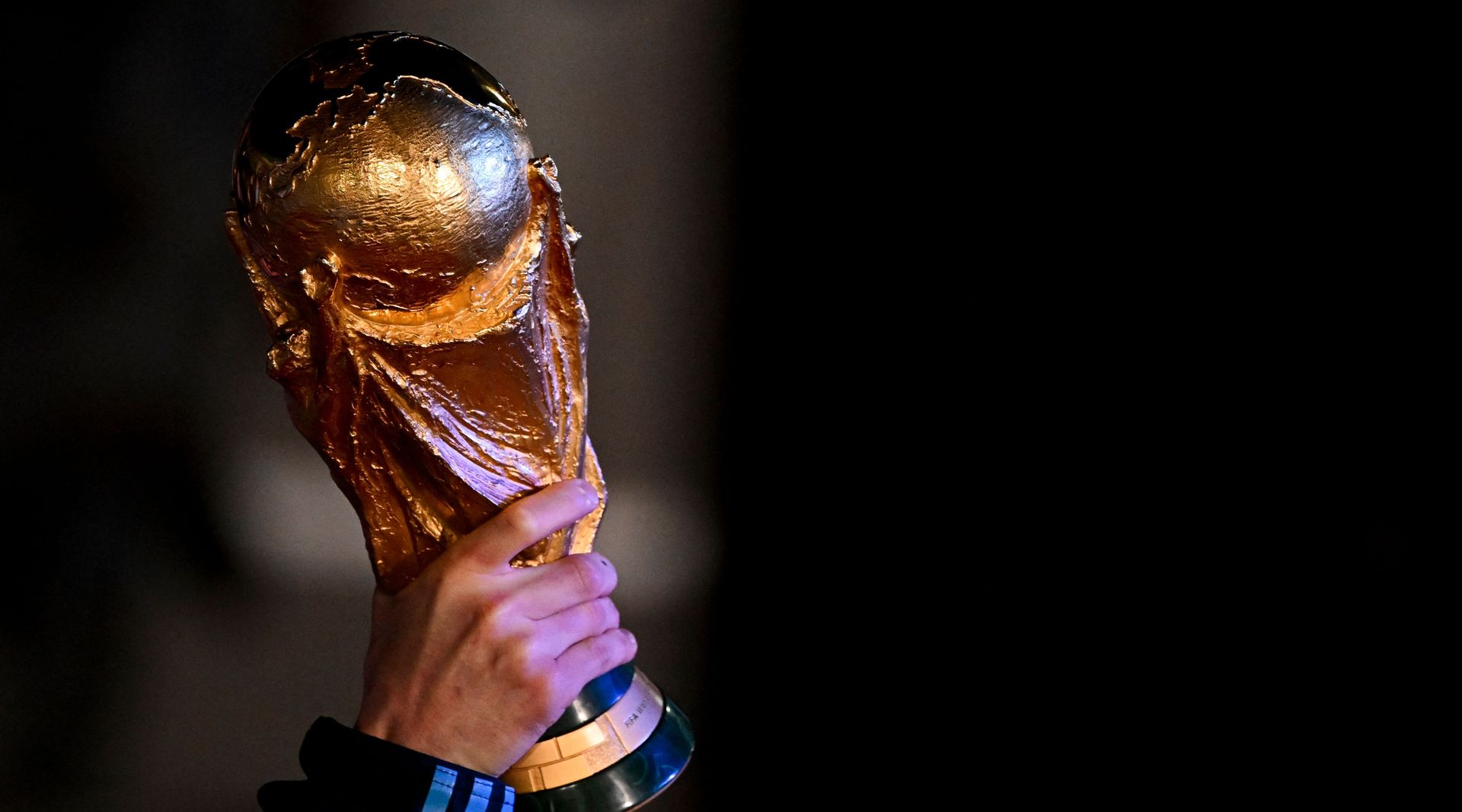
Stay connected with FourFourTwo’s comprehensive World Cup 2026 coverage, where we bring you the latest updates and insights from football’s grandest stage.
Anticipation is already high for the upcoming World Cup, set to unfold in the summer of 2026, with Canada, Mexico and the United States sharing hosting duties — a historic first for the tournament.
Argentina will aim to retain the World Cup title they captured in a thrilling final against France in 2022, as the event expands from 32 to 48 teams for the very first time.
This 23rd edition marks the largest and most ambitious World Cup ever. Here’s everything you need to know — bookmark this page to stay updated as more information and developments come through.
Dates: Thursday, June 11 to Sunday, July 19
Hosts: United States, Canada and Mexico
Teams: 48
Matches: 104
Opening Match Venue: Estadio Azteca, Mexico City
Final Venue: MetLife Stadium, East Rutherford
The 2026 World Cup will take place from Thursday, June 11 to Sunday, July 19.
Group Stage: June 11 – June 27, 2026
Round of 32: June 28 – July 3, 2026
Round of 16: July 4 – July 7, 2026
Quarter-finals: July 9 – July 11, 2026
Semi-finals: July 14 – July 15, 2026
Third-place Play-off: July 18, 2026
Final: July 19, 2026
In a major shift from FIFA’s earlier stance, the 2026 World Cup will be co-hosted by Canada, Mexico and the United States. FIFA had previously resisted multi-nation hosting since the 2002 World Cup, jointly organised by Japan and South Korea.
Initially, all three nations planned separate bids but joined forces in 2017. With UEFA and AFC nations excluded from bidding after hosting the last two tournaments, Morocco remained their only competitor. The North American joint bid triumphed with 134 votes to 65.
The United States last hosted the tournament in 1994, while Mexico did so in 1970 and 1986, stepping in after Colombia withdrew. Canada, meanwhile, will host its first men’s World Cup, having previously staged the Women’s World Cup in 2015.
Here are the 16 stadiums for the 2026 World Cup, along with their expected capacities:
Vancouver (Canada): 54,400
Toronto (Canada): 45,736
Mexico City (Mexico): 87,523
Guadalupe (Mexico): 53,500
Zapopan (Mexico): 49,850
East Rutherford (USA): 82,500
Arlington (USA): 80,000
Kansas City (USA): 76,416
Houston (USA): 72,220
Atlanta (USA): 71,000
Inglewood (USA): 70,240
Philadelphia (USA): 69,796
Seattle (USA): 69,000
Santa Clara (USA): 68,500
Foxborough (USA): 65,878
Miami Gardens (USA): 64,767
All three host nations — Canada, Mexico and the United States — have earned automatic qualification. The first teams to secure qualification through their respective confederation campaigns will be confirmed during the March 2025 international break.
By early 2026, 42 teams will have qualified, with the final six spots decided through intercontinental play-offs in March 2026, four months before the tournament draw.
The 2026 World Cup will also feature four nations making their debut appearances — Jordan, Uzbekistan, Cape Verde and Curacao.
Allocation of Qualification Slots:
AFC (Asia): Eight direct qualifiers, one intercontinental play-off slot.
CAF (Africa): Nine direct qualifiers, one intercontinental play-off slot.
CONCACAF (North & Central America, Caribbean): Three co-hosts plus three direct qualifiers and two intercontinental play-off slots.
CONMEBOL (South America): Six direct qualifiers, one intercontinental play-off slot.
OFC (Oceania): One direct qualifier, one intercontinental play-off slot.
UEFA (Europe): Sixteen direct qualifiers, no intercontinental play-off slots.
FIFA no longer grants automatic qualification to the reigning champions, a rule dropped after 2002. Argentina, the 2022 winners, qualified comfortably as CONMEBOL’s top team with 12 wins from 18 matches.
The expanded 48-team format introduces major structural changes to both the group and knockout stages. Instead of eight groups of four as in previous editions, there will now be 12 groups of four. The top two teams from each group, along with the eight best third-placed teams, will advance to a 32-team knockout round.
This makes the tournament twice the size of earlier 24-team formats, creating a longer and more competitive event.
Ticket prices and travel costs for fans are expected to be record-breaking, with FIFA introducing dynamic pricing for sales starting in 2025. Fans from participating nations’ supporter groups were given early access, and prices rose at each sales phase. The first open sale in April featured final match tickets priced above £8,000.
Despite high costs, FIFA reported receiving over 500 million ticket requests, and more than three million tickets have already been sold.
FourFourTwo’s popular World Cup wall chart returns, now larger to accommodate 104 fixtures across North America. The chart spans eight A4 pages to form a giant A1 poster, available in colour or black and white, with kick-off times for multiple time zones.
Seventy-two matches will be played in the group stage, spread across 12 groups of four teams each. The extended format means up to four daily kick-off slots, spanning 13 different time zones — making it a challenge for European fans to watch every game live.
Each of the 48 teams will submit a 26-player squad, totalling 1,248 players in the tournament.
Key Squad Deadlines:
• May 11: Preliminary squad of 35–55 players submitted to FIFA.
• May 25: Clubs not in continental finals must release players.
• May 30: Final 26-player squads confirmed.
• June 11: Up to nine additional players may join for training purposes.
FIFA unveiled the tournament mascots in September 2025. Canada’s mascot, Maple the Moose, is described as “a street-style-loving artist, music enthusiast and dedicated goalkeeper.” Mexico’s Zayu the Jaguar represents “a cultural celebration and connection, carrying Mexico’s heart with pride,” and is the only mascot wearing a captain’s armband. The United States’ Clutch the Bald Eagle is “an adventurous spirit with an unquenchable thirst for exploration.”
Although AT&T Stadium in Dallas was initially favoured, the final will be staged at MetLife Stadium in East Rutherford, New Jersey — roughly ten miles from New York City. The venue has previously hosted the 2014 Super Bowl, 2016 Copa America final, and WrestleMania events in 2013 and 2019.
MetLife, home to the New York Giants and Jets, will undergo modifications to meet FIFA’s pitch size standards.
The official match ball, designed by Adidas, is named Trionda.
Adidas released the first World Cup home kits in November 2025, followed by designs from Puma, Nike, Reebok (Panama), Marathon (Ecuador), Kelme (Jordan), 7Saber (Uzbekistan), and Saeta (Haiti). So far, only Ecuador’s kits by Marathon have been unveiled.
Globally, broadcasters are preparing for record viewership. In the UK, the tournament will be shown on BBC and ITV, with other regional broadcasters confirmed worldwide.
For fans who prefer community viewing, FourFourTwo has curated a list of the best pubs in Britain to watch the matches, complete with location details and a map for easy searching.
-
Telangana Education Commission Chairman Akunuri Murali resigns

-
TN govt reshuffles six IPS officers

-
Dhar SP issues warning for first Friday after court order on Bhojshala temple
-
UPI will be operational in Cyprus from next year, MEA confirms
-
AI is reshaping jobs, creating new opportunities; India must urgently skill up: CPRG founder