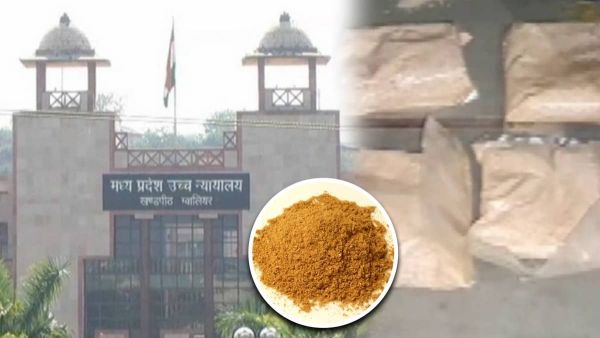
Bhopal: In a ruling highlighting flaws in India's airport security and forensic systems, the Madhya Pradesh High Court has ordered the state government to pay Rs 10 lakh in compensation to a businessman who spent 57 days in jail after common kitchen spices were erroneously flagged as narcotic drugs.
The incident occurred in May 2010 when Ajay Singh, a businessman travelling from Bhopal to Delhi en route to Malaysia, had his luggage screened at Bhopal airport. Packets containing aamchur (dried mango) powder and garam masala triggered alerts on an Explosive Trace Detector (ETD) machine, leading security officials to suspect the presence of heroin and MDEA, a psychotropic substance.
Singh was promptly arrested and booked under the stringent provisions of the Narcotic Drugs and Psychotropic Substances (NDPS) Act. He remained in judicial custody for 57 days until forensic tests cleared him.
Samples seized from his luggage were initially sent to the Regional Forensic Science Laboratory (RFSL) in Bhopal. However, the lab returned them, admitting it lacked the necessary equipment and technical capability for proper analysis. The samples were then forwarded to the Central Forensic Science Laboratory (CFSL) in Hyderabad, which conclusively determined that the substances were ordinary spices with no traces of narcotics.
Singh was released on July 2, 2010, and the NDPS court later accepted a closure report in the case. It took him over 16 years to secure justice through the High Court.
Court's Observations and Directions
The High Court bench observed that the prolonged detention resulted from serious deficiencies in the state's forensic infrastructure and over-reliance on preliminary screening tools. The court noted that ETD machines provide only indicative results and cannot substitute for proper scientific forensic confirmation.
"Had adequate forensic systems and scientific testing facilities been available locally, the businessman could have been released much earlier," the court remarked while holding the state responsible for the violation of the petitioner's fundamental rights under Article 21 of the Constitution (right to life and personal liberty).
In addition to the compensation, payable within three months, the court directed the Chief Secretary of Madhya Pradesh to inspect regional forensic science laboratories across the state and ensure they are equipped with modern technology, updated facilities, and trained personnel to prevent similar cases of justice.
The ruling has sparked renewed discussion on the calibration of imported airport detection equipment, which may not be adequately tuned for common aromatic Indian spices, and the urgent need for faster forensic verification in NDPS cases.
While Singh had sought higher compensation and a probe into the airport machines, the court did not grant those specific requests but allowed him liberty to pursue additional civil remedies if desired.
This case serves as a stark reminder of the human cost of systemic gaps in forensic and security infrastructure, where an innocent traveller's life was upended for nearly two months due to what turned out to be kitchen staples.
-
5 Iced Tea Recipes You Need to Brew This Summer

-
Tripti Dimri reached the promotion wearing such a cheap tunic set, eyes got stuck on the simple look

-
Sudden weight loss? After fatty liver, the body shows ‘these’ terrible symptoms, it would be dangerous to ignore

-
The growing trend of screenless fitness trackers! Along with fashion, a smart eye can be placed on health and daily lifestyle

-
CSK vs GT: Chennai got a big shock in the live match, Sanju Samson went out of the field due to injury.