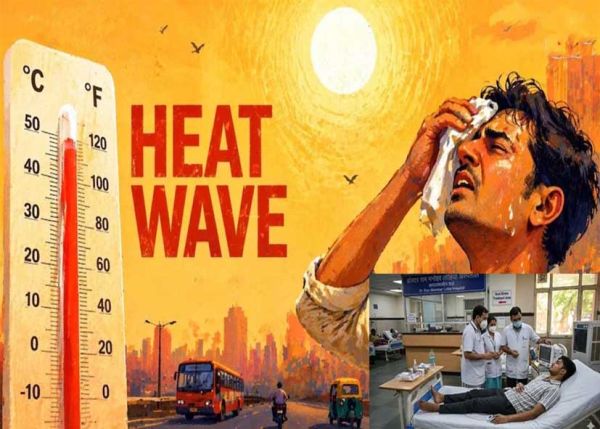
The effect of extreme heat is continuously increasing in Delhi-NCR. In many areas the temperature reached close to 45 degrees Celsius, due to which people had to face intense heat wave and scorching heat. The maximum temperature in Safdarjung was recorded at 44.5 degrees Celsius, which was 4.1 degrees above normal. The temperature in Palam reached 44.9 degrees. Apart from this, the temperature in Lodhi Road, Ridge and Ayanagar was also recorded between 44.5 to 45 degrees Celsius, due to which the heat is at its peak in the entire Delhi-NCR region. Along with the day, the nights also remain hot. According to IMD, the minimum temperature was also recorded well above normal. Meanwhile, the first case of heatstroke of this season has been registered in Ram Manohar Lohia (RML) of the capital.
First case of heat stroke in Delhi
The scorching heat has now started having a serious impact on people’s health. Meanwhile, the first case of heatstroke of this season has been registered in Ram Manohar Lohia (RML) of the capital. According to the information, a 24-year-old youth from West Bengal was coming to Delhi by train. During the journey, his health suddenly deteriorated due to extreme heat and heat stroke. At around 1:45 pm on Tuesday night, he was brought to RML Hospital in a critical condition, where doctors diagnosed him as a case of heatstroke. Dr. Atul Chauhan, Director of the Medicine Department of RML Hospital, has described the patient’s condition as very serious. According to Dr. Chauhan, a 24-year-old youth from West Bengal was coming to Delhi by train. During the journey his health suddenly started deteriorating. She vomited, felt extremely tired and started having loose motions. After some time, he became unconscious. He told that when the young man was brought to the hospital, his body temperature was 105 degrees Fahrenheit, which is considered a very serious condition of heatstroke. Doctors immediately started emergency treatment and kept the young man in cold water mixed with ice from the neck down, so that the body temperature could be reduced rapidly. After this he was admitted to the medicine ward.
Heatstroke can be fatal
Amidst the scorching heat in Delhi-NCR, doctors have advised people to be cautious about heatstroke. Dr. Atul Chauhan warned that heat stroke can prove to be a very serious and fatal condition. According to Dr. Chauhan, the risk of heatstroke is higher especially in passengers traveling by long train, laborers working outside and people who stay in strong sunlight for a long time. He said that due to dehydration, continuous strong sunlight, hot winds, lack of water and salt in the body, the body temperature increases rapidly, which can cause serious conditions.
Heat wave continues in Delhi-NCR
According to the Meteorological Department, during the last 24 hours the maximum temperature at all major weather stations of Delhi-NCR has been recorded 3 to 5 degrees Celsius above normal. There is severe heat during the day due to strong sunlight and hot winds, while the night temperature is also above normal and people are not getting relief. Continuous hot nights have further increased the humidity and discomfort. Meteorologists say that when the temperature remains high both day and night, the effect of heatwave becomes more serious and the body does not get adequate rest.
The most serious and life-threatening condition
Heat stroke is considered one of the most serious and life-threatening conditions to heat. In this condition, the body temperature suddenly increases and the body is unable to cool itself to normal temperature. According to experts, if timely treatment is not received, heat stroke can affect vital organs of the body like heart, brain and kidneys and the patient’s condition can become very serious. It is important to contact a doctor immediately if symptoms like high fever, dizziness, fainting, severe headache, confusion or difficulty in breathing appear. Amidst the ever-increasing heat, the Health Department is advising people to stay out in the sun less, drink enough water and keep the body cool.
Warning of severe heat wave issued
IMD has issued a warning regarding severe heat wave in north-west and central India. Meanwhile, the first heat stroke case reported in Delhi has increased the concern of hospitals and health department. According to the estimates of the Meteorological Department, the temperature in the capital can reach 46 degrees Celsius on May 21 and 22. The maximum temperature is expected to remain between 44 to 45 degrees Celsius till May 26.
The number of heat wave patients is increasing
The effect of continuously increasing heat in Delhi is now clearly visible on people’s health. The number of patients affected by heat exhaustion is increasing in the hospitals of the capital. According to doctors, due to higher than normal temperatures and continuous hot winds, problems like extreme tiredness, muscle cramps, dehydration (lack of water in the body), lethargy and imbalance of essential electrolytes in the body are increasing rapidly in people. Health experts say that staying in the sun for a long time, drinking less water and not getting enough rest can lead to heat exhaustion, which can turn into heat stroke if severe.
How to avoid heat stroke and heat exhaustion?
Health experts are advising people to take special precautions to protect themselves from extreme heat and heatstroke. According to doctors, one should avoid going out in the sun between 12 noon and 3 pm, because at this time the effect of temperature and hot winds is maximum. Along with this, it has been advised to wear light and loose cotton clothes and take adequate amount of fluids. Experts say that it is important to consume not only plain water, but also electrolyte-rich drinks, ORS, lemonade, soups and seasonal fruit juices, so that the balance of water and essential salts in the body is maintained. Preventing dehydration keeps body temperature under control and reduces the risk of serious conditions like heat exhaustion or heat stroke.
-
Indian economist cites India's sustainable agriculture push as PM Modi receives FAO Agricola Medal
-
Paradise Biryani plans 100 new outlets in 3 years as Samara Capital backs expansion
-
Bill Gates loves this Indian food and it's one of the world's most popular dishes

-
Hardik Pandya Bluntly Advised To Quit Mumbai Indians, Join This Team As Captain: "Fresh Start"

-
SpaceX IPO bets $2 trillion on Musk's ambitious rockets-to-AI vision