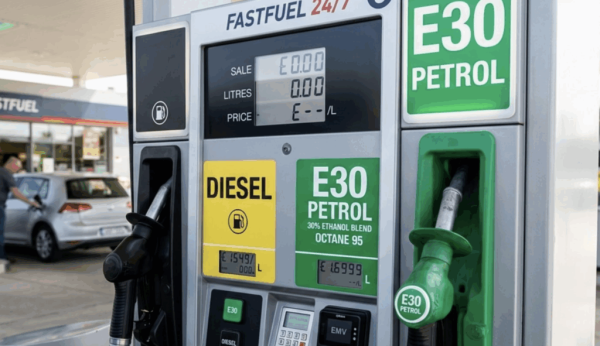
India has officially notified standards for petrol blended with up to 30% ethanol, commonly known as E30 fuel, signaling a major advancement in the country’s biofuel and energy transition plans.
The development comes as the government continues aggressively expanding its ethanol blending program to reduce crude oil imports and improve energy security. The Bureau of Indian Standards (BIS) has now finalized technical specifications for E30 fuel, paving the way for future adoption across the country.
Currently, India is rapidly moving toward achieving widespread E20 fuel implementation, where petrol contains 20% ethanol. The notification of E30 standards suggests policymakers are already planning for the next phase of higher ethanol integration in transportation fuels.
Why India Is Increasing Ethanol Blending
India imports a large portion of its crude oil requirements, making fuel prices heavily dependent on global oil markets and geopolitical events. Ethanol blending is being promoted as a way to reduce this dependence while supporting domestic agriculture and lowering emissions.
Ethanol is primarily produced from sugarcane, maize, damaged food grains, and agricultural biomass. By blending ethanol into petrol, the government aims to reduce fossil fuel consumption and cut carbon emissions generated by conventional gasoline.
Officials believe higher ethanol usage can also create additional income opportunities for farmers and strengthen India’s rural economy by increasing demand for agricultural feedstock.
The government has repeatedly stated that ethanol blending is a key pillar of India’s long-term energy transition strategy.
The Backstory: India’s Ethanol Journey
India’s ethanol blending mission has evolved dramatically over the past decade.
For years, ethanol blending levels remained relatively low because of supply shortages, weak infrastructure, and limited coordination between oil companies and ethanol producers. Blending levels often struggled to cross single digits.
However, the government began aggressively pushing ethanol adoption after rising crude oil import bills and growing climate concerns placed pressure on policymakers to explore alternative fuels.
Under the Ethanol Blended Petrol (EBP) Programme, India steadily increased blending targets and introduced incentives for ethanol production. Oil marketing companies signed long-term procurement agreements, while sugar mills and distilleries received policy support to expand capacity.
Initially, India aimed to achieve 20% ethanol blending by 2030. However, the target was later advanced to 2025-26 due to faster-than-expected progress.
As ethanol production expanded rapidly, policymakers started preparing for even higher blending possibilities such as E30.
What E30 Means For Vehicles
The shift toward higher ethanol blending will have major implications for the automobile industry.
Ethanol behaves differently from pure petrol and requires engines, fuel systems, and components designed specifically to handle higher alcohol content. Vehicles not engineered for higher blends may experience reduced efficiency, corrosion, or performance issues over time.
As a result, automakers are increasingly developing flex-fuel and ethanol-compatible engines for the Indian market.
Several automobile manufacturers have already started adapting vehicles for E20 compatibility. The notification of E30 standards may further accelerate investments into advanced fuel technologies and engine modifications.
Experts believe flex-fuel vehicles capable of running on multiple ethanol blend combinations could become increasingly common in India over the next decade.
Environmental And Economic Impact
The government sees ethanol blending as both an environmental and economic strategy.
Supporters argue that higher ethanol use can reduce greenhouse gas emissions, improve air quality, and decrease India’s reliance on imported fossil fuels. At the same time, the ethanol ecosystem generates new revenue streams for farmers, sugar mills, and rural industries.
However, experts have also raised concerns regarding water-intensive sugarcane cultivation and the long-term sustainability of large-scale ethanol production. Some analysts warn that balancing food security, water usage, and fuel production will remain an important challenge as blending targets increase further.
India’s Fuel Transition Is Accelerating
The notification of E30 standards highlights how rapidly India’s fuel ecosystem is changing.
Alongside electric vehicles, hydrogen projects, compressed biogas, and sustainable aviation fuels, ethanol blending is emerging as a major component of India’s broader clean mobility strategy.
While E30 fuel may still take time before nationwide implementation, the latest move makes it clear that India is preparing for a future where biofuels play a significantly larger role in transportation and energy security.
-
Real Madrid should avoid signing Alexis Mac Allister and Enzo Fernandez despite their long-term interest — both Argentines come with major warning signs after troubled seasons

-
Manchester United plan surprise move for Jarrod Bowen as Red Devils join Liverpool and Chelsea in chase for West Ham skipper

-
Manchester United eye bargain midfield reinforcements to save millions on Elliot Anderson deal

-
UoH warns students against creating atmosphere of fear on campus

-
RTI activist arrested in Mysuru for driving car with man hanging onto bonnet