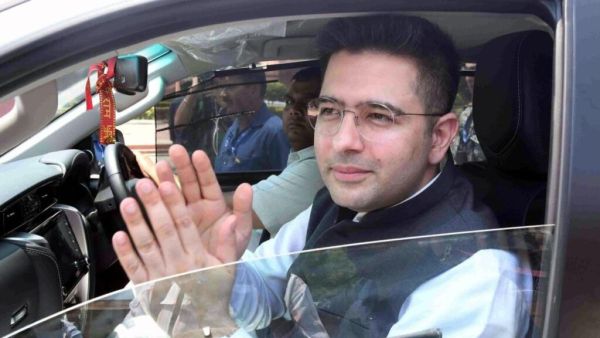
The Delhi High Court on Wednesday reserved its order on interim relief sought by Raghav Chadha in a lawsuit alleging misuse of his personality rights through AI-generated deepfakes, morphed visuals and manipulated social media content.
The matter was heard by Justice Subramonium Prasadwho orally observed during proceedings that the material placed before the Court appeared, at least prima facie, to be criticism of a political decision rather than a direct violation of personality rights.
Chadha, a senior leader of the Aam Aadmi Party and Rajya Sabha member, approached the High Court seeking protection against allegedly manipulated online content that he claimed falsely portrayed him through artificial intelligence-generated edits, altered videos and misleading visuals circulating on social media platforms.
According to submissions made before the Court, the petition argued that the use of AI tools and digital manipulation had crossed legal and ethical boundaries by misrepresenting the politician’s identity and public image. The suit reportedly sought interim directions for removal or restriction of the disputed content pending final adjudication of the matter.
During the hearing, however, the Court appeared to draw a distinction between unlawful misuse of personality rights and criticism or satire linked to political discourse. Justice Prasad orally remarked that political commentary and criticism may not automatically amount to a violation of personality rights protections.
The observations come amid growing legal and political debate in India over AI-generated deepfakes, manipulated videos and synthetic media, especially involving politicians, celebrities and public figures. Courts globally have increasingly faced challenges balancing freedom of expression with privacy, reputation and digital identity rights in the era of rapidly advancing artificial intelligence tools.
The case has attracted wider attention because it touches upon emerging legal questions surrounding political satire, deepfake regulation and social media accountability ahead of India’s increasingly digital political campaigns. Experts believe the matter could contribute to future jurisprudence on AI-generated political content in India.
Recent months have witnessed a sharp rise in deepfake- controversies involving public personalities across the country, prompting demands for stricter regulation of synthetic media technologies and stronger safeguards against misinformation.
The Delhi High Court has now reserved orders on Chadha’s plea for interim relief, with the final decision expected to clarify the Court’s preliminary position on the intersection of political criticism, AI manipulation and personality rights law.
-
Health Tips: The risk of kidney stones will be reduced, drink this healthy juice daily, you will get relief from the problem

-
Lenovo Legion 5 15IAX11 brings together OLED visuals, RTX 5070 power and fast charging

-
Indian Railways To Use AI-Based Surveillance, Drones, And Advanced CCTV Systems To Enhance Passenger Safety
-
Meta keeps an eye on children’s online activity, launches new tools for Instagram-Facebook

-
Users are surprised by a bug in Gmail! Many people can’t open emails, what exactly happened?