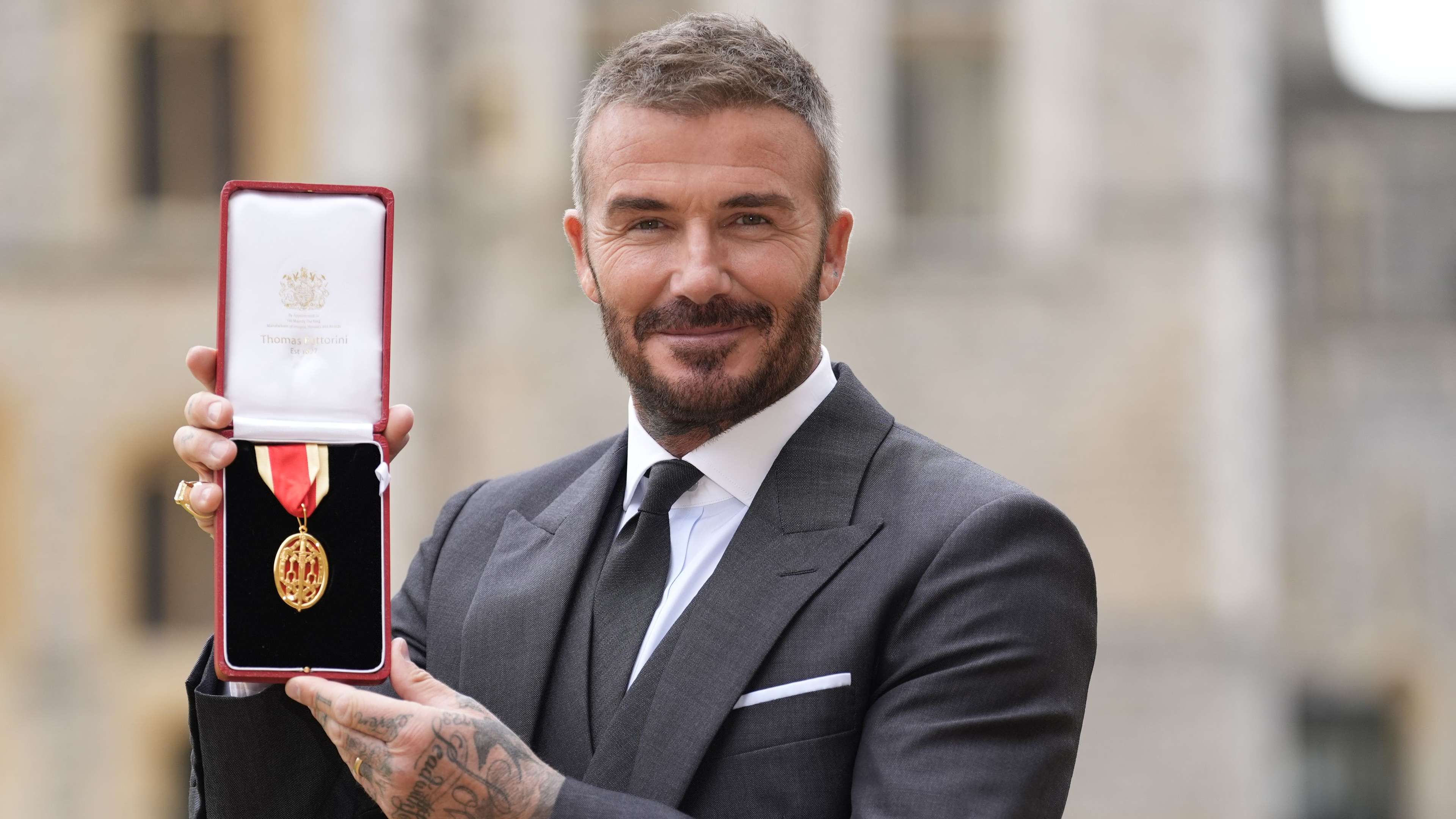
Among the most gifted midfielders of his time, Sir David Beckham stands out as one of the finest crossers the sport has ever seen, and a free-kick specialist whose precision rivalled the very best. Yet, despite his immense contribution on the field, his influence off it has often overshadowed his footballing brilliance. One of the defining figures in world football over the last three decades, Beckham’s legacy as a player is sometimes overlooked when discussing the true greats of the game.
Beckham – now formally known as Sir David Beckham – shaped not just football but the very culture surrounding it. He became the blueprint for the modern footballer-turned-brand, much like how Michael Jordan revolutionised basketball earlier. Beckham’s transformation into a global icon transcended sport, paving the way for future stars such as Cristiano Ronaldo, Neymar, and Lionel Messi to follow the path he created.
However, his commercial success and celebrity status should not detract from his immense footballing accomplishments. It is precisely these on-field achievements that make him a worthy inductee into GOAL’s Hall of Fame.
Bend it like Beckham
In the late 1990s and early 2000s, Beckham wasn’t just a footballer; he was a global sensation. Every teenager wanted to emulate him – his playing style, his fashion sense, even his ever-evolving hairstyles. From his blonde highlights to the buzz cut that marked the new millennium, from the mohawk that irked Sir Alex Ferguson to the cornrows and man bun during his Real Madrid days – Beckham’s looks were copied across continents. His adidas Predator boots became a must-have for aspiring players, and the No.7 Manchester United jersey became a fashion symbol.
Fans might have admired his style, but what they truly coveted was his unique ability to strike the ball. His signature posture – right arm swinging back as he delivered a curling cross – became one of football’s most iconic images. It even inspired the title of the film ‘Bend It Like Beckham’, introducing his legend to an entirely new audience.
Much More Than a Pop Icon
Beyond the glamour, Beckham was a complete footballer – strong, intelligent, and vastly underrated. The media’s obsession with his relationship with pop star Victoria Adams (now Victoria Beckham) often overshadowed his performances at Old Trafford. For years, his name appeared more frequently in gossip columns than in sports pages, creating a perception that he was more celebrity than athlete – too polished, too perfect, too stylish to be taken seriously as an elite player.
Yet Beckham’s footballing talent was undeniable. He was not a traditional winger who dazzled with dribbles, but his right foot was a weapon of precision. His crosses and passes were near-perfect, his vision sublime, and his technical skills unmatched. Often functioning as a wide playmaker, Beckham’s intelligence and control set him apart. It is little wonder he is widely regarded as the greatest crosser of all time and one of the finest free-kick takers in the history of football.
His unforgettable free-kick against Greece in October 2001, which secured England’s qualification for the World Cup in Japan and South Korea, remains his magnum opus — a goal etched permanently in football history. Equally iconic was his strike from the halfway line against Wimbledon in 1996, which symbolically marked the start of his legendary Manchester United career.
Appearances Can Be Deceiving
Beckham’s greatness was never limited to his technical prowess. As the third-most capped player in England’s history, he wore the captain’s armband for six years, leading the Three Lions in 58 matches. From being vilified after his red card against Argentina in the 1998 World Cup to becoming a national symbol of redemption, Beckham’s journey epitomised resilience and leadership.
He led by example — passionate, disciplined, and selfless. Even demanding managers like Fabio Capello acknowledged his professionalism. Capello famously defied Real Madrid president Florentino Pérez by reinstating Beckham to the starting XI, a decision that proved crucial as Madrid went on to win La Liga before Beckham departed for LA Galaxy.
Wherever he played, Beckham made an impact — from his triumphs with Manchester United to his success with Real Madrid, from conquering Major League Soccer with LA Galaxy to his short yet memorable spells with AC Milan and Paris Saint-Germain. Despite his celebrity aura, he carried himself with humility and commitment, earning respect wherever he went.
Ballon d’Or Worthy?
In 1999, the year Manchester United won the treble under Sir Alex Ferguson, Beckham played a pivotal role and arguably merited the Ballon d’Or, which instead went to Rivaldo. While the Brazilian shone in La Liga with Barcelona, his side’s early Champions League exit weakened his claim compared to Beckham’s all-round brilliance.
Beckham’s resilience that year was extraordinary. After being vilified post-World Cup, subjected to relentless abuse from fans, and jeered across Premier League stadiums, he responded not with words but with performances. “The more he was targeted, the better he played,” recalled his former teammate Ole Gunnar Solskjaer. With six goals and 12 assists in the Premier League, two goals and eight assists in the Champions League, and a decisive strike in the FA Cup semi-final against Arsenal, Beckham was instrumental in Manchester United’s treble-winning campaign.
Finishing second in the 1999 Ballon d’Or voting may have denied him the ultimate individual honour, but his influence on and off the pitch remains timeless. Over a decade after his retirement, reassessing Sir David Beckham’s legacy is not merely nostalgic — it is a rightful recognition of one of football’s most iconic and underrated figures.
-
5 Iced Tea Recipes You Need to Brew This Summer

-
Tripti Dimri reached the promotion wearing such a cheap tunic set, eyes got stuck on the simple look

-
Sudden weight loss? After fatty liver, the body shows ‘these’ terrible symptoms, it would be dangerous to ignore
-
The growing trend of screenless fitness trackers! Along with fashion, a smart eye can be placed on health and daily lifestyle

-
CSK vs GT: Chennai got a big shock in the live match, Sanju Samson went out of the field due to injury.