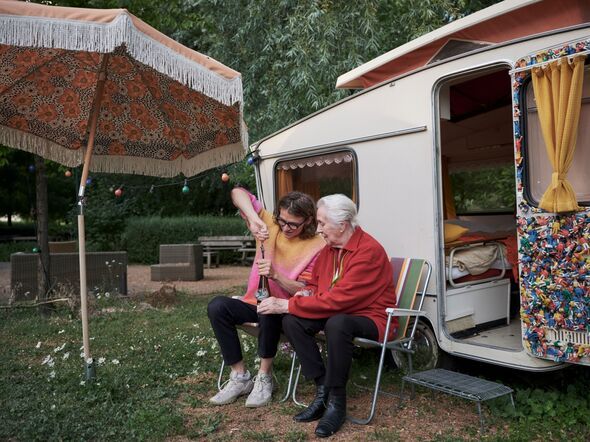
She had no money or coat but the bus driver let her on board, and the elderly dementia patient, who had rather cunningly escaped from a care home, headed back to the village where she had once lived to visit her neighbours.
Wil Vis, 89, wasn't allowed the code to open the doors of the closed ward of the nursing home she lived in in Amstelven in the Netherlands but nevertheless managed to slip out behind someone else.
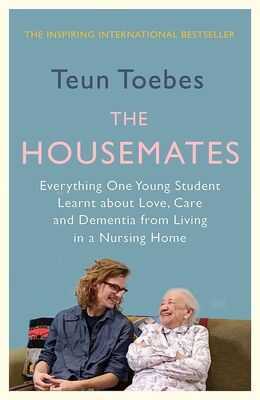
Her room mate knew all about it though. But then he would. For he was Teun Toebes, a 26-year-old student nurse who had befriended her while living in the home himself, not as staff, but as an actual resident.
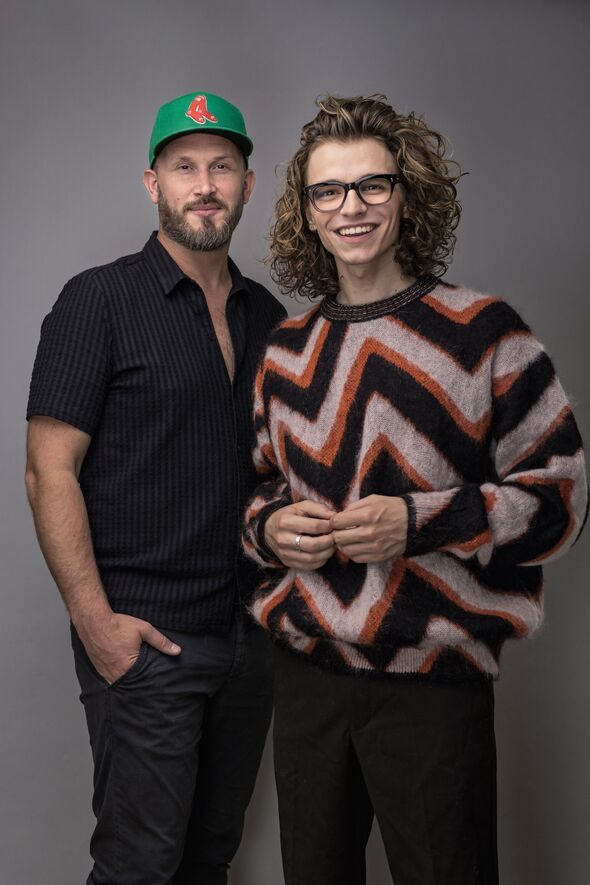
The Dutch humanitarian activist gained worldwide recognition for his documenary film Human Forever, created with filmmaker Jonathan de Jong, which premiered in October 2023 at the G20 dementia summit.
He lived in two Dutch dementia homes over a period of three and half years in his early 20s in order to make the film.
Teun confided: "I knew she had gone but when she was brought back by her daughter I asked her if she had had a good day and her face just lit up and she said it was so good to see her neighbours again. Why shouldn't she? You might call it wandering because she has dementia but I call it walking.
"Alright she didn't have her coat on but do we really have to eliminate all risk? At what cost? Life is risk.
"I strongly believe that we need to listen to the voices of people with dementia and give them their freedom and automony, even if that does comes with risks."
It is hard to imagine how his views would go down in the British social care system but you can imagine many cooped up care home residents vigorously applauding him.
Teun became close friends with Wil, a former tailor and librarian, during his stay at Verpleeghuis Groenelaan (Green Lanes Nursing Home) and the unlikely pair would hang out in each others' rooms, chatting and drinking tea, all as part of Teun's social experiment to discover what it is really like living in a care home 24/7.
In between, Teun, who had the 4-digit code to get out, and Jonathan, travelled the world filming elderly people in different care settings from a psychiatric hospital in Moldova with bars on the windows to shacks in South Africa and Bulgaria and the more luxurious nursing homes more prevalent in his native Netherlands, Denmark and Belgium.
Teun said: "What I concluded was it isn't just about money. That isn't just the answer. In the Modolva psychiatric hospital there was one carer to 34 patients but it felt happy and inclusive because there were people living together with all different conditions. They would help each other go to the toilet and feed each other because they had to.
"In the UK, as it is in the Netherlands, taking someone to the toilet is seen as a job that needs a professional qualification. It doesn't. It just needs compassion. It was so special to see people with different needs and labels living together and helping each other.
"They are there for each other regardless of who they are or why they are here. The institution felt more inclusive."
In Teun's ideal world people with dementia would live in their own homes for as long as possible and be fully integrated into the community and certainly not locked up."
During Forever Human he visited one nursing home in Denmark where the doors are never locked. Residents are never given sedatives and medications are reduced. There is no spending all day in a chair in front of a blaring TV with a glazed expression on your face here.
Teun said: "There is this idea that we need to calm people with dementia down, not to over-stimulate them, that they are prone to anger. While this is sometimes true the answer isn't to sedate them but to find out what is happening in their environment to make them angry and change it."
Last month Teun, who has now swapped living in a care home for Amsterdam's Red Light District ('people are stigmatised there too" he says) attended Wil's funeral and finally said goodbye to the frail, elderly dementia patient he came to regard as a close friend.
He says: "I am 26 but I won't stay that age forever. At the moment people listen to what I want and care what I think. I am free to be whoever I want to be and go wherever I want to go but there is a one in five chance I won't have that choice in the future.
"The thought of ending up in a nursing home with dementia makes me incredibly sad. After a lifetime of freedom and autonomy who wants to be locked up in a place where loneliness resonates in echoing hallwaya in a system where your voice and opinion is no longer relevant?
"This has to change which is why I am going to look for answers to the future."
Teun and Jonathan are currently working on a follow-up film with the working title 'There is no Society" due to go on general release in cinemas next year, and this time, having visited numerous countries around the world to see how elderly people with dementia are cared for, they are coming to the UK.
Jonathan said: "In the new film we come to Manchester and look at a social housing project. Residents are taking control of their own future. This time it isn't just about dementia patients. It's about how do we all want to live in the future, in one community, all together" he explains pointing out that young people are often as lonely as the elderly.
In the meantime, ahead of Dementia Action Week 2026,which runs from May 18-24, the pair continue to campaign to change how we view and treat people with dementia.
The Alzheimer's Society, who are running a campaign to raise awareness, encourage diagnosis, and improve the lives of those affected by dementia, very much support the idea of building dementia-friendly communities too.
Teun concludes: "The more I see the more I realise that the perfect system does not appear to exist. We are the system.
"Everywhere I went to there are people standing up for others whose voices are no longer heard."
Jonathan said as a society we are even more afraid of dementia than death.
"People are afraid of it but we need to have that conversation and change our approach because one way or another dementia will touch us all."
BREAKOUT:
There 55 million people worldwide living with some form of dementia. That figure will rise to 78 million by 2030 and 139 million by 2025 - that's one in five people on the planet.
In the UK there are currently approximately 982,000 people estimated to be living with dementia and number is projected to rise to 1.4 million by 2040 due to our increasingly ageing population.
According to the Alzheimer's Society, dementia is the UK's biggest killer. And they say one in three people in the UK living with dementia do not have a diagnosis.
Dementia Action Week is an awareness campaign led by Alzheimer's Society, bringing people and organisations together to act on dementia. This year, they're encouraging everyone to join the Forget Me Not Appeal.
Meanwhile research has found 40 percent of dementia related symptoms can be prevented by modifying lifestyle.
TheFINGER trial (Finnish Geriatric Intervention Study to Prevent Cognitive Impairment and Disability) was launched in Finland.
The five digits of the Finger programme are physical exercise, healthy diet, cognitive training, social activities and vascular care.
-
France Squad for FIFA World Cup 2026: Full List of Players Heading to USA, Mexico and Canada

-
USMNT defender Chris Richards assisted off the field after full-time due to suspected ankle injury

-
Matthijs de Ligt shares heartfelt message as Manchester United defender’s World Cup hopes are dashed

-
Marcus Rashford edges closer to permanent Barcelona move as Manchester United star agrees terms: report

-
2026-27 Season Football Kits Unveiled: Liverpool, Manchester United, Arsenal, PSG, Juventus, and More Reveal New Jerseys