Arsenal did not win the Premier League in one glorious rush across a pitch. It arrived through a scoreline from elsewhere, through anxious eyes fixed on Bournemouth, through the strange quiet before relief finally broke.
Manchester City needed to win at Bournemouth on May 19 to keep the title race alive, but a 1-1 draw left Mikel Arteta’s side four points clear with one match left. A day earlier, Arsenal had done its part with a tight 1-0 win over Burnley. Then it waited. For once, it ended kindly.
For a generation of Arsenal supporters, the league title had existed mostly as inheritance. They had heard the stories of Highbury, of Arsene Wenger’s great sides, of Thierry Henry gliding through defenders and Patrick Vieira lifting the trophy, but their own memories were shaped by something else: late-season slips, Champions League exits, fourth-place jokes, anger outside the Emirates and the uneasy feeling that Arsenal had become a club always close to being itself again, but never quite there.
That is why this title carried more than celebration. It felt like a release.
For Arsenal, this was never only about a league table. It was about 22 years of carrying 2003-04 as both memory and burden. The Invincibles, with Vieira lifting the trophy and Henry in full flight, had given the club a season that seemed almost untouchable.
But it also became the last reference point for every Arsenal side that followed. The club won FA Cups and Community Shields after that, but the Premier League trophy kept moving further away.
The years in between were filled with beauty, frustration and reinvention. Wenger remained the defining figure long after the last league title, but the later years of his reign carried the ache of teams that could still play but could no longer impose themselves over a season.
Mikel Arteta became Arsenal coach in 2019 and won the FA Cup in his first season. However, Arsenal finished eighth in successive campaigns, fell out of Europe and, at one point in 2021, looked far removed from the club that had once made Champions League qualification feel routine.
| Photo Credit:
AFP
Mikel Arteta became Arsenal coach in 2019 and won the FA Cup in his first season. However, Arsenal finished eighth in successive campaigns, fell out of Europe and, at one point in 2021, looked far removed from the club that had once made Champions League qualification feel routine.
| Photo Credit:
AFP
Unai Emery arrived in 2018 as the first major break from that era, but his stay lasted only 18 months. Freddie Ljungberg briefly held the side together before Arteta returned in December 2019.
With no senior managerial experience, Arteta’s appointment looked like a risky move. He won the FA Cup in his first season, but Arsenal finished eighth in successive campaigns, fell out of Europe and, at one point in 2021, looked far removed from the club that had once made Champions League qualification feel routine.
The rebuild was not romantic. It was severe. Pierre-Emerick Aubameyang moved on. The dressing room was reshaped. The squad became younger, harder and more controlled. Arteta did not simply try to restore Wenger’s Arsenal; he built something sterner.
That is why this title feels different from the old Arsenal ideal. It was not always built on fluency. It was built on pressure, territory, structure and a refusal to let matches drift.
Arteta’s Arsenal pressed high, guarded space carefully and became comfortable winning games that did not flatter the eye. The old accusation that Arsenal was too soft slowly disappeared. In its place came another one: too mechanical, too set-piece heavy, too willing to win ugly.
The criticism reached its loudest point in March, when Arsenal’s corner routines became a talking point across the league. Some called it unattractive. Others argued that set pieces were beginning to damage the spectacle. Arteta’s answer was telling. He said he was upset that Arsenal did not score more from them. It sounded blunt, but it also revealed the edge of this team. Arsenal had stopped apologising for finding a way.
Nicolas Jover’s set-piece work became one of the season’s decisive weapons. Arsenal scored 24 goals from set pieces in the league and 18 from corners, a Premier League record for a single season.
The winner against Burnley, headed in by Kai Havertz from Bukayo Saka’s corner, was a perfect symbol of the campaign: nervous, narrow, rehearsed, decisive.
But it would be unfair to reduce Arsenal’s title to corners alone. Declan Rice gave the team its engine and authority. Martin Zubimendi’s arrival added control in midfield. Eberechi Eze brought invention and personality. Viktor Gyokeres, with his goals and presence, gave Arsenal the centre-forward profile it had long been chasing.
Saka, even through an injury-interrupted campaign, remained the player opponents feared most in the forward line. Leandro Trossard and Havertz gave Arteta the kind of decisive moments title-winning squads need beyond their obvious stars.
At the other end, Arsenal’s title had its clearest foundation. David Raya won the Premier League Golden Glove for a third successive season, while Gabriel Magalhaes and William Saliba formed the core of the league’s shrewdest defence. Gabriel gave Arsenal force in both boxes.
Saliba gave it calm. Jurrien Timber, until injury interrupted his season, added aggression and balance. This was not a fragile Arsenal waiting to be bullied. It was a side built to survive the bad days.
That mattered because the old label never fully went away. After three straight runner-up finishes, the word ‘bottlers’ followed Arsenal into every wobble. In 2022-23, City chased it down. In 2023-24, City edged it by two points. In 2024-25, Liverpool finished above it.
Each near miss hardened the question: did Arsenal have enough nerve when the season tightened? This time, the answer came not through swagger, but through resistance.
There were still moments when the old fear returned. Arsenal lost twice to City in April during a damaging run across competitions, and the season briefly seemed ready to follow a familiar path. But the collapse never came. The response was not spectacular, but mature. Clean sheets returned, margins were protected. The final weeks became less about performance and more about temperament. In title races, that is often the difference.
Arteta’s greatest achievement is not only that Arsenal has won again. It is that he has changed what Arsenal is allowed to be. The club can still value craft, but it no longer has to be defined by it
| Photo Credit:
AFP
Arteta’s greatest achievement is not only that Arsenal has won again. It is that he has changed what Arsenal is allowed to be. The club can still value craft, but it no longer has to be defined by it
| Photo Credit:
AFP
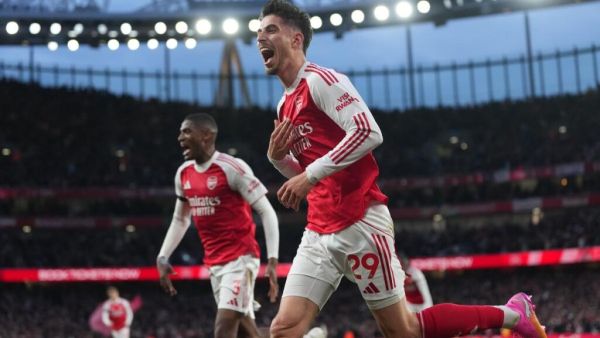
When City drew at Bournemouth, Arsenal’s players watched together and celebrated far away from the pitch. Supporters gathered around the Emirates as flares lit the streets of north London. It was not the cinematic ending of a home win and a final whistle. It was something more Arsenal-like for this era: a title delivered through accumulated work, tension and a result managed from afar.
The triumph did not erase the years in between, but it softened them. The frustration, the mockery, the ‘bottlers’ tag and the seasons that ended with Arsenal looking over its shoulder all became part of the climb rather than proof of failure.
Arteta’s greatest achievement is not only Arsenal winning the title again. It is that he has changed what Arsenal was allowed to be. The club can still value craft, but it no longer has to be defined by it. It can win with Saka’s touch, Rice’s drive, Raya’s saves, Saliba’s composure, Gabriel’s headers and a crowd of players attacking a corner. It can be elegant when possible and ruthless when necessary.
The Premier League trophy returns to Arsenal after 22 years, but this is not a return to the Invincibles. It is the end of a different journey. The years of almosts, the jokes, the collapses, the ‘not yet’ seasons, the springtime anxieties, the wait for another team to slip — Arsenal has lived through all of it.
Now, finally, it has outlasted it.
Published on May 20, 2026