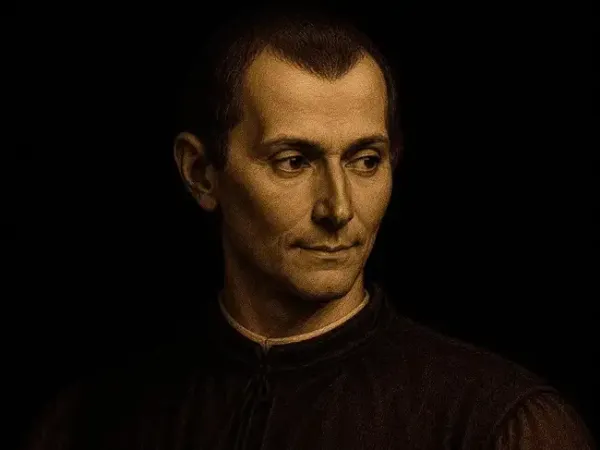
Quote of the Day by Niccolò Machiavelli: There are moments when you trust someone completely, and later realize that trust doesn’t always last. People change, feelings fade, promises don’t always hold. And sometimes, after everything settles, you understand something uncomfortable—not everyone stays out of care; some stay out of compulsion.
Centuries ago, a thinker tried to capture this exact reality. Not the ideal world we wish for, but the world as it actually is. That 16th-century Italian diplomat and political theorist was Niccolò Machiavelli. And his words still echo with unsettling clarity today. The quote means that love is fragile and unreliable for control, while fear creates stronger, more lasting obedience or influence.
ALSO READ: Quote of the Day by Princess Diana
ALSO READ: Meta told employees to work from home, then sent 4 am layoff emails
At first glance, the line feels harsh like most of Machiavelli’s writing. But if we dig deeper, it forces a question that still feels relevant in today’s world: What truly keeps people in control—respect, love, or fear?
Machiavelli is not necessarily saying “be cruel.” Instead, he is highlighting a political reality: in positions of authority, love is fragile, but fear often creates stronger compliance. In modern terms, he is describing the difference between emotional influence and structural control.
In such a world, he observed that rulers who depended only on affection often lost control when that affection disappeared. His writing was not idealistic—it was observational. He studied how power actually worked, not how people wished it worked. That’s why his ideas continue to feel relevant even today.
The idea behind the quote can still be seen in many places:
In workplaces, where authority is maintained through rules, performance pressure, or job insecurity
In institutions, where systems rely more on compliance than emotional connection
In digital spaces, where algorithms control visibility and influence attention
In leadership styles, where some rely on respect and trust, while others rely on strict control
The modern takeaway is not about fear alone—it is about control versus connection.
Relationships today, be it personal, professional, or social, often exist in fast-changing environments. People leave jobs quickly, friendships shift online and attention spans are short. Trust is harder to build and easier to lose. In such a setting, the quote raises a difficult question:
Is influence stronger when people respect you—or when they are afraid of consequences?
But there is another layer too. Modern psychology and leadership studies often suggest that long-term influence is actually stronger when built on trust rather than fear. Fear may create obedience, but it rarely creates loyalty. So today’s interpretation is more balanced: fear may control behavior, but trust sustains relationships.
In workplaces, some leaders motivate through respect, while others depend on strict authority. In friendships, some bonds survive distance and time, while others fade when emotional balance breaks.
The difference is not always visible immediately—but it becomes clear over time. For example, in a workplace, an employee may seem loyal and committed to a manager for years, but that loyalty might come from job security or fear of losing income rather than genuine respect. The moment that pressure or dependence disappears, the relationship can change quickly.
Machiavelli forces us to think about what people actually respond to in reality, not just in theory. That is why his words are still debated centuries later.
In today’s world, where leadership, relationships, and influence are constantly evolving, this quote does not offer a simple answer. Instead, it offers a mirror. It reminds us that power can come from many sources—but each source carries its own consequences.
“The ends justify the means.” (often attributed, though debated in exact wording)
“Everyone sees what you appear to be, few experience what you really are.”
“Never attempt to win by force what can be won by deception.”
“It is double pleasure to deceive the deceiver.”
“Men are so simple and so ready to obey present necessities.”
“Whosoever desires constant success must change his conduct with the times.”
“Hatred is gained as much by good works as by evil.”
“Where the willingness is great, the difficulties cannot be great.”
“He who wishes to be obeyed must know how to command.”
Centuries ago, a thinker tried to capture this exact reality. Not the ideal world we wish for, but the world as it actually is. That 16th-century Italian diplomat and political theorist was Niccolò Machiavelli. And his words still echo with unsettling clarity today. The quote means that love is fragile and unreliable for control, while fear creates stronger, more lasting obedience or influence.
ALSO READ: Quote of the Day by Princess Diana
Quote of the Day
"Since love and fear can hardly exist together, if we must choose between them, it is far safer to be feared than loved"- widely attributed to Niccolò MachiavelliMeaning of the quote
At the core of this statement is a simple idea: human emotions are unstable, especially love. Love depends on feelings, trust, and personal connection. It can fade when expectations are not met and can change with time, distance, or disappointment. Fear, on the other hand, is immediate and predictable. It creates boundaries, enforces discipline and doesn’t depend on emotional consistency.ALSO READ: Meta told employees to work from home, then sent 4 am layoff emails
At first glance, the line feels harsh like most of Machiavelli’s writing. But if we dig deeper, it forces a question that still feels relevant in today’s world: What truly keeps people in control—respect, love, or fear?
Machiavelli is not necessarily saying “be cruel.” Instead, he is highlighting a political reality: in positions of authority, love is fragile, but fear often creates stronger compliance. In modern terms, he is describing the difference between emotional influence and structural control.
Why Machiavelli said this
Niccolò Machiavelli lived in a time of unstable kingdoms, betrayals, and constant power shifts in Renaissance Italy. Leaders rose and fell quickly and loyalty was uncertain.In such a world, he observed that rulers who depended only on affection often lost control when that affection disappeared. His writing was not idealistic—it was observational. He studied how power actually worked, not how people wished it worked. That’s why his ideas continue to feel relevant even today.
Why this quote still matters today
Even though the world has changed, the basic structure of power relationships hasn’t disappeared. It just looks different now. Today, we don’t just see leaders and kings—we see managers, governments, institutions, influencers, and even social media platforms shaping behavior.The idea behind the quote can still be seen in many places:
In workplaces, where authority is maintained through rules, performance pressure, or job insecurity
In institutions, where systems rely more on compliance than emotional connection
In digital spaces, where algorithms control visibility and influence attention
In leadership styles, where some rely on respect and trust, while others rely on strict control
The modern takeaway is not about fear alone—it is about control versus connection.
Link to today’s generation
For today’s generation, especially younger audiences growing up in a highly connected but emotionally volatile world, this quote hits differently.Relationships today, be it personal, professional, or social, often exist in fast-changing environments. People leave jobs quickly, friendships shift online and attention spans are short. Trust is harder to build and easier to lose. In such a setting, the quote raises a difficult question:
Is influence stronger when people respect you—or when they are afraid of consequences?
But there is another layer too. Modern psychology and leadership studies often suggest that long-term influence is actually stronger when built on trust rather than fear. Fear may create obedience, but it rarely creates loyalty. So today’s interpretation is more balanced: fear may control behavior, but trust sustains relationships.
Love vs fear in real life
Machiavelli’s idea also shows up in everyday life, often without us noticing. In families, some relationships are held together by affection and understanding, while others are maintained through pressure or expectation.In workplaces, some leaders motivate through respect, while others depend on strict authority. In friendships, some bonds survive distance and time, while others fade when emotional balance breaks.
The difference is not always visible immediately—but it becomes clear over time. For example, in a workplace, an employee may seem loyal and committed to a manager for years, but that loyalty might come from job security or fear of losing income rather than genuine respect. The moment that pressure or dependence disappears, the relationship can change quickly.
The uncomfortable truth behind the quote
What makes this quote powerful is not that it promotes fear, but that it questions human consistency. Love is beautiful—but unpredictable. Fear is harsh—but reliable.Machiavelli forces us to think about what people actually respond to in reality, not just in theory. That is why his words are still debated centuries later.
In today’s world, where leadership, relationships, and influence are constantly evolving, this quote does not offer a simple answer. Instead, it offers a mirror. It reminds us that power can come from many sources—but each source carries its own consequences.
Other powerful quotes by Niccolò Machiavelli
“It is better to be feared than loved, if you cannot be both.”“The ends justify the means.” (often attributed, though debated in exact wording)
“Everyone sees what you appear to be, few experience what you really are.”
“Never attempt to win by force what can be won by deception.”
“It is double pleasure to deceive the deceiver.”
“Men are so simple and so ready to obey present necessities.”
“Whosoever desires constant success must change his conduct with the times.”
“Hatred is gained as much by good works as by evil.”
“Where the willingness is great, the difficulties cannot be great.”
“He who wishes to be obeyed must know how to command.”