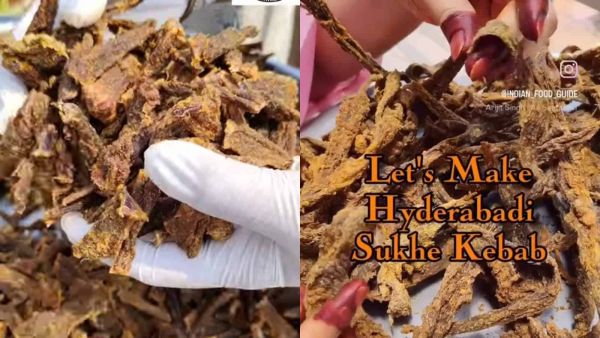
For the past few years, something vital was missing from the rooftops of Hyderabad around Bakrid time. The cloudy skies and damp air during the previous rainy Bakrids made it impossible to carry out a favourite, old tradition. Without hot, bright sunshine, families simply could not make Ghosht ke Sukke Kabab or Sukke Kawab, as the locals call it.
But this year, the summer sun is back in full force just in time for Eid and for the city’s famous sun-dried meat. Step out onto your balcony or take a walk through the narrow lanes of the city a day after the festival, and you will see a classic Hyderabadi sight return to life. Clotheslines will not be holding laundry, instead, they will be filled with hundreds of thin, spice-coated strips of mutton hanging out to dry in the heat.
Long before refrigerators existed, this was just a smart way to preserve the extra meat from the festival. Today, people still do it simply because it tastes incredible. There is a beautiful, old-school rhythm to it. By letting the harsh summer sun do its magic, Hyderabadis turn a temporary festive abundance into a crispy, savoury treasure that sits in airtight jars, ready to bring a burst of flavour to the dinner tables.

The craft behind Hyderabad’s sukke kawab
Making these dried kababs is an art form passed down from grandmothers, but it also relies on a bit of clever kitchen science. You cannot just hang any piece of meat in the sun and hope for the best. It takes careful preparation to get that perfect crunch.
First comes the cutting. Home cooks select the leanest, completely boneless pieces of mutton. Every single bit of fat must be carefully trimmed away. This is the golden rule: fat holds onto moisture and spoils quickly, which would ruin the whole batch. Once the meat is perfectly lean, it is sliced with a sharp knife into paper-thin ribbons.
Next is the marinade, which acts as a delicious armour. The meat strips are thoroughly massaged with a heavy mixture of ginger-garlic paste, fiery red chilli powder, turmeric, and garam masala. Most importantly, a generous amount of salt is added. Together, salt and turmeric act as natural protectors, keeping bacteria at bay while the meat cures.
Once coated, the strips are woven onto strong threads or draped over clean clothes hangers and moved to the brightest spot on the terrace. Over three or four days, the heat evaporates every last drop of water from the meat.
The real magic, though, happens back down in the kitchen. When a handful of these dry shards is dropped into a shallow pool of smoking-hot oil, they puff up instantly. In less than a minute, the spices crisp up and the meat becomes beautifully crunchy, resulting in a deep, savoury flavour explosion.
Pairing it with traditional Hyderabadi food
Sukke kawab are rarely eaten by itself. Because its flavour is so concentrated and salty, it is designed to be the ultimate partner to comforting everyday meals.
Ask any local, and they will tell you that the absolute best way to enjoy it is alongside a hot bowl of Khatti Daland steaming white rice. They also take on the form of Sukke Kawab ka Salan made with onions. The dal provides a comforting backdrop, while the sharp, crackling crunch of the kabab cuts through the rice like a lightning bolt. It is a match made in culinary heaven.
-
Ireland names youthful squad for ICC Women’s T20 World Cup 2026
-
Drishyam 3 First Review: Suspense-thriller and danger every moment, know how is Mohanlal’s film? | Drishyam 3 First Review In Hindi Release Update Mohanlal Movie Final Chapter Malayalam Franchise

-
Rodri eyes Real Madrid move as Guardiola’s Man City era nears end

-
Historic Move: Congress joins Tamil Nadu cabinet after 59 years

-
Rajnath Singh’s warning from South Korea’s soil, what ultimatum has he given to the neighboring country! | Rajnath Singh Issues Stern Warning From South Korea