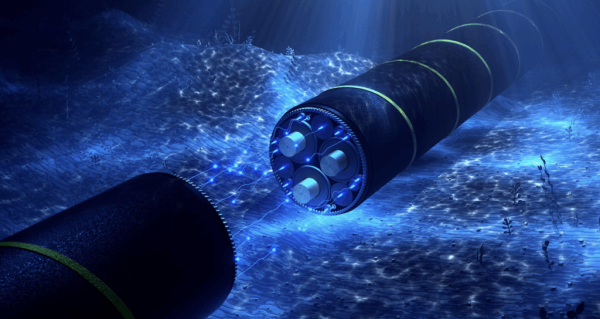
Iran is increasingly drawing attention to the undersea internet cables passing through the Strait of Hormuz, raising concerns about potential risks to global digital infrastructure amid ongoing geopolitical tensions in the Middle East. Reports said Iranian state-linked media outlets have discussed imposing fees and tighter controls on submarine communication cables operating in the region.
The Strait of Hormuz is one of the world’s most important maritime chokepoints, not only for global oil shipments but also for international internet traffic. Multiple submarine fiber-optic cables connecting Asia, Europe, and the Gulf region pass through or near the waterway.
Undersea Cables Carry Most Global Internet Traffic
Industry reports estimate that more than 95% of global internet and international data traffic is carried through undersea fiber-optic cable networks. These cables support banking transactions, cloud computing, AI infrastructure, video streaming, messaging platforms, and financial trading systems worldwide.
Several major cable systems, including AAE-1, FALCON, and Gulf Bridge International (GBI), operate in the broader Gulf region. According to telecom infrastructure researchers, some of these cables pass close to or through Iranian territorial waters.
Iranian Media Discusses Fees And Control Measures
According to multiple reports, Iranian state-linked outlets and media associated with the Islamic Revolutionary Guard Corps (IRGC) have floated proposals to regulate or impose fees on international submarine cables using the Strait of Hormuz corridor.
Some reports suggested that Iran could require foreign operators to obtain permits, comply with Iranian regulations, or use Iranian firms for maintenance and repair operations.
Analysts noted that while the legal and technical feasibility of such measures remains uncertain, the discussion itself has increased concerns over the vulnerability of global digital infrastructure in conflict-prone maritime regions.
Concerns Over Global Digital Disruption
Experts have warned that any major disruption to submarine cables in the Strait of Hormuz could affect internet connectivity, financial systems, cloud services, and cross-border communications across several regions.
The issue gained further attention after previous incidents involving damaged undersea cables in the Red Sea disrupted internet traffic and telecommunications services in parts of the Middle East, Asia, and Africa.
Repairing damaged submarine cables can also become difficult during periods of military conflict because repair ships require security clearances and safe maritime access.
Global Focus On Alternative Cable Routes
The growing risks around maritime chokepoints have prompted governments and technology companies to explore alternative digital infrastructure routes. The European Union is reportedly considering Arctic undersea cable projects to reduce dependence on routes passing through the Middle East and Russia.
Technology companies and telecom operators have also increased investments in network redundancy and diversified routing systems to reduce the risk of large-scale outages caused by geopolitical tensions or accidental cable damage.
-
Trump holds off strikes on Iran planned for Tuesday at Arab leaders' request

-
Understanding Petrol Pump Fraud: How to Protect Yourself

-
Indian Railways Launches Recruitment for 6,565 Technician Positions in 2026

-
Tom Kane dead: Star Wars legend dies in hospital as heartbreaking tributes pour in

-
Andy Burnham torn to shreds on GB News in humiliating four word put down live on air