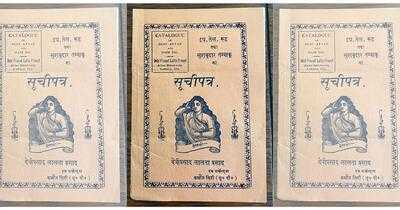
One of the great ironies of Indian public life is that in our haste to celebrate deep histories, we often ignore the equally rich, if not richer, recent histories that connect us to our antiquities. The very celebration of hoary antiquity ends up blinding us to the innovative ways in which traditions, to survive, have repeatedly been updated. Consider, for instance, the “perfume capital of India”, Kannauj.
Kannauj attars received a GI tag a little over a decade ago and since then, innumerable media outlets have spoken of the ancient town’s almost ageless association with perfumery. This repeated emphasis on “thousands of years of history” has contrapuntally also served to erase a history of rich innovations throughout the last century and a half. Kannauj has emerged, willy-nilly, as a town stuck in time.
A new industryYet what makes Kannauj attars accessible to us today is precisely the fact that a series of enterprising innovators throughout the past century and a half have adapted it to changing contexts. They introduced new techniques and materials in both production and marketing. Moreover, many of these innovators were not scions of ancient craftsmen. Rather, they were inventive men who learnt and then adapted the traditional arts of fragrance-making.
Today, one of...
Read more
-
Millions of lives at risk unless climate crisis declared health emergency: WHO-linked report

-
Adani reaches $275 million settlement with US for alleged violation of Iran sanctions

-
RCB looks strong for encore, seven teams in running for three other spots

-
Victorian disease rips through the UK - 542 new cases reported

-
Saurabh Vijay takes charge as CEO of Unique Identification Authority of India