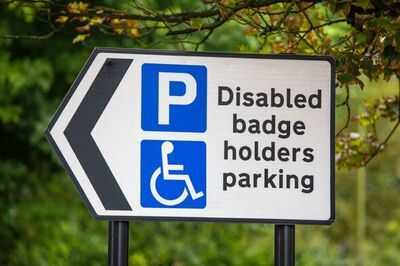
Councils across the UK handed out 55,000 blue badges to people with "hidden disabilities" last year, with recipients accused of "abusing the system". Tens of thousands of Brits diagnosed with conditions including anxiety and ADHD have taken advantage of rule changes introduced in 2019, which allowed those with non-visible disabilities to apply for the parking permits for the first time.
The change was praised at the time for extending eligibility to those with dementia, arthritis and Parkinson's, but uptake by those with "invisible" mental health conditions has seen the number of badges handed out rise by 37,000 in five years. Dr Becky Spelman, of the Private Therapy Clinic, warned that the growing trend risked turning the badges into an advantage rather than an accommodation for those with mobility needs.
Dr Spelman, who has ADHD herself, told The Telegraph: "While I understand the neurobiological deficits associated with the condition, I personally would never apply for a blue badge. To so do would feel like an abuse of a system designed for those with more profound, visible or life-altering mobility limitations."
- HMRC confirms £17 extra tax charges for state pensioners every month
- Abandoned UK shopping village left to rot after all 40 stores close down
The blue badge scheme enables people with disabilities to park closer to their destination than other drivers as they are less able to walk longer distances or take public transport.
Videos circulated online in recent years have coached applicants with mental health issues on how to obtain a badge for their condition, for which councils usually need evidence such as medication or a doctor's note.
In one clip, a woman diagnosed with ADHD said: "I completely did not think it would get approved but it did and it arrived the other day, and I can already say it has been a life-saver.
"Parking for me is so stressful, especially on a weekend or when you go anywhere busy."
Responding to criticism from other social media users, she said her hour-and-a-half commute left her "drained" and "overwhelmed", with the badge "completely eliminating" the stress of finding a parking spot.
A spokesperson for the Deaprtment for Transport (DfT) said: "A diagnosis of ADHD does not automatically qualify someone for a blue badge. Eligibility is based on how a condition affects a person's ability to get around - not on a diagnosis alone.
"Local councils are responsible for assessing each application on its own merits, and have powers to tackle misuse of the scheme, which is a criminal offence.
"The blue badge scheme is a vital lifeline for many disabled people, and we are committed to ensuring it reaches those who genuinely need it."
A representative for the Local Government Association added: "Although the vast majority of badges are used correctly, there is a small minority who fraudulently use other people's. Blue badges offer those who are eligible the freedom to get out and about, and their illegal use is not a victimless crime.
"Councils will do what they can but they have to take into account a number of competing priorities when using their limited resources to take enforcement action against blue-badge fraud and theft where it can be proven."
-
Congo opens more treatment centres after rare Ebola strain kills 120

-
Centre imposes undeclared lockdown, claims Punjab CM

-
After Haryana woman delivers baby at hospital gate, govt issues directives

-
West Bengal govt clears prosecution of ex-RG Kar principal

-
Boiler blast in Madhya Pradesh kills one, injures several