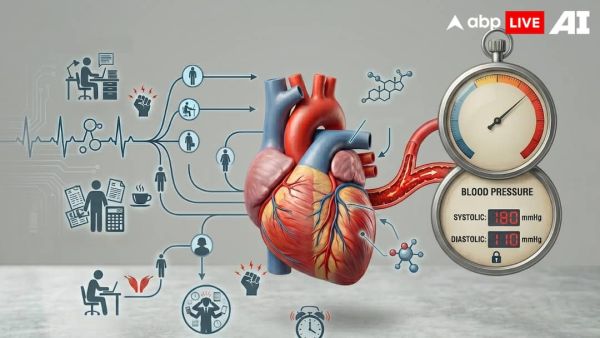
In today’s fast-paced life, stress has become so common that many people now consider it a part of their daily routine. High blood pressure was once seen as a problem linked to old age, but doctors are now noticing it rapidly increasing among people in their 20s and 30s, office workers, students, and parents dealing with responsibilities. Even people who appear physically fit from the outside may silently be dealing with constant stress, and one of its biggest effects is seen on heart health.
According to the Centers for Disease Control and Prevention, high blood pressure often slowly damages the body without showing clear symptoms. Meanwhile, the National Institutes of Health states that during stress, the body enters “fight or flight” mode, which increases both heart rate and blood pressure.
What Happens Inside The Body During Stress?
Marga Mind Care Consultant Adult Psychiatrist and Sexologist Dr. Mauryadeep Ghatak explains, “When a person feels stressed, the body releases the hormone cortisol. This increases the heartbeat and causes blood vessels to narrow, which raises blood pressure.”
According to him, the body cannot properly differentiate between mental and physical stress. This means that even if a person is simply sitting on an office chair, the body may react as if it is running away from danger.
How Does Mental Stress Affect The Body?
The problem becomes more serious when stress does not stay limited to a few minutes or hours but continues constantly. Late-night work, mobile notifications, traffic, financial pressure, and personal life problems keep the brain in a continuous alert mode.
According to a research review published by the National Institutes of Health, long-term mental stress may gradually become a cause of permanent high blood pressure.
What Effect Does Stress Have On Sleep?
One of the biggest effects of stress is seen on sleep. Dr. Mauryadeep Ghatak says that during sleep, the heart and blood vessels recover from the stress and tiredness of the day. Normally, blood pressure naturally drops during sleep, giving the heart some rest.
However, continuous stress affects this recovery process. Using mobile phones and laptops late at night may also reduce the production of melatonin, the hormone linked to sleep, which can further disturb sleeping patterns.
How Lifestyle Habits Make Things Worse
Stress also changes daily habits. People may stop exercising, eat more junk food, or develop habits like smoking and drinking alcohol more frequently. According to Dr. Mauryadeep Ghatak, all these factors can increase the risk of high blood pressure even further.
The most dangerous part is that high blood pressure usually develops slowly and often remains unnoticed until serious effects begin appearing in the body.
Does Stress Affect Heart Health?
Doctors now see stress not only as a mental health issue but also as a major risk for heart health. Regular exercise, proper sleep, reduced screen time, and maintaining a balance between work and personal life may help keep blood pressure under control.
According to experts, understanding the effects of increasing stress at the right time has now become extremely important.
-
Hanoi sidewalk businesses struggle to adapt as city tightens encroachment rules

-
Harry Styles opens “Together, Together” tour in Amsterdam

-
You are running the cooler but still there is stuffiness and stickiness in the room, these 5 mistakes of yours are increasing the problem…
-
The Weekly Chinese Horoscope Is Here For Each Animal Sign From May 18 – 24, 2026

-
5 Italian tourists die in scuba diving tragedy in Maldives