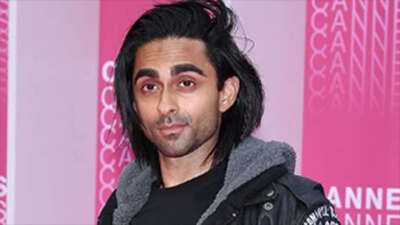
Indian-origin producer and showrunner Adi Shankar believes the global entertainment industry is heading towards a dramatic transformation. He thinks Indian cinema may soon emerge as one of the biggest forces in worldwide blockbuster storytelling. Known for backing projects like ‘Dredd’, ‘Castlevania’, ‘Devil May Cry’ and ‘Captain Laserhawk: A Blood Dragon Remix’, Shankar recently shared his views on the future of filmmaking, franchise culture and India’s growing cinematic influence.
In a conversation with Variety India, the filmmaker spoke extensively about why Indian event films such as ‘ Ramayana ’ and ‘ Dhurandhar ’ could play a major role in reshaping the global theatrical landscape. While discussing large-scale theatrical films, Shankar pointed out that Indian commercial cinema still understands emotional storytelling and larger-than-life heroes in a way many global studios have forgotten.
“The first thing Indian cinema gets right is that it still believes in the hero. Indian commercial cinema still understands that the audience wants to feel something,” he said. According to him, another major advantage lies in originality. Unlike Hollywood, which he believes has become dependent on recycling existing intellectual properties, India continues to create fresh cinematic spectacles.
“It also matters that Indian event cinema is still largely original. That is a massive advantage. The Hollywood business became addicted to recycling known brands. India still has a real instinct for building new cinematic events. New is the future,” Shankar explained. Adi Shankar also addressed what he sees as India’s biggest challenge on the global stage: lack of confidence in its own identity.
“Where I think India undersells itself globally is in confidence. There is still too much implied deference to Hollywood, as if global validation has to come from the West. It doesn’t,” he stated. Drawing comparisons with Japan’s entertainment industry, Shankar stressed that India’s strength lies in embracing its own cultural roots instead of imitating Western storytelling models. “Japan didn’t win by chasing Hollywood’s approval. It won by being more Japanese. India will win by being more Indian, not less,” he added. The producer even predicted a massive shift in the global box office over the next decade. “My honest view is that if India stays on this path, Indian blockbusters will outgross Hollywood blockbusters within ten years,” he said.
Adi Shankar criticises modern franchise filmmaking
The producer also spoke critically about the current state of franchise-driven entertainment. Having worked on adaptations like ‘Castlevania’ and ‘Devil May Cry’, he argued that many blockbuster films have become creatively repetitive despite impressive visual effects. “A lot of franchise filmmaking got flatter and more generic because VFX got powerful enough to fake imagination,” he said.
He believes artificial intelligence will further expose weak storytelling because polished visuals will no longer feel special once everyone has access to similar technology. “AI is about to finish that illusion off. It takes what was once magical about VFX and turns it into something fundamentally unremarkable,” Shankar explained. Shankar suggested that viewers are slowly moving away from empty spectacle and are now craving originality and stronger creative voices.
“So yes, I think audiences are far more hungry for point of view than polish now. In fact, because of it I think we’re heading toward a correction, maybe even a crash, but eventually a creative renaissance,” he said. He also referenced big-ticket Hollywood projects while discussing how difficult it may become for studios to rely solely on visual spectacle and familiar intellectual properties.
Why ‘Devil May Cry’ worked for him
Speaking about his latest project ‘Devil May Cry’, Shankar revealed that the emotional depth of protagonist Dante mattered more to him than simply making the character appear stylish. “Johnny understands that Dante’s bravado is a defense mechanism,” he said while praising actor Johnny Yong Bosch.
The filmmaker also credited Netflix for understanding global storytelling trends much earlier than traditional studios. “Netflix embraces cultural fusion,” he shared, adding that the streaming platform recognized anime and international narratives long before many competitors.
Adi Shankar also reflected on his approach toward storytelling and why he avoids playing safe with adaptations. “I’d say ‘unsafe’ is the through line of my work. The safe version usually isn’t just less interesting, it’s usually dishonest,” he stated. Recalling a conversation with legendary game creator Hideo Kojima, Shankar explained why companies approach him for unconventional ideas. “The answer I gave him was: they come to me for the unsafe version. That’s the value I bring,” he said.
For Shankar, the future of global entertainment belongs to industries that are willing to take creative risks, embrace cultural identity and move beyond formula-driven filmmaking.
-
Bhopal: Accused in assault of Muslim man not linked to Hindutva groups, claim police

-
Bhopal: Accused in assault of Muslim man not linked to Hindutva groups, claim police

-
ED searches premises linked to AAP leader Deepak Singla in money laundering case

-
For children: Pajapati is inconsolable when her sister Maya dies after giving birth to Siddhartha

-
Indian markets tumble as West Asia tensions and oil price spike rattle investors