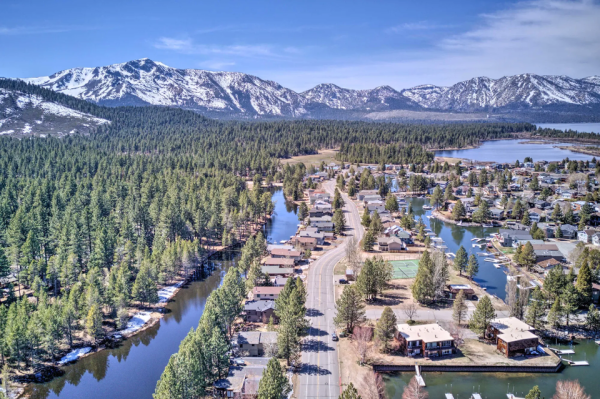
A dramatic manifestation of the tech industry’s unquenchable thirst for energy emerged on May 13, 2026, as news broke that nearly 50,000 residents in the Lake Tahoe region have precisely one year to secure a new source of electricity. In an unprecedented move, a major Nevada energy supplier informed a neighboring California utility provider that it will permanently sever its power supply to the scenic community after May 2027. The reason? The utility company is redirecting its capacity to feed the massive, high-revenue data centers mushrooming across Nevada, illustrating a stark new reality where ordinary citizens must directly compete with digital infrastructure for survival.
The unfolding crisis highlights the vulnerability of regional power grids that cross state lines. For years, Liberty Utilities, the private provider serving approximately 49,000 customers on the California side of the Lake Tahoe basin has heavily relied on purchasing excess electricity from NV Energya major utility giant based in Nevada.
However, NV Energy recently notified Liberty Utilities that it will not renew its long-standing power delivery contract when it expires in May 2027. Because the Lake Tahoe community sits in an geographically isolated, mountainous region, building immediate, alternative domestic generation or running new high-voltage transmission lines through California’s strict environmental landscape is a logistical nightmare. Residents are effectively being cut off from their primary energetic lifeline with a ticking 12-month clock.
The Rise of the Data Center Hegemony
While NV Energy’s corporate communications have not explicitly pinned the decision on a single artificial intelligence facility, industry analysts note that the timeline aligns perfectly with Nevada’s aggressive transformation into a top-tier data center hub. Tech giants have flocked to northern Nevada due to favorable tax structures and land availability, erecting massive server farms that run around the clock.
The scale of this digital consumption is staggering. Most of the region’s infrastructure sits inside the Tahoe Reno Industrial Center, owned and operated by hyper-scale titans like Google, Microsoft, and Apple. These facilities require immense baseload power to cool and fuel the generative AI models taking the technology world by storm. NV Energy is currently looking to redirect its available electricity capacity away from residential contracts to feed at least 12 planned or expanding data centers in northern Nevada.
The “Sauron” Effect: High Profits vs. Public Welfare
The decision to abandon 49,000 residential customers in favor of digital infrastructure highlights the sheer economic disparity between tech corporations and localized communities. For a utility company like NV Energy, serving a handful of hyperscale data centers is far more lucrative and less operationally complex than maintaining thousands of miles of residential power lines susceptible to winter storms and wildfires.
The situation has sparked intense debate over corporate responsibility, with critics pointing out a troubling paradigm shift: when forced to choose between supporting local communities or feeding Big Tech, energy providers are increasingly choosing the machines. As users note on online forums, the public is left holding the bag for increased transmission costs and grid stress, while being asked to scale down their own residential footprint to accommodate industrial AI demands.
The Looming Financial Shock for Tahoe Consumers
As Liberty Utilities scrambles to find an emergency solution, the financial fallout is expected to hit consumers hard. To replace the lost Nevada power, Liberty will likely be forced to buy electricity from the broader California independent system operator (CAISO) grid or negotiate expensive out-of-state emergency contracts.
Because California’s energy costs are significantly higher due to strict renewable mandates and state taxes, local utility bills are expected to skyrocket. Experts warn that even if Liberty successfully secures an alternative energy source by 2027, residents could see their monthly power bills inflate dramatically. This is a bitter pill to swallow for a community trapped in regulatory limbo with limited geographical access to alternative infrastructure.
A Growing National Backlash Against the AI Grid
The situation in Lake Tahoe is not an isolated incident; it is the tip of a spear poking at a growing national crisis where tech expansion directly collides with local resources. A recent Gallup survey shows that 70% of Americans now oppose constructing data centers in their local areas, making them statistically less popular than nuclear power plants.
From Maryland, where citizens were slapped with a $2 billion grid upgrade bill for out-of-state data centers, to Michigan towns actively rushing to block new buildouts after a $16 billion “Stargate” AI data center went forward despite pushback, the public is fighting back. Citizens are increasingly resistant to the reality that local water tables and energy infrastructure are being re-routed to power remote computing operations.
As of mid-May 2026, the clock is officially ticking for the residents of Lake Tahoe. Over the next 365 days, local officials and utility engineers must pull off an operational miracle to prevent a regional energy crisis when NV Energy officially flips the switch to favor the silicon over the citizens.
The Lake Tahoe crisis serves as a sobering reminder that the digital world does not exist in a vacuum. Every large language model query, every cloud backup, and every autonomous loop requires real-world coal, gas, and green electrons to function. In the digital arteries of the modern economy, the fight for resources has officially moved into our backyards. If the current trend continues, the citizens of Lake Tahoe won’t be the last ones forced to scramble for power so that the machines can keep thinking.
-
RBI: Gold Bonds Yield Rich Returns; RBI Sets Redemption Price at ₹16,012..

-
Gold Price Surge: Know the New Home Gold Limit You Can Keep Without a Purchase Bill

-
Major Benefit of Investing in SCSS: Senior Citizens to Receive ₹61,500 in Interest Every Three Months...

-
President’s Salary Then vs Now: How Much Did India’s First President Earn Compared to Today?

-
Anant Ambani Launches Vantara Creamery: Find Out the Price and Key Highlights of This Ice Cream..