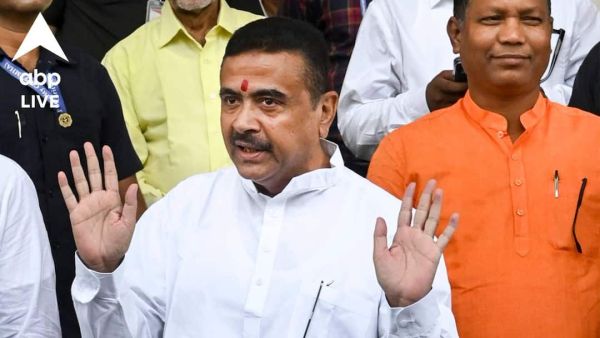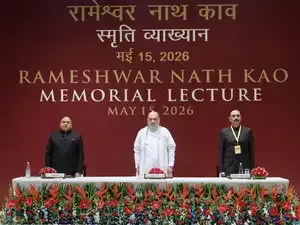
Union Home Minister Amit Shah delivered the annual R.N. Kao Memorial Lecture in New Delhi, outlining India’s goal to achieve a drug-free nation by 2047. During his address to diplomats from over 40 countries, he called for synchronized global laws and real-time intelligence to dismantle drug syndicates and prevent narco-terrorism.
The subject of lecture on Friday was Narcotics: A Borderless Threat, A Collective Responsibility. The annual lecture series was instituted in the year 2007 to honour the memory of the organisation’s founder Rameshwar Nath Kao.
Shah stated that India has a concrete, multi-ministerial roadmap and operates under a policy of "Zero Tolerance," ensuring that no narcotics enter the country or utilize it as a transit route.
He warned that fragmented international approaches allow drug cartels to exploit policy gaps. He advocated for standardized punishments, uniform laws, and seamless extradition of transnational drug kingpins.
Shah emphasized that drug trafficking is far more than a law-and-order issue. With drug funds funneling into terrorist networks and organized crime, he cautioned that if nations fail to act collectively now, the damage caused by narcotics could become irreversible within a decade.
He stated that while there was awareness about drug money being funnelled to fund terrorists and criminal networks and fuelling a parallel economy, what largely went unnoticed was the permanent damage drug abuse caused to the human body. He cautioned that there was still time for all responsible nations of the world to work together to defeat this threat, adding that if joint efforts were not initiated now, after ten years the world would realise that it was too late to reverse the harm it had caused.
Underlining that the scope for international cooperation on countering narcotics trafficking was crucial, he highlighted the importance of sharing real-time intelligence to interdict narcotics consignments and detain/deport drug kingpins. He informed that in the last two years India was successful in bringing back more than 40 transnational criminals to India, with the support of friendly countries. However, he added that much more was required to be done.
He stated that there is a need for all responsible countries to reach a consensus on the fact that the war on drugs is critical for national security, protecting public health and preventing Narco-States from becoming alternate power centers.
Shah also said that he world, with a population of 8 billion people, 195 nations, and 250,000 kilometres of international borders, cannot tackle the problem of drugs through fragmented approaches.
In the fight against drugs, collective resolve among nations, along with intelligence sharing, coordinated action, and cross-border operations, will prove crucial.
He added that the battle against drugs must rise above geopolitical differences and individual national interests. The world must simultaneously fight both narco networks and narco-terror states.
In this fight, the world will have to adopt uniform laws for a common definition of prohibited substances, standardized punishments for drug trafficking, extradition of drug kingpins, and intelligence sharing.
The subject of lecture on Friday was Narcotics: A Borderless Threat, A Collective Responsibility. The annual lecture series was instituted in the year 2007 to honour the memory of the organisation’s founder Rameshwar Nath Kao.
Shah stated that India has a concrete, multi-ministerial roadmap and operates under a policy of "Zero Tolerance," ensuring that no narcotics enter the country or utilize it as a transit route.
He warned that fragmented international approaches allow drug cartels to exploit policy gaps. He advocated for standardized punishments, uniform laws, and seamless extradition of transnational drug kingpins.
Shah emphasized that drug trafficking is far more than a law-and-order issue. With drug funds funneling into terrorist networks and organized crime, he cautioned that if nations fail to act collectively now, the damage caused by narcotics could become irreversible within a decade.
He stated that while there was awareness about drug money being funnelled to fund terrorists and criminal networks and fuelling a parallel economy, what largely went unnoticed was the permanent damage drug abuse caused to the human body. He cautioned that there was still time for all responsible nations of the world to work together to defeat this threat, adding that if joint efforts were not initiated now, after ten years the world would realise that it was too late to reverse the harm it had caused.
Underlining that the scope for international cooperation on countering narcotics trafficking was crucial, he highlighted the importance of sharing real-time intelligence to interdict narcotics consignments and detain/deport drug kingpins. He informed that in the last two years India was successful in bringing back more than 40 transnational criminals to India, with the support of friendly countries. However, he added that much more was required to be done.
He stated that there is a need for all responsible countries to reach a consensus on the fact that the war on drugs is critical for national security, protecting public health and preventing Narco-States from becoming alternate power centers.
Shah also said that he world, with a population of 8 billion people, 195 nations, and 250,000 kilometres of international borders, cannot tackle the problem of drugs through fragmented approaches.
In the fight against drugs, collective resolve among nations, along with intelligence sharing, coordinated action, and cross-border operations, will prove crucial.
He added that the battle against drugs must rise above geopolitical differences and individual national interests. The world must simultaneously fight both narco networks and narco-terror states.
In this fight, the world will have to adopt uniform laws for a common definition of prohibited substances, standardized punishments for drug trafficking, extradition of drug kingpins, and intelligence sharing.