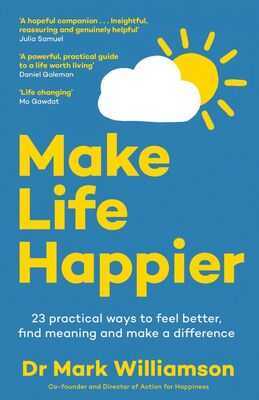

We often think happiness requires major life changes, like a new job, more money or fewer problems. But in reality, it's shaped by the small things we do each day. I've spent 15 years working with wellbeing experts and in my new book - Make Life Happier - I share powerful and practical changes which are within our control.
Most importantly, it's not just about looking after yourself. The biggest boost to happiness comes when we combine self-care with caring for others. We can't control the whole world, but we can influence the tone of the world around us. And when we amplify kindness and encourage trust, we help to make life happier for ourselves and others around us too. Feeling better ourselves and showing up for others go hand in hand. When we take care of ourselves, we have more energy, patience and perspective. And when we support others, we often find a deeper sense of meaning and fulfilment.
Happiness isn't a zero-sum game where one person's gain comes at someone else's expense. It's something we can create together. You don't have to change everything overnight. You can start small, with a helpful perspective or a kind word. So wherever you are, and whatever you're facing, ask yourself: What action can I take today to make life happier - for myself and for others?
Here are 10 small changes that really can make a big difference.
1. Get off autopilotMost of us spend a lot of our lives on autopilot. We rush from one thing to the next, reacting to emails, habits and expectations without stopping to ask: Is this really how I want to be living? The alternative is to wake up, become more present in everyday moments and consciously pay more attention to what really matters. A simple way to do this is to imagine yourself in the future, looking back on your life. Then ask: What advice would my future self give me about what really matters now? Often the answers are very different from how we're currently spending our time. Small moments of awareness can be the starting point for bigger changes.
 2. Be a realistic optimist
Our brains are wired to focus on what's wrong. It's called the 'negativity bias' and it's why one awkward comment can stick with us all day, while lots of good things pass unnoticed. That instinct helped our ancestors survive, but today it can leave us stuck in worry and frustration. The answer isn't forced positivity or pretending it's all fine. Life is messy and often hard. Instead, practise realistic optimism: seeing things as they are, while choosing to focus on what helps. A simple trick is to use the word "and". "This is difficult and I can take a step forward." "I feel anxious and I'm grateful for my friends." You're not ignoring reality, you're expanding it. That builds hope and resilience.
3. Try small 'happiness experiments'We think we need to feel motivated before taking action. But it's the other way round: action creates motivation. As I like to remind people, we don't think our way into new ways of living; we live our way into new ways of thinking. So it helps to treat life as a series of small experiments. Instead of overthinking what might work, try something simple and see how it feels. Go for a walk. Call a friend. Change your routine slightly. Some things will lift your mood. Others won't - and that's useful to know too. Science can point us in the right direction, but the most important research is your own. You're the experiment. So stay curious, keep it small, and let your experience guide you.
4. Make good habits easyIf you want a helpful habit to stick, don't rely onwillpower - design it to be easy. Make the things you want to do more of easier and the things you want to do less of harder. So leave your running shoes by the door, keep unhealthy snacks out of sight or turn off those distracting notifications. It also helps to start ridiculously small. Instead of aiming to meditate for 15 minutes, commit to taking five slow breaths when you brush your teeth. Link the new habit to something you already do, so it fits naturally into your day. Then, when you do it, celebrate. Even a small 'well done' helps your brain register that this is worth repeating. Changing behaviour is less about discipline and more about making good habits the easy and enjoyable choice.
5. Shift your perspective in tough timesDifficult things happen - that's part of life. What really shapes how we feel is not just what happens, it's how we interpret it. This is the key idea behind my SHIFT model. When something happens, we quickly tell ourselves a story about what it means - which then drives our emotions and reactions. For example, if someone doesn't reply, we might think: "They don't care about me." But another explanation could be: "They're just busy." The situation is the same, but the feeling is very different. We can't always control events, especially in an uncertain world. But we can choose how we respond. So next time something feels overwhelming, pause and ask: Is there another way of seeing this? A small shift in perspective can change everything.
6. Build your 'social fitness'Decades of research show that strong relationships are the biggest predictor of a long and happy life. Yet many of us treat ours as if they'll take care of themselves. So we need to maintain our social fitness. Just like physical fitness, relationships need regular attention. Without it, they slowly fade - not through conflict, but neglect. The good news is that small actions make a big difference. Take time to check in, send a message, or put your phone away and really listen. Consistency matters more than grand gestures. So when someone comes to mind, reach out to them. That simple habit can strengthen your relationships and make life feel a lot richer.
7. Help people feel truly heardWhen someone shares a problem, our instinct is to jump to solutions. We offer advice or try to cheer them up. But people don't want to be fixed -they want to feel heard. The greatest gift we can give is our full attention. Put the phone down, stop thinking about what to say and just listen. A simple way to do this is to reflect on what you've heard: "It sounds like that was really frustrating." You don't have to solve the problem - in fact, once people feel understood, they're often better able to solve it themselves. When we really listen, we help others feel seen and valued. That strengthens our relationships more than any clever advice ever could.
8. Stay on your side of the netAll relationships involve disagreement, whether at home, at work or beyond. The challenge isn't avoiding conflict; it's handling it well. One common mistake is assuming we know what's going on for the other person. We say things like "You don't care", or, "You did that on purpose". But in reality, we can't know their thoughts or intentions. A helpful rule is to "stay on your side of the net". That means focusing on your own experience, not theirs. Instead of blaming, describe what happened and how it affected you: "When that happened, I felt frustrated". This reduces defensiveness and makes it easier to have a real conversation. We may not be able to control how others behave, but we can choose how we show up.
9. Stop hoping for a better pastWe all carry hurts - things we wish hadn't happened or ways we've been wronged. Letting go of past wounds feels hard and uncomfortable. But learning to forgive doesn't mean saying what happened was OK. It simply means giving up all hope for a better past. When we hold onto anger or resentment, it keeps us stuck - replaying old events and reliving the pain. When we forgive and move on, we let go of the weight we're carrying. It doesn't change the past, but it does change how much it controls you. You can still set boundaries, stand up for yourself and learn from what happened. But by releasing that ongoing resentment, you free up energy for the present and the future.
10. Build trust and spread kindnessIn a world that feels divided, two simple intentions can make a powerful difference: kindness and trust. Kindness doesn't have to be big - our small everyday actions can lift someone's mood and strengthen our connections. Kindness spreads, so when we help someone, it creates a ripple, inspiring others to do the same. So whenever something happens, a helpful question is: What's the kindest way to respond right now? The same is true for trust. When we show faith in people - by giving responsibility or saying "I believe in you" - they're more likely to live up to it.
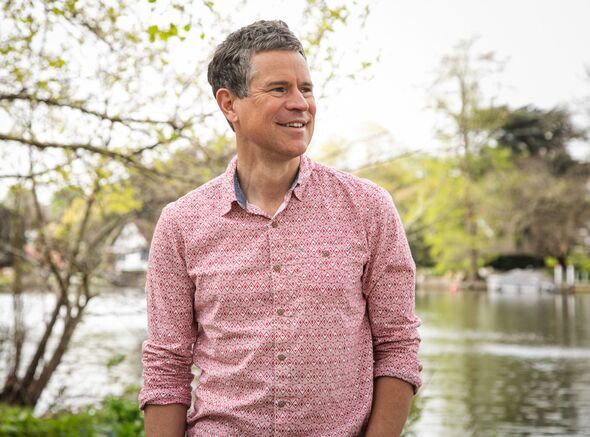
- Dr Mark Williamson is the CEO of Action for Happiness and author of Make Life Happier (Bonnier Books, £16.99)
-
As Netanyahu spotlights Israel's ties to UAE, its rulers prefer to be discreet

-
PGIM India Mutual Fund restricts subscription in its 3 international funds

-
TCS aims to be world's largest AI tech firm; 130 top AI clients onboarded: CEO Krithivasan
-
Mphasis playing host to a high-stakes game of executive musical chairs

-
Age-old home remedy to improve skin complexion: Miracle of gram flour, curd and turmeric