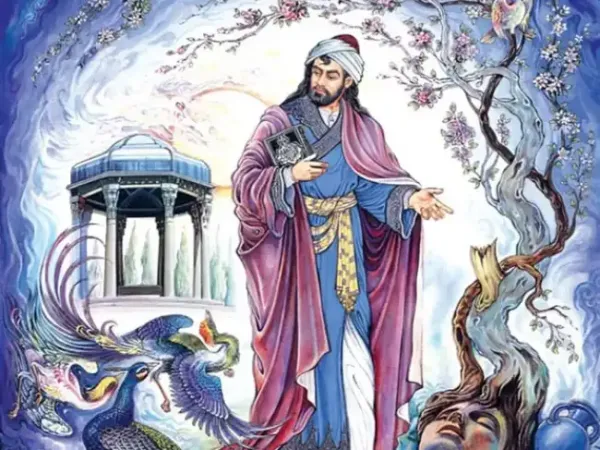
Shams-ud-din Muhammad Hafez, better known as Hafez Shirazi, was one of the celebrated 14th-century Persian poets. Even today, he remains one of literature’s most enduring voices, revered far beyond the borders of Iran for his profound verses on love, spirituality, and human nature. His timeless poetry transcended cultures and generations, earning admiration from iconic thinkers like Ralph Waldo Emerson and Johann Wolfgang von Goethe, who regarded Hafez as an extraordinary creative force. Influential figures such as Friedrich Nietzsche and Arthur Conan Doyle also found inspiration in his work.
Among Hafez’s numerous poems, one that deserves a special mention is this: ‘Run from anyone likely to put a sharp knife into your sacred, tender, beautiful heart'. The full verse goes like this, ‘Run, my dear, from anything that may not strengthen your precious budding wings. Run like hell, my dear, from anyone likely to put a sharp knife into the sacred, tender vision of your beautiful heart.’
Quote of the day by Hafez Shirazi: Protecting emotional purity
Hafez Shirazi’s quote of the day emphasizes the importance of guarding one’s emotional well-being from those who may exploit our vulnerability or cause deep personal pain. His wisdom suggests that the heart, with its capacity for love, trust, and compassion, is precious and should not be carelessly handed over to toxic individuals. In real life, this resonates strongly in relationships, friendships, and social circles where emotional manipulation or betrayal can leave lasting scars. By recognizing unhealthy influences early and prioritizing self-protection, individuals can preserve their peace, dignity, and emotional health.
Hafez Shirazi quote of the day: Self-worth over harmful bonds
Quote of the day by Hafez Shirazi also reflects on the necessity of walking away from connections that threaten to ruin your inner peace and personal value. In modern life, people often remain in damaging relationships out of fear, attachment, or hope that the person they love will eventually change. But Hafez’s message serves as a reminder that protecting one’s soul sometimes requires distance from those who do not honour or care for our heart. Self-respect and healthy boundaries allow individuals to cultivate stronger emotional resilience. True fulfillment often comes not from enduring pain, but from preserving the beauty within through wise choices.
More about Hafez Shirazi
Hafez, born in 1325 or 1326 in Shiraz, Iran, became one of the most celebrated literary figures in Persian history. He received a strong classical religious education, studied theology deeply, taught Qur’anic subjects, and wrote interpretations of important religious texts, as per Britannica. As a respected court poet, Hafez enjoyed support from several rulers in Shiraz during his lifetime.
Around 1368 or 1369, Hafez lost favor at court and remained away from royal support for nearly two decades before regaining his position shortly before his death. His poetry often reflected real historical events, personal experiences, and vivid details of daily life in Shiraz. A major influence on his worldview was Sufism, the mystical branch of Islam focused on spiritual devotion and seeking unity with the ultimate truth.
Hafez became especially known for mastering the ghazal, a poetic form made up of short lyrical verses centered on emotional depth, symbolism, and spiritual themes rather than strict logical progression. Traditional themes of love and wine in his poetry often carried deeper mystical meanings connected to freedom, ecstasy, and divine connection. He also minimized excessive praise of rulers, allowing his philosophical and spiritual reflections to take center stage.
The widespread admiration for Hafez across Persian-speaking cultures comes largely from his clear, musical, and relatable language. His poetry avoided unnecessary complexity while using familiar imagery and everyday expressions that deeply resonated with readers. Hafez is best remembered for his Divan, a celebrated collection of his works, which has been translated into English multiple times by scholars such as Gertrude Bell and H. Wilberforce Clarke.
Among Hafez’s numerous poems, one that deserves a special mention is this: ‘Run from anyone likely to put a sharp knife into your sacred, tender, beautiful heart'. The full verse goes like this, ‘Run, my dear, from anything that may not strengthen your precious budding wings. Run like hell, my dear, from anyone likely to put a sharp knife into the sacred, tender vision of your beautiful heart.’
Quote of the day by Hafez Shirazi: Protecting emotional purity
Hafez Shirazi’s quote of the day emphasizes the importance of guarding one’s emotional well-being from those who may exploit our vulnerability or cause deep personal pain. His wisdom suggests that the heart, with its capacity for love, trust, and compassion, is precious and should not be carelessly handed over to toxic individuals. In real life, this resonates strongly in relationships, friendships, and social circles where emotional manipulation or betrayal can leave lasting scars. By recognizing unhealthy influences early and prioritizing self-protection, individuals can preserve their peace, dignity, and emotional health.
Hafez Shirazi quote of the day: Self-worth over harmful bonds
Quote of the day by Hafez Shirazi also reflects on the necessity of walking away from connections that threaten to ruin your inner peace and personal value. In modern life, people often remain in damaging relationships out of fear, attachment, or hope that the person they love will eventually change. But Hafez’s message serves as a reminder that protecting one’s soul sometimes requires distance from those who do not honour or care for our heart. Self-respect and healthy boundaries allow individuals to cultivate stronger emotional resilience. True fulfillment often comes not from enduring pain, but from preserving the beauty within through wise choices.
More about Hafez Shirazi
Hafez, born in 1325 or 1326 in Shiraz, Iran, became one of the most celebrated literary figures in Persian history. He received a strong classical religious education, studied theology deeply, taught Qur’anic subjects, and wrote interpretations of important religious texts, as per Britannica. As a respected court poet, Hafez enjoyed support from several rulers in Shiraz during his lifetime.
Around 1368 or 1369, Hafez lost favor at court and remained away from royal support for nearly two decades before regaining his position shortly before his death. His poetry often reflected real historical events, personal experiences, and vivid details of daily life in Shiraz. A major influence on his worldview was Sufism, the mystical branch of Islam focused on spiritual devotion and seeking unity with the ultimate truth.
Hafez became especially known for mastering the ghazal, a poetic form made up of short lyrical verses centered on emotional depth, symbolism, and spiritual themes rather than strict logical progression. Traditional themes of love and wine in his poetry often carried deeper mystical meanings connected to freedom, ecstasy, and divine connection. He also minimized excessive praise of rulers, allowing his philosophical and spiritual reflections to take center stage.
The widespread admiration for Hafez across Persian-speaking cultures comes largely from his clear, musical, and relatable language. His poetry avoided unnecessary complexity while using familiar imagery and everyday expressions that deeply resonated with readers. Hafez is best remembered for his Divan, a celebrated collection of his works, which has been translated into English multiple times by scholars such as Gertrude Bell and H. Wilberforce Clarke.