Is Vaginal Bleeding in a Newborn Girl Child Normal?
Pregatips | May 14, 2026 3:39 PM CST
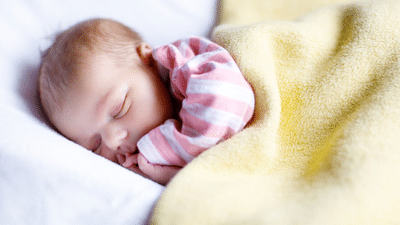
The most common cause of vaginal bleeding in newborns is Neonatal Uterine Bleeding (NUB).
During pregnancy, maternal hormones (oestrogen, progesterone, etc.) pass through the placenta to the baby. Post delivery, the sudden withdrawal of these hormones can cause light pink or red coloured spotting to emulate a “mini-period” or “false menses” in newborns.
This is a normal physiological occurrence reported in around 5% of newborns. Since most newborns are progesterone resistant, the withdrawal of hormones does not cause NUB in them.
NUB is mostly observed around the 3rd-5th day of life and resolves by itself by the 10th day of life.
Usually, NUB is considered harmless and does not require any medical treatment. But monitor the nature, frequency and amount of bleeding closely.
Other Causes of Vaginal Bleeding in Newborn Girls
Apart from NUB, vaginal bleeding can also be caused by other causes that might need medical attention:
Risk Factors Linked to Genital Bleeding in Newborns
The presence of vaginal bleeding in a newborn baby girl often indicates that the baby went through distress (didn't receive enough oxygen) in the womb. This helps in connecting certain maternal conditions as a precursor that can cause vaginal bleeding in the newborn. Here are a few conditions to look out for:
Due to a lack of awareness, a lot of parents can get frightened when they first notice vaginal bleeding in their baby. Usually, light spotting lasting 2-3 days within the first 10 days of life is considered normal, given there are no other signs or possible distress in the baby.
But you should definitely seek medical attention if you notice any of these signs:
The Link Between NUB and Endometriosis
Recent studies have observed a pattern of babies with NUB experiencing endometriosis later in life.
A plausible explanation for this can be that during the endometrial shedding in case of NUB, some endometrial cells might travel to the pelvic cavity via retrograde flow and stay inactive till the first period. The first period might activate these cells, causing endometriosis.
However, this is just a theory as of now, and more research is needed in this area to fully understand the link between these two.
Whether you’re pregnant, a new mom, or navigating postpartum, you don’t have to do it alone. Join our support group to connect, share, and support one another.
FAQs on Is Vaginal Bleeding in a Newborn Girl Child Normal?I noticed blood in my baby girl's diaper. Is this normal?
Yes, usually light pink or red coloured spotting in the diaper within the first 10 days of life post delivery is considered normal. If the bleeding occurs outside of this timeframe or is heavy, you should consult your paediatrician.
What does normal vaginal bleeding look like in a newborn?
Light pink or red coloured spotting, usually mixed with thick, clear or greyish-white discharge, is considered normal in case of NUB. The discharge is odourless and resolves on its own within 2-3 days.
My newborn is experiencing NUB. Does this mean she has endometriosis?
No, generally NUB is considered harmless. It is a one-time occurrence due to hormone withdrawal after birth. The correlation of NUB to endometriosis is still being studied, and you don't need to worry about it.
During pregnancy, maternal hormones (oestrogen, progesterone, etc.) pass through the placenta to the baby. Post delivery, the sudden withdrawal of these hormones can cause light pink or red coloured spotting to emulate a “mini-period” or “false menses” in newborns.
This is a normal physiological occurrence reported in around 5% of newborns. Since most newborns are progesterone resistant, the withdrawal of hormones does not cause NUB in them.
NUB is mostly observed around the 3rd-5th day of life and resolves by itself by the 10th day of life.
Usually, NUB is considered harmless and does not require any medical treatment. But monitor the nature, frequency and amount of bleeding closely.
Other Causes of Vaginal Bleeding in Newborn Girls
Apart from NUB, vaginal bleeding can also be caused by other causes that might need medical attention:
- Foreign Body: Sometimes foreign bodies like toilet paper, a small plastic cap or a toy can get stuck while cleaning the baby or during playtime. This can result in irritation, bleeding and even foul-smelling discharge from the vagina.
- Accidental-Trauma: Most commonly seen is a straddle injury when the baby girl falls onto an object (playground equipment or bicycle bars) and hits her genitals.
- Non-Accidental Trauma: Sometimes vaginal bleeding is caused by sexual abuse.
- Infections: The labia minora in infants are usually small and do not provide enough protection to the vagina. Due to this, even mild scratching can lead to infection of the vulva or vagina.
- Skin Conditions: Psoriasis (red patches, sometimes scaly in the diaper region), eczema (dry, scaly, itchy patches) and lichen sclerosus (an autoimmune condition causing white, itchy patches in the genital area).
- Tumours: Ovarian, vaginal or vulvar tumours can also present as vaginal bleeding.
- Congenital Anomalies: Imperforate hymen (the hymen completely covers the opening of the vagina) and transverse vaginal septum (the vagina is divided into upper and lower parts by a horizontal layer of extra tissue in the middle) cause the normal mucous discharge of the vagina to collect as the vaginal opening is blocked. This creates a bulge that can sometimes be bloody.
- Uterine Anomalies: Uterine didelphysis a condition where a baby is born with two uteri and two cervixes. As the baby has double the amount of endometrial tissue, the hormone withdrawal post-delivery can cause heavy vaginal bleeding.
Risk Factors Linked to Genital Bleeding in Newborns
The presence of vaginal bleeding in a newborn baby girl often indicates that the baby went through distress (didn't receive enough oxygen) in the womb. This helps in connecting certain maternal conditions as a precursor that can cause vaginal bleeding in the newborn. Here are a few conditions to look out for:
- Preeclampsia ( high blood pressure and organ damage in pregnant women).
- Low birth weight of the baby.
- Younger maternal age (for example, a teen pregnancy).
- Prolonged pregnancy (>40 weeks).
- Foetal-maternal blood incompatibility (Rh -ve mother carries an Rh +ve baby).
Due to a lack of awareness, a lot of parents can get frightened when they first notice vaginal bleeding in their baby. Usually, light spotting lasting 2-3 days within the first 10 days of life is considered normal, given there are no other signs or possible distress in the baby.
But you should definitely seek medical attention if you notice any of these signs:
- Heavy bleeding or if the bleeding lasts more than 3-4 days.
- Any history or signs of visible injury or bruising on the baby's genitals.
- Bleeding accompanied by swelling, redness or foul-smelling discharge.
- If the baby has a fever or seems irritated or unusually drowsy, along with vaginal bleeding.
- Noticeable red, scaly or white patches on the genital area.
The Link Between NUB and Endometriosis
Recent studies have observed a pattern of babies with NUB experiencing endometriosis later in life.
A plausible explanation for this can be that during the endometrial shedding in case of NUB, some endometrial cells might travel to the pelvic cavity via retrograde flow and stay inactive till the first period. The first period might activate these cells, causing endometriosis.
However, this is just a theory as of now, and more research is needed in this area to fully understand the link between these two.
Whether you’re pregnant, a new mom, or navigating postpartum, you don’t have to do it alone. Join our support group to connect, share, and support one another.
FAQs on Is Vaginal Bleeding in a Newborn Girl Child Normal?
Yes, usually light pink or red coloured spotting in the diaper within the first 10 days of life post delivery is considered normal. If the bleeding occurs outside of this timeframe or is heavy, you should consult your paediatrician.
Light pink or red coloured spotting, usually mixed with thick, clear or greyish-white discharge, is considered normal in case of NUB. The discharge is odourless and resolves on its own within 2-3 days.
No, generally NUB is considered harmless. It is a one-time occurrence due to hormone withdrawal after birth. The correlation of NUB to endometriosis is still being studied, and you don't need to worry about it.
READ NEXT
-
Will Ramayana Suffer The Fate Of Adipurush? Producer Namit Malhotra Finally Responds

-
Two women held for running prostitution racket from rented houses in Bengaluru; 3 women rescued

-
Alum will remove even the oldest freckles, just know the right way to use it

-
NTPC Recruitment 2026: Applications Open for 25 Engineer Posts, Check Eligibility and Apply Online

-
Princess Kate given sweet nickname as Italy tour underway