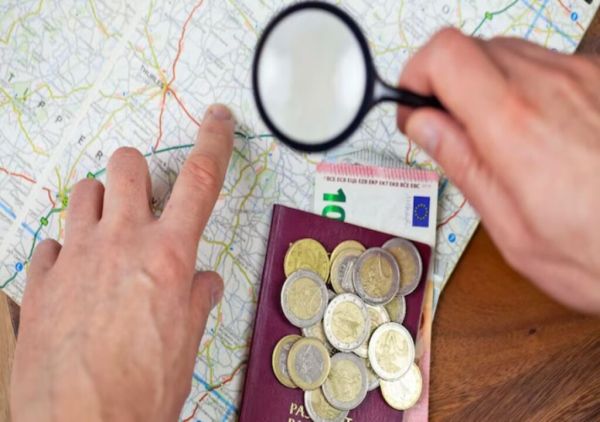
New Delhi: A Europe honeymoon, a Thailand getaway or a Dubai shopping spree — these are increasingly common aspirations for Indian travellers. With rising incomes and easier access to international travel, overseas holidays are no longer limited to a select few. They have become celebrations of milestones, symbols of success and long-awaited rewards for many families.
However, behind the excitement of international travel lies an economic dimension that often goes unnoticed. While individual trips may seem insignificant in isolation, their cumulative impact can influence India’s broader financial landscape, particularly the value of the rupee.
The hidden economics of overseas travel
Every international trip involves converting Indian rupees into foreign currencies such as dollars, euros or pounds. This process, repeated across millions of travellers, increases the overall demand for foreign exchange.
Each airline ticket booked, hotel reserved or meal paid for abroad contributes to the outflow of foreign currency. While one traveller’s expenses may appear modest, lakhs of Indians travelling abroad simultaneously can create a substantial demand for dollars.
Financial experts note that this growing trend plays a role in India’s current account dynamics. Siddharth Maurya, Founder and Managing Director of Vibhavangal Anukulakara Pvt. Ltd., explains that outbound travel adds to foreign exchange demand, particularly during periods of global economic uncertainty.
He emphasises that while travel alone may not directly weaken the rupee, it becomes a contributing factor when combined with other pressures such as rising import costs and global financial instability.
Why the concern is rising now
The timing of this discussion is significant. Global crude oil prices have surged past $105 per barrel, increasing India’s import bill. As a country that imports over 80% of its oil requirements, India relies heavily on dollar payments for energy needs.
This means that when oil prices rise, the demand for dollars increases sharply. At the same time, outbound tourism further adds to this demand, creating additional pressure on the rupee.
It is in this context that Prime Minister Narendra Modi recently urged citizens to avoid non-essential foreign travel for a year. While the statement may appear unusual at first glance, it reflects concerns about managing foreign exchange reserves and maintaining economic stability.
Experts suggest that such appeals are less about restricting personal travel choices and more about encouraging economic prudence during uncertain times.
Overseas travel: No longer a luxury
The profile of Indian travellers has changed significantly over the past decade. International travel is no longer restricted to high-income groups. Today, middle-class families are increasingly opting for holidays in destinations like Bali, Singapore and Turkey.
Ankit Bagadia, Associate Director at BankBazaar, describes this as a structural shift in consumption patterns. According to him, the scale of outbound travel has expanded rapidly, turning what was once a niche activity into a mainstream trend.
Every forex card recharge, international transaction or overseas booking involves selling rupees to purchase foreign currency. As more Indians travel abroad in record numbers, the cumulative outflow of dollars becomes economically relevant.
Over time, this can contribute to widening the current account deficit and exert pressure on foreign exchange reserves.
The irony of a weakening rupee
There is also an unintended consequence of this growing travel trend. A weaker rupee makes international travel more expensive.
When the rupee depreciates against the dollar, costs rise across the board — from flight tickets and hotel bookings to dining and shopping abroad. Travel companies often adjust their pricing in response to exchange rate fluctuations, making packages costlier.
In effect, the surge in overseas travel today could make future foreign holidays less affordable. Travellers may find themselves paying significantly more for the same experiences if currency pressures persist.
A smarter approach to travel
Experts do not advocate stopping international travel altogether. Instead, they suggest adopting a more strategic approach, especially during periods of economic uncertainty.
Travellers can consider choosing destinations where the rupee holds relatively stronger value, locking in exchange rates in advance and minimising forex- charges on international transactions.
At the same time, domestic tourism presents a viable alternative. Opting for destinations within India — such as Kerala, Kashmir or Rajasthan — not only reduces foreign exchange outflow but also supports local businesses, hospitality sectors and employment.
Promoting domestic travel can act as a stabilising factor for the economy while still offering rich and diverse travel experiences.
Small choices, big impact
A single international trip may not significantly impact the rupee. However, when millions of such trips occur simultaneously, especially during periods of high import bills and global uncertainty, the cumulative effect becomes more pronounced.
Economic trends are often shaped by collective behaviour. Each airline ticket, hotel booking and foreign transaction contributes incrementally to the broader financial picture.
The Prime Minister’s appeal highlights this interconnectedness — where individual spending decisions, though personal in nature, can collectively influence the nation’s economic stability.
As outbound travel continues to grow, balancing aspirations with economic awareness may become increasingly important. In the long run, mindful spending choices can help ensure both personal financial health and macroeconomic resilience.
-
Never took a wicket in T20, gets beaten fiercely, who is Saurabh Dubey whom KKR gave a chance in place of Varun Chakraborty

-
Will bring home sweet and juicy mangoes every time! 3 smart tips to remember while buying
-
Top 3 Qualities of Integrated Electrical Services That Matter

-
Ghee is considered beneficial in stomach problems! Many celebrities also consume it on an empty stomach – News Himachali News Himachali

-
After Amul, now Mother Dairy also increased the prices of milk, milk packet will become so expensive from May 14