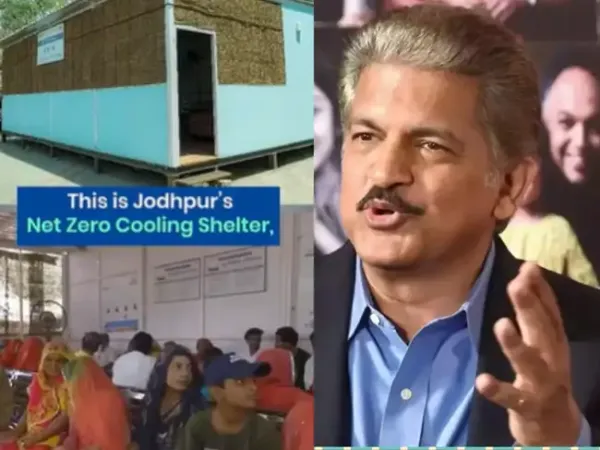
India’s summers are getting tougher every year, and cities are struggling to keep people safe during heatwaves. In the middle of all this, Jodhpur has quietly built something refreshingly simple, a net-zero cooling shelter that actually works without heavy electricity use or expensive air-conditioning.
Even business leader Anand Mahindra recently highlighted the idea on X, praising its simplicity and the role of empathy in urban planning. And honestly, that feels like the right lens to look at it through.
“Simple. Unglamorous. No new technology. But the power behind it is empathy. That’s the fuel that should drive urban planning, especially as adapting to climate change becomes one of our greatest civic priorities,” he wrote.
He also applauded the efforts of Mahila Housing Trust and Jodhpur Nagar Nigam for developing the cooling shelter under the city’s Heat Action Plan.
What Is the Jodhpur Cooling Shelter?
The Jodhpur net-zero cooling shelter is basically a public resting space designed to offer relief from extreme heat, especially for those who spend long hours outdoors like delivery workers, street vendors, daily wage labourers, and elderly citizens.
Inside, temperatures can drop by up to 8°C compared to outside, and the best part? There’s no traditional AC system guzzling electricity.
Instead, it’s all about smart, low-tech design working with nature.
How It Cools Without Air Conditioning
This isn’t flashy tech, it’s clever environmental design. The shelter uses a mix of passive cooling methods and renewable energy to stay comfortable:
More Than Just a Cool Room, It’s a Heat Relief Hub
This isn’t just a shady bench or a waiting area. The shelter is designed as a proper relief point during extreme heat conditions.
Inside, around 40–45 people can rest at a time. Facilities include:
Built Under the Heat Action Plan
The project has been developed under the city’s Heat Action Plan by Mahila Housing Trust and Jodhpur Nagar Nigam.
What makes it stand out isn’t just the design, but the intent behind it, treating extreme heat as a serious public health issue rather than just “summer discomfort”.
As climate change pushes temperatures higher each year, this kind of infrastructure becomes less of a luxury and more of a necessity.
Why This Matters for Indian Cities
Urban India is warming fast, and millions of people don’t have the option to stay indoors during peak heat hours. That’s why solutions like this matter.
They are:
This is the kind of practical innovation that doesn’t make much noise but quietly saves lives.
Should Every Indian City Have Cooling Shelters Like This?
That’s the big question now.
If heatwaves are becoming the new normal, then shaded, cooled public shelters might need to become as common as bus stops. Jodhpur has already shown what’s possible when design, community thinking, and empathy come together.
The rest of urban India might want to take notes.
Even business leader Anand Mahindra recently highlighted the idea on X, praising its simplicity and the role of empathy in urban planning. And honestly, that feels like the right lens to look at it through.
“Simple. Unglamorous. No new technology. But the power behind it is empathy. That’s the fuel that should drive urban planning, especially as adapting to climate change becomes one of our greatest civic priorities,” he wrote.
He also applauded the efforts of Mahila Housing Trust and Jodhpur Nagar Nigam for developing the cooling shelter under the city’s Heat Action Plan.
What Is the Jodhpur Cooling Shelter?
The Jodhpur net-zero cooling shelter is basically a public resting space designed to offer relief from extreme heat, especially for those who spend long hours outdoors like delivery workers, street vendors, daily wage labourers, and elderly citizens.Inside, temperatures can drop by up to 8°C compared to outside, and the best part? There’s no traditional AC system guzzling electricity.
Instead, it’s all about smart, low-tech design working with nature.
How It Cools Without Air Conditioning
This isn’t flashy tech, it’s clever environmental design. The shelter uses a mix of passive cooling methods and renewable energy to stay comfortable:- Solar panels power fans, lighting, and a light misting system
- A solar-reflective roof coating helps bounce heat away instead of absorbing it
- Strong insulation layers stop heat from building up inside
- Traditional khus (vetiver) curtains, kept damp, cool the air naturally as it passes through
- A wind tower system pushes hot air out while drawing cooler air in
More Than Just a Cool Room, It’s a Heat Relief Hub
This isn’t just a shady bench or a waiting area. The shelter is designed as a proper relief point during extreme heat conditions.Inside, around 40–45 people can rest at a time. Facilities include:
- Seating and shaded resting space
- Cold drinking water
- ORS (oral rehydration solution)
- Basic first aid
Built Under the Heat Action Plan
The project has been developed under the city’s Heat Action Plan by Mahila Housing Trust and Jodhpur Nagar Nigam.What makes it stand out isn’t just the design, but the intent behind it, treating extreme heat as a serious public health issue rather than just “summer discomfort”.
As climate change pushes temperatures higher each year, this kind of infrastructure becomes less of a luxury and more of a necessity.
Why This Matters for Indian Cities
Urban India is warming fast, and millions of people don’t have the option to stay indoors during peak heat hours. That’s why solutions like this matter.They are:
- Low-cost compared to conventional cooling systems
- Energy-efficient and climate-friendly
- Easy to replicate in other cities
- Designed for the people most exposed to heat
This is the kind of practical innovation that doesn’t make much noise but quietly saves lives.
Should Every Indian City Have Cooling Shelters Like This?
That’s the big question now.If heatwaves are becoming the new normal, then shaded, cooled public shelters might need to become as common as bus stops. Jodhpur has already shown what’s possible when design, community thinking, and empathy come together.
The rest of urban India might want to take notes.