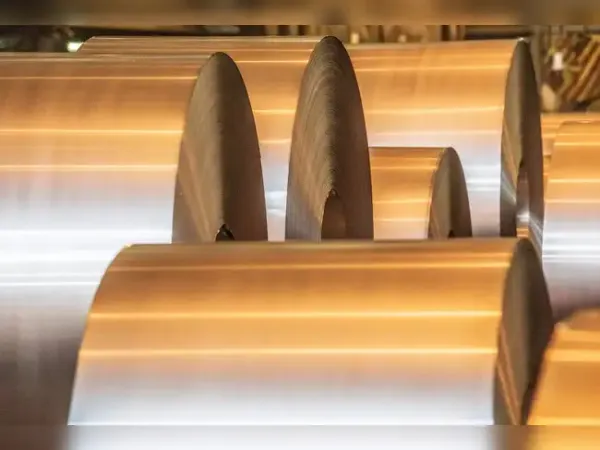
Copper prices are climbing at a pace that is forcing global markets to rethink the future of industrial commodities. What once moved largely on construction demand and manufacturing cycles is now being reshaped by artificial intelligence, geopolitical conflict, electrification, and deep structural shortages. This week, London Metal Exchange copper prices surged above $14,000 per ton while COMEX copper futures crossed $6.50 per pound, extending one of the strongest commodity rallies in recent years.
The speed of the move has caught investors’ attention. Since tensions escalated around Iran and the Strait of Hormuz, copper prices have already jumped nearly 8%, while year-to-date gains are approaching 15%. Yet traders increasingly believe this rally is not simply another short-term commodity spike. Instead, markets are beginning to price in a world where copper becomes one of the most strategically important materials of the AI era.
The United States Copper Index Fund (CPER) touched a new all-time high of $40.46 on Tuesday, up 15.7% since January and nearly 10% in just the past month.
Copper futures are now up roughly 75% since October 2023, a surge that tells a story not just about one metal, but about the collision of a new technological era with decades of underinvestment in the ground beneath us. What is driving copper prices higher today is not a single event or headline — it is a convergence of structural forces that, once understood, changes how you see the global economy entirely.
Sulfuric acid is an indispensable auxiliary material in copper smelting, used in heap leaching to extract copper from ore. Nearly half of the world's seaborne sulfuric acid supply originates from the Middle East, where sulfur — a byproduct of petroleum refining — is produced in abundance by Iran, Saudi Arabia, and the UAE.
When Hormuz shipping disruptions proved far more prolonged than markets anticipated, the global sulfuric acid supply chain fractured. Its highly corrosive nature makes land-based alternatives impractical at scale. The supply-demand gap widened rapidly.
Sulfur prices broke through $1,200 per metric ton, a record high confirmed in Mosaic's latest quarterly report.
China, facing its own internal supply pressures, tightened restrictions on sulfuric acid exports beginning in May, amplifying the crunch further.
Chilean copper producers, who had already seen output fall around 6% in the first quarter of 2026 compared to a year earlier, felt the full weight of the shortage before its impact was even fully priced in.
Copper futures responded with urgency — and rightly so. Marex analyst Edward Meir noted that the duration of Hormuz transit restrictions exceeded what the market had modeled, forcing traders to reprice both near-term supply risk and longer-term capacity assumptions for one of the world's most essential industrial metals.
High-purity copper is the connective tissue of AI computing infrastructure. It runs through power supply modules and signal transmission systems inside AI servers. It forms the high-speed interconnect cables that link tens of thousands of processors inside hyperscale data centers. It sits inside liquid cooling systems that prevent those processors from melting under the heat loads that large language model training generates.
There is no near-term substitute material that matches copper's combination of electrical conductivity, thermal performance, and manufacturability at scale. A single large-scale data center can consume thousands of tons of copper. The most ambitious supercomputing facilities exceed 10,000 tons in copper requirements alone.
As global technology companies race to build the infrastructure that will support the next generation of AI workloads, the pace of data center construction has accelerated dramatically. Microsoft, Google, Amazon, and Meta have collectively announced hundreds of billions of dollars in capital expenditure targeting AI infrastructure.
Each new facility locks in years of copper demand. Analysts at ING noted that the price correlation between copper and U.S. technology stocks has strengthened considerably, a reflection of the market's growing understanding that copper is, in a meaningful sense, becoming an AI commodity.
Copper futures are not just reacting to geopolitics — they are pricing in a structural demand regime that is unlike anything the copper market has encountered before.
Freeport-McMoRan's subsidiary confirmed that a full restart has been pushed to early 2028 due to additional infrastructure requirements. The company revised its 2026 targets to just 65% of capacity in the second half of the year, rising to 80% by mid-2027. Although Freeport-McMoRan later reiterated its official guidance of a late-2027 restart, the market absorbed the news as confirmation of what it already suspected: new copper supply is slower, harder, and more expensive to bring online than the demand curve requires.
Jacob White of Sprott Asset Management put the structural constraint plainly — the copper industry was already grappling with declining ore grades before the current crisis emerged. Lower copper content per ton of ore means more rock must be moved, more energy must be consumed, and more capital must be deployed to produce the same pound of refined copper.
Layer onto that the reality of long mine development cycles, increasingly complex permitting processes, and geographic concentration of known copper deposits, and the supply side of the copper futures equation looks constrained for years, not months.
Scotiabank mining analyst Orest Wowkodaw revised his copper market outlook sharply in recent weeks, projecting a global supply deficit of 350,000 tons by 2027 — a dramatic shift from an expectation of near-balance just two months prior. "This truly constitutes a 'perfect storm' for copper prices," Wowkodaw said, adding that the current strength of global copper demand is unprecedented and provides a solid foundation for a sustained higher price environment.
The CPER ETF, which tracks COMEX copper futures, has become a vehicle of choice for investors seeking exposure to copper prices without directly managing futures contracts.
With $735.9 million in assets under management and an average daily volume of 727,000 shares, CPER's recent surge to record highs reflects both institutional conviction and growing retail awareness of the copper story.
Billionaire investor Robert Friedland has warned publicly about the Hormuz disruption's ripple effect through critical industrial supply chains, lending further credibility to the thesis that copper prices are not in a temporary speculative bubble but are responding to genuine, durable imbalances.
China's export data added another layer to the demand picture. Chinese exports surged 14% year-over-year in April, driven partly by clean-tech shipments and industrial components with heavy copper content. The rebound in Chinese manufacturing activity — with PMI reaching a five-year high — has driven a recovery in physical copper demand even as the broader global economy navigates elevated interest rates and equity market uncertainty.
The S&P 500 fell 0.43% on Wednesday, the Dow lost 0.55%, and the NASDAQ dropped 0.66%. Copper gained. That divergence is a signal worth reading carefully.
The ING commodities strategist Ewa Manthey noted that outside the United States, copper inventories in other regions are at low levels, making copper prices extremely sensitive to any incremental demand shock. When inventories are thin, the buffer against surprise is gone. Every data center contract, every manufacturing uptick, every delayed mine restart moves the price needle in real time.
What is unfolding in the copper futures market is the physical economy catching up with the promises that technology companies have made to their shareholders and their users. The AI revolution requires electrons, and electrons require copper.
The data centers being built today will demand copper for their entire operational lifetimes — in their wiring, in their cooling, in their constant expansion. Meanwhile, the mines that must supply that copper face geological limits, political barriers, and now an acute chemical inputs crisis that has no easy or fast resolution.
The "higher for longer" scenario for copper prices is not a slogan — it is a supply and demand arithmetic problem, and the numbers do not balance in copper's favor anytime soon.
The speed of the move has caught investors’ attention. Since tensions escalated around Iran and the Strait of Hormuz, copper prices have already jumped nearly 8%, while year-to-date gains are approaching 15%. Yet traders increasingly believe this rally is not simply another short-term commodity spike. Instead, markets are beginning to price in a world where copper becomes one of the most strategically important materials of the AI era.
The United States Copper Index Fund (CPER) touched a new all-time high of $40.46 on Tuesday, up 15.7% since January and nearly 10% in just the past month.
Copper futures are now up roughly 75% since October 2023, a surge that tells a story not just about one metal, but about the collision of a new technological era with decades of underinvestment in the ground beneath us. What is driving copper prices higher today is not a single event or headline — it is a convergence of structural forces that, once understood, changes how you see the global economy entirely.
Why Copper Futures Are Surging to Record Highs in 2026
The copper futures rally of 2026 has its roots in a crisis that most investors were watching for entirely different reasons. When conflict erupted involving Iran, the Strait of Hormuz — one of the world's most critical maritime chokepoints — effectively closed to the seaborne transport of sulfuric acid. That detail might sound obscure, but it sits at the heart of why copper prices are at record levels today.Sulfuric acid is an indispensable auxiliary material in copper smelting, used in heap leaching to extract copper from ore. Nearly half of the world's seaborne sulfuric acid supply originates from the Middle East, where sulfur — a byproduct of petroleum refining — is produced in abundance by Iran, Saudi Arabia, and the UAE.
When Hormuz shipping disruptions proved far more prolonged than markets anticipated, the global sulfuric acid supply chain fractured. Its highly corrosive nature makes land-based alternatives impractical at scale. The supply-demand gap widened rapidly.
Sulfur prices broke through $1,200 per metric ton, a record high confirmed in Mosaic's latest quarterly report.
China, facing its own internal supply pressures, tightened restrictions on sulfuric acid exports beginning in May, amplifying the crunch further.
Chilean copper producers, who had already seen output fall around 6% in the first quarter of 2026 compared to a year earlier, felt the full weight of the shortage before its impact was even fully priced in.
Copper futures responded with urgency — and rightly so. Marex analyst Edward Meir noted that the duration of Hormuz transit restrictions exceeded what the market had modeled, forcing traders to reprice both near-term supply risk and longer-term capacity assumptions for one of the world's most essential industrial metals.
The AI Infrastructure Boom Is Rewriting Copper Demand Forever
Here is where the copper futures story becomes something more than a supply disruption trade. The demand side of this equation has been quietly transforming for the past two years, and artificial intelligence is the engine behind it.High-purity copper is the connective tissue of AI computing infrastructure. It runs through power supply modules and signal transmission systems inside AI servers. It forms the high-speed interconnect cables that link tens of thousands of processors inside hyperscale data centers. It sits inside liquid cooling systems that prevent those processors from melting under the heat loads that large language model training generates.
There is no near-term substitute material that matches copper's combination of electrical conductivity, thermal performance, and manufacturability at scale. A single large-scale data center can consume thousands of tons of copper. The most ambitious supercomputing facilities exceed 10,000 tons in copper requirements alone.
As global technology companies race to build the infrastructure that will support the next generation of AI workloads, the pace of data center construction has accelerated dramatically. Microsoft, Google, Amazon, and Meta have collectively announced hundreds of billions of dollars in capital expenditure targeting AI infrastructure.
Each new facility locks in years of copper demand. Analysts at ING noted that the price correlation between copper and U.S. technology stocks has strengthened considerably, a reflection of the market's growing understanding that copper is, in a meaningful sense, becoming an AI commodity.
Copper futures are not just reacting to geopolitics — they are pricing in a structural demand regime that is unlike anything the copper market has encountered before.
The Grasberg Delay and the Mine Supply Wall Copper Cannot Climb Over
Even without the sulfuric acid crisis, copper futures faced a formidable supply problem in 2026. The Grasberg copper mine in Indonesia — the world's second-largest by output — has been operating below full capacity following a September landslide.Freeport-McMoRan's subsidiary confirmed that a full restart has been pushed to early 2028 due to additional infrastructure requirements. The company revised its 2026 targets to just 65% of capacity in the second half of the year, rising to 80% by mid-2027. Although Freeport-McMoRan later reiterated its official guidance of a late-2027 restart, the market absorbed the news as confirmation of what it already suspected: new copper supply is slower, harder, and more expensive to bring online than the demand curve requires.
Jacob White of Sprott Asset Management put the structural constraint plainly — the copper industry was already grappling with declining ore grades before the current crisis emerged. Lower copper content per ton of ore means more rock must be moved, more energy must be consumed, and more capital must be deployed to produce the same pound of refined copper.
Layer onto that the reality of long mine development cycles, increasingly complex permitting processes, and geographic concentration of known copper deposits, and the supply side of the copper futures equation looks constrained for years, not months.
Scotiabank mining analyst Orest Wowkodaw revised his copper market outlook sharply in recent weeks, projecting a global supply deficit of 350,000 tons by 2027 — a dramatic shift from an expectation of near-balance just two months prior. "This truly constitutes a 'perfect storm' for copper prices," Wowkodaw said, adding that the current strength of global copper demand is unprecedented and provides a solid foundation for a sustained higher price environment.
What the Options Market and Smart Money Are Saying About Copper Prices
When professional capital shifts positioning in the derivatives market, it tends to know something. Bart Melek, Head of Global Commodity Strategy at TD Securities, flagged a surge in options activity, with substantial capital flowing into derivative instruments that profit from further copper price appreciation. Investors are not just reacting to today's supply shock — they are positioning for a multi-year structural deficit.The CPER ETF, which tracks COMEX copper futures, has become a vehicle of choice for investors seeking exposure to copper prices without directly managing futures contracts.
With $735.9 million in assets under management and an average daily volume of 727,000 shares, CPER's recent surge to record highs reflects both institutional conviction and growing retail awareness of the copper story.
Billionaire investor Robert Friedland has warned publicly about the Hormuz disruption's ripple effect through critical industrial supply chains, lending further credibility to the thesis that copper prices are not in a temporary speculative bubble but are responding to genuine, durable imbalances.
China's export data added another layer to the demand picture. Chinese exports surged 14% year-over-year in April, driven partly by clean-tech shipments and industrial components with heavy copper content. The rebound in Chinese manufacturing activity — with PMI reaching a five-year high — has driven a recovery in physical copper demand even as the broader global economy navigates elevated interest rates and equity market uncertainty.
The S&P 500 fell 0.43% on Wednesday, the Dow lost 0.55%, and the NASDAQ dropped 0.66%. Copper gained. That divergence is a signal worth reading carefully.
The ING commodities strategist Ewa Manthey noted that outside the United States, copper inventories in other regions are at low levels, making copper prices extremely sensitive to any incremental demand shock. When inventories are thin, the buffer against surprise is gone. Every data center contract, every manufacturing uptick, every delayed mine restart moves the price needle in real time.
What is unfolding in the copper futures market is the physical economy catching up with the promises that technology companies have made to their shareholders and their users. The AI revolution requires electrons, and electrons require copper.
The data centers being built today will demand copper for their entire operational lifetimes — in their wiring, in their cooling, in their constant expansion. Meanwhile, the mines that must supply that copper face geological limits, political barriers, and now an acute chemical inputs crisis that has no easy or fast resolution.
The "higher for longer" scenario for copper prices is not a slogan — it is a supply and demand arithmetic problem, and the numbers do not balance in copper's favor anytime soon.