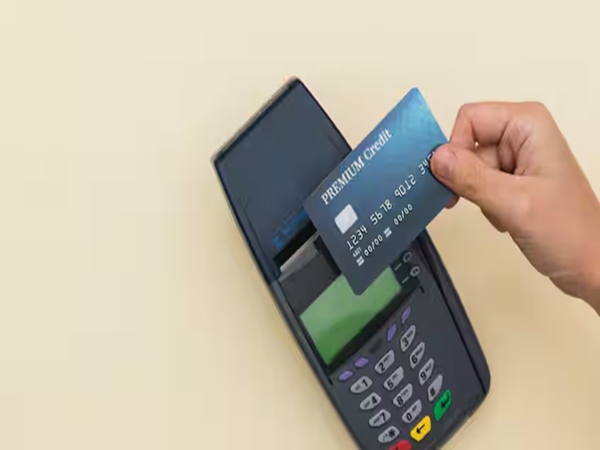
In today's times, credit cards have become an indispensable part of everyone's life. They are no longer merely a means of spending; they have evolved into an integral part of one's lifestyle. Indeed—whether it involves online shopping, food delivery, travel, or unexpected expenses—people now rely on credit cards for assistance in almost every situation. However, the real trouble begins at the end of the month when a hefty bill lands on their doorstep.
This is precisely where banks offer credit card holders a seemingly easy way out: the "Minimum Amount Due." While this may appear to be a relief at first glance, making this seemingly minor mistake can ensnare you in a debt trap from which escaping becomes extremely difficult.
**Understand the Full Story in 5 Key Points:**
* Paying the Minimum Due does not settle the entire bill.
* Interest ranging from 36% to 42% may be levied on the remaining balance.
* If you consistently opt for this, your CIBIL score may plummet.
* Securing future loans could become challenging.
* Making a full payment or converting the balance into EMIs is considered superior alternative.
**What is the Real Catch Behind the "Minimum Due"?**
Credit card holders often assume that paying the Minimum Due signifies that the bill has been settled on time. However, the reality is quite different.
In truth, the Minimum Due represents only a small fraction of your total bill—a sum that, when paid, ensures the bank does not classify you as a "defaulter." Typically, this amount constitutes approximately 5% of the total outstanding balance.
**Let's Understand This with an Example:**
If your total bill amounts to ₹100,000 and the Minimum Due is ₹5,000, you have effectively paid only ₹5,000. The remaining balance of ₹95,000 is then carried forward to the following month. However, heavy interest charges will immediately begin to accrue on this outstanding balance.
**How Much Interest is Charged?**
| **Situation** | **Interest Rate** |
| :-------------------------------- | :------------------------- |
| Balance Remaining After Minimum Due | Up to 36%–42% per annum |
| EMI Conversion | Approximately 12%–18% |
| Cash Withdrawal | Interest charged from Day 1 |
In other words, if you consistently choose to pay only the Minimum Due, your debt can spiral out of control very rapidly.
**How Does This Impact Your CIBIL Score?** Many people believe that paying only the 'Minimum Due' amount keeps their CIBIL score safe. However, doing this consistently sends the wrong signal to the bank.
**What do banks perceive?**
In such instances, banks assume that:
You are unable to manage your expenses.
You are overly dependent on credit.
Your repayment capacity is weak.
**What will be the impact?**
Your CIBIL score could drop by 50–100 points, even if you did not intend for this to happen.
Consequently, your home loan could become more expensive.
Your future car loan applications could be rejected.
Your credit limit could be reduced.
**Why is a CIBIL score of 750+ considered essential?**
In today's times, a good CIBIL score is not limited merely to obtaining loans.
**Benefits of a High CIBIL Score:**
Faster loan approval.
Lower interest rates.
Higher credit limits.
Access to premium credit cards.
**Then why do banks offer the 'Minimum Due' option?**
It is worth noting that banks offer the 'Minimum Due' option primarily to encourage customers to continue using their cards—thereby ensuring they keep paying hefty interest charges on the outstanding balance. In other words, this facility is not nearly as affordable as it appears to be convenient.
**How to avoid falling into a debt trap?**
**1. Always make Full Payments**
Strive to pay your entire bill on time.
**2. Opt for EMIs if the bill is high**
The interest charged on EMIs is significantly lower than the interest charged on credit cards.
**3. Keep Credit Utilization low**
Aim to utilize no more than 30% of your available credit limit.
**4. Set up Auto-Debit**
This minimizes the risk of missing a payment.
**5. Avoid Cash Withdrawals**
Withdrawing cash using a credit card is considered the most expensive option available.
Disclaimer: This content has been sourced and edited from Dainik Jagran. While we have made modifications for clarity and presentation, the original content belongs to its respective authors and website. We do not claim ownership of the content.
-
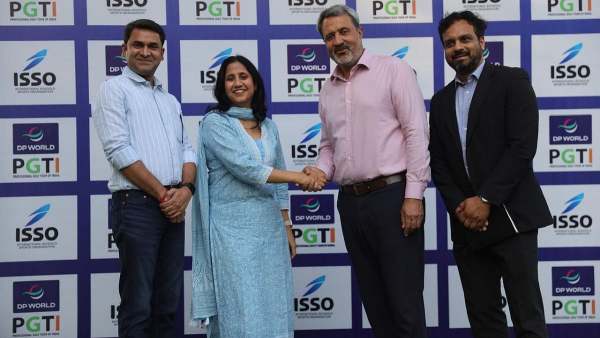
ISSO Signs MoU With DP World PGTI To Promote Golf In India’s International Schools
-
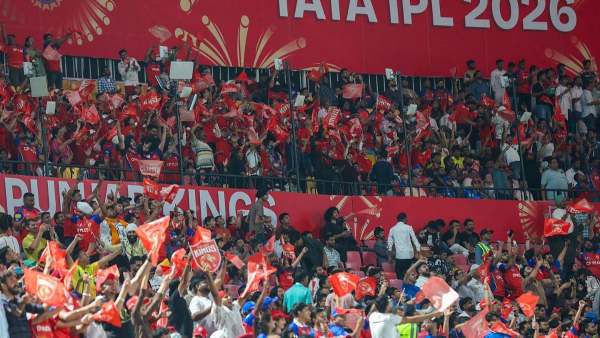
Tickets For Punjab Kings’ Home Match Against RCB To Go Live On May 13
-
Asian Shares Mixed: Nikkei 62,775, Kospi 0.9% As AI Excitement Fades & Oil Surges Above $100

-
CBSE Class 12 Result 2026: Trivandrum Tops With 95.62%; Pune Secures Strong 87.32%
-
CBSE Class 12 Supplementary Exam 2026 To Be Held On July 15; Check Details Here