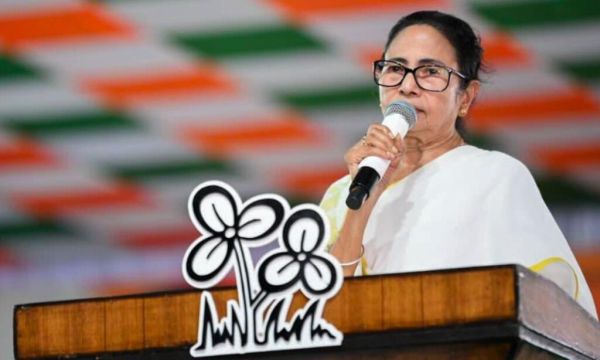
The future of the Trinamool Congress (TMC) and its founder Mamata Banerjee has become one of the biggest questions in state politics after the party’s crushing defeat to the BJP ended its 15-year rule in West Bengal.
The defeat has plunged the party into an unprecedented crisis, exposing ideological confusion, organisational decay and infighting, while raising doubts over whether the party can survive as Bengal’s principal opposition force against Suvendu Adhikari’s triumphant BJP government.
TMC faces internal turmoil
Mamata, who transformed herself from a street fighter against the Left Front into Bengal’s dominant political figure after 2011, has refused to accept the result as a straightforward political rejection.
After the BJP’s landslide victory, she alleged that the election outcome had been shaped by “conspiracy” and large-scale manipulation linked to the Special Intensive Revision (SIR) of electoral rolls.
Also read | Bengal’s Didi shield cracks: How Mamata Banerjee lost the state she dominated
Her party has since mounted a legal challenge, arguing that the number of deleted voters exceeded victory margins in several constituencies. On Monday, the Supreme Court asked Mamata and other TMC leaders to file fresh petitions on the issue, opening a narrow but politically significant legal route for the party.
But even as the leadership blames alleged voter disenfranchisement and the Election Commission, the defeat has unleashed an unusually public blame game inside the party.
What was once one of India’s most tightly controlled regional parties is now witnessing open rebellion by leaders, spokespersons and district-level functionaries.
Cracks widen within party
The sharpest attacks have come from suspended party spokesperson Riju Dutta, who emerged as a symbol of the TMC’s internal disintegration after publicly apologising to BJP leaders and election officials for his earlier remarks during the campaign.
Dutta was suspended for six years after allegedly violating party discipline. Soon after, he launched a blistering attack on the party leadership, accusing the TMC of institutionalising corruption and disconnecting itself from ordinary workers.
“Why are people celebrating? We did not introspect,” Dutta told reporters after his suspension, while alleging that corruption had become “institutionalised”. He also accused political consultancy firm I-PAC of “capturing” the party structure and sidelining grassroots leaders. His criticism echoed broader dissent emerging within the party after the defeat.
Senior TMC MP Kalyan Banerjee publicly blamed I-PAC for weakening the organisation and creating factionalism. “I-PAC is a serious issue. It caused the maximum damage,” he told the media. He also admitted that the party may have become “blind” after years in power.
I-PAC model under fire
The criticism is politically significant because the TMC had relied heavily on professional election management and centralised campaign structures in recent years under the growing influence of Mamata’s nephew, Abhishek Banerjee.
Several leaders are now privately questioning whether that model hollowed out the party’s traditional grassroots machinery.
A senior TMC leader, pleading anonymity, said I-PAC had helped the party with data analysis and strengthening its social media outreach, but added that a major lacuna emerged when inexperienced consultants began directing senior leaders.
Also read | What explains Bengal’s saffron shift? 6 reasons why Mamata was decimated
“Problems began when young I-PAC members with little political experience started directing party veterans, many of whom had fought and won several elections, on how to do politics and conduct election campaigns,” the leader said.
The party’s existential crisis has been further accentuated by post-election violence, intimidation and attacks on TMC workers and party offices.
Political violence sparks panic
TMC leaders have alleged that party workers are being attacked or forced to flee villages in parts of Junglemahal, North Bengal and several other districts where the BJP swept the elections.
The TMC claimed that six of its workers had been killed so far in post-poll violence. However, the BJP denied orchestrating reprisals and accused the TMC of exaggerating incidents to create political sympathy.
The post-election atmosphere has reinforced fears within the TMC that the party could face large-scale defections similar to what happened to the Left Front after its defeat in 2011.
For decades, Bengal politics has revolved around proximity to state power. Political workers often migrated toward whichever party controlled the administration, local contracts and rural patronage structures. That possibility now haunts the TMC.
“The party’s organisational network was built not merely on ideology but on a complex web of local leaders, welfare intermediaries and district strongmen,” said Siliguri-based senior journalist and commentator Probir Pramanik. “Without access to state power, those structures could weaken rapidly.”
Mamata seeks Opposition unity
It is against this backdrop that Mamata has made perhaps the most dramatic political shift of her career.
For years, she built her political identity around fighting the Left Front. But after the BJP’s rise, Mamata has now appealed to Left and even “ultra-Left” forces to unite with the TMC against what she called the BJP’s authoritarian politics. “I call upon all opposition parties, including the Left and ultra-Left, to come together,” she said after the BJP government took office.
The appeal reflected the severity of the crisis confronting the TMC. Political observers noted that such an appeal would have been politically unimaginable even a few weeks ago.
But the response from the Left and Congress was swift and dismissive. CPI(M) state secretary Md Salim rejected the proposal, saying the Left would not align with forces associated with corruption and political violence.
Congress leaders similarly accused Mamata of destroying Opposition politics in Bengal over the past decade. The rejection highlighted her isolation after the defeat.
Even Opposition leaders outside Bengal who expressed sympathy over alleged voter deletions stopped short of endorsing an alliance under her leadership.
TMC’s lone road to recovery
The scenario left Mamata with little choice but to fight, on her own, three simultaneous battles — legal, organisational and ideological.
Legally, the TMC hopes that petitions over SIR-linked voter deletions could keep alive its argument that the election was not entirely fair. Organisationally, the party may have to rebuild from the grassroots almost from scratch. That could require empowering local leaders, reducing dependence on centralised campaign managers and addressing long-standing allegations of corruption that damaged the party’s image among urban and rural voters alike.
Also read | Despite her call for a mega anti-BJP platform, why Mamata seems to be a lonely warrior
The ideological challenge may prove even harder. For over a decade, Mamata positioned herself as the defender of Bengali identity against the BJP’s Hindu nationalist politics.
But the BJP’s victory showed that large sections of Hindu voters across caste lines, including in tribal belts and the Matua heartland, shifted decisively toward the saffron party.
Yet despite all this, Mamata still retains important political advantages.
The TMC continues to command a significant support base among minorities, sections of rural women and welfare beneficiaries. It secured more than 40 per cent of the vote in the just-concluded Assembly elections.
More importantly, the TMC still lacks any alternative mass leader capable of replacing Mamata’s charisma and political instincts, making the party inseparable from its founder and reducing the possibility of a vertical split.
-
What kind of trick is this? This player has been playing every match wearing the same underwear for 8 years

-
IPL 2026: Arshdeep Singh caught in controversy because of girlfriend Samreen Kaur’s picture, broke BCCI rule

-
VFS Global Launches More UK Premium Visa Centres in India for Faster Processing

-
Google India Officially Joins ‘Main Tera’ Trend With Viral ‘May 13’ Post; Wins Internet

-
Air Purifying Plants: 5 plants that purify the air naturally, will definitely be found in doctors’ homes. Doctors Consider 5 Plants to Naturally Purify Air in House