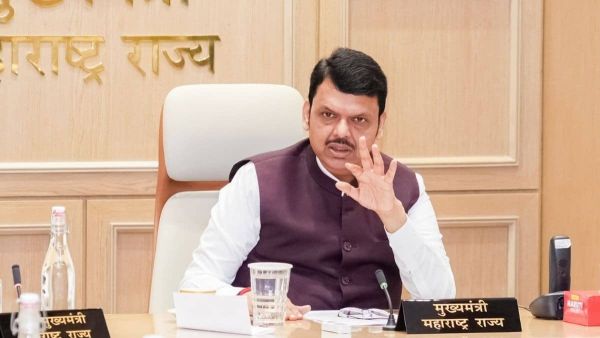
In response to global energy supply disruptions triggered by the ongoing conflict in West Asia, Maharashtra Chief Minister Devendra Fadnavis has issued a directive aimed at curbing government expenditure. State ministers are now required to obtain formal clearance from the Chief Minister’s Office (CMO) before using aircraft for official travel.
This move follows a broader appeal for austerity by Prime Minister Narendra Modi, who recently urged citizens and government bodies to minimize fuel consumption to safeguard the national economy.
New Protocol for Official Travel
Revenue Minister Chandrashekhar Bawankule confirmed the directive, noting that the Chief Minister has made it clear that air travel is no longer a matter of personal discretion for cabinet members.
"The Chief Minister has instructed that ministers cannot use aircraft without his prior approval," Bawankule stated.
The Minister emphasized that the state leadership is committed to leading by example. He noted that while the Chief Minister and Deputy Chief Ministers maintain demanding schedules that may necessitate air travel, most other ministers rarely utilize aircraft, reserving such trips only for urgent situations.
Shifting to Virtual Governance
To align with these fuel-saving measures, the state government is increasingly relying on digital infrastructure to conduct business. Bawankule highlighted his own transition toward virtual meetings to reduce the logistical and financial burden on district-level administration.
“Most of my meetings are conducted online. I never call collectors to my office. I do not summon divisional commissioners to my office either. Maximum meetings are held virtually while the collector remains in Solapur or Nagpur itself. They are aware of this. I call collectors very rarely," Bawankule explained.
By leveraging video conferencing, the state aims to keep district officials in their respective jurisdictions rather than forcing them to travel to Mumbai for routine reviews.
Minimizing the Burden on District Officials
Beyond saving fuel, the new approach aims to streamline administrative efficiency. According to Bawankule, his travel records reflect this shift toward restraint.
“If you look at my schedule over the past year, I have travelled only four or five times and that too only in urgent situations. Our ministers do not travel much. The chief minister and deputy chief ministers have extremely busy schedules and responsibilities, so that is a different matter. But apart from them, very few state ministers use aircraft," he added.
Instructions have also been issued to ensure that protocol requirements do not force unnecessary travel upon lower-level officials.
“Our first instructions are that collectors should not be made to come under protocol obligations. Therefore, we do not force officers to travel extensively. We conduct meetings online and find solutions through that mechanism," the Minister noted.
National Call for Economic Resilience
These state-level measures mirror the Prime Minister’s national strategy to shield the Indian economy from the volatility of the West Asia crisis. PM Modi has called for a collective effort to conserve foreign exchange by practicing judicious use of fuel, postponing gold purchases, and deferring non-essential foreign travel.
Specific suggestions from the Centre include:
- Reducing individual petrol and diesel consumption.
- Utilizing Metro rail services and carpooling in urban areas.
- Transitioning to electric vehicles.
- Shifting parcel movements to railway services.
- Adopting work-from-home models where feasible.
-
Govt ramped up domestic production, minimized burden: Hardeep Puri
-
IPL 2026: Cummins backs SRH batters despite 82-run defeat vs GT
-
Import duty increased on gold and silver, government’s big decision after PM Modi’s appeal, new rates applicable from today

-
West Bengal: Crude bomb found in Naihati amid ongoing NIA terror probe

-
Delhi HC hears ex-AAP MLA Naresh Balyan’s bail plea in MCOCA case