James Henderson is the founder of JBH Public Relations, UAE, and Soho Communications, London.
Against a backdrop of continued recovery and margin pressure across the hospitality sector, operators in Dubai are entering a new phase of operational discipline. Rather than expansion or aggressive scaling, the dominant strategy today is efficiency: tighter labour models, reduced opening hours in some cases, and leaner front-of-house teams designed to protect profitability while managing fluctuating demand.
On paper, the logic is clear. Following a period of revenue volatility and cost inflation during the last quarter, many restaurants and hospitality groups are understandably focused on catching up — stabilising margins and ensuring they are not overexposed during quieter trading periods. Streamlining staffing levels and adjusting service hours has become one of the most immediate and controllable ways to do that.
But as the market begins to normalise, a growing question is emerging within industry circles: how long can this level of streamlining realistically continue before it begins to impact brand perception?
What is currently being framed as operational efficiency risks, over time, creates an unintended gap in the customer experience. Reduced service availability, whether through earlier closing times, leaner floor teams taking orders, or fewer staff simply ready with a card machine, can quietly reshape how diners perceive a venue. In a market as competitive and experience-led as Dubai, those perceptions are not only difficult to build, but even harder to reverse once they take hold.
Within hospitality, consistency has always been a key differentiator. Guests may accept occasional constraints, but repeated touchpoints of reduced service can begin to erode confidence. Over time, this does not simply affect a single visit — it influences whether a customer chooses to return at all, or recommends the venue within their wider network. Besides, we know how small Dubai is, for example.
James Henderson, founder of JBH Public Relations, UAE, and Soho Communications, London.
Understandably, operators are still working through the financial impact of the last quarter and making pragmatic decisions to protect their businesses. However, as trading conditions begin to stabilise and consumer activity returns to more familiar patterns, there is a growing argument that some of these streamlined measures may need to be reassessed sooner rather than later.
Elsewhere in the sector, there is increasing recognition that hospitality in Dubai is no longer just about filling covers — it is about maintaining brand equity in a market where choice is expanding rapidly and consumer expectations continue to rise.
The brands that will ultimately outperform are unlikely to be those that simply operate leanest, but those that manage to balance efficiency with experience — ensuring that short-term operational decisions do not quietly undermine long-term positioning.
Dubai’s hospitality sector has always been defined by speed of adaptation. The current moment is no different. But as the market continues to evolve, the question is shifting from how efficiently venues can operate, to how sustainably they can maintain the standards that made them successful in the first place.
-
NEET-UG 2026 Exam Cancellation Sparks Investigation into Alleged Paper Leak

-
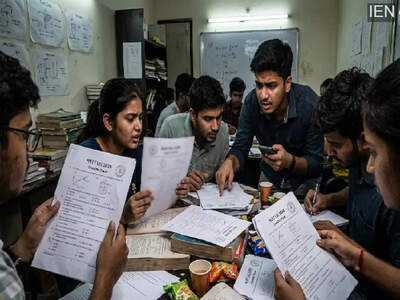
NEET-UG 2026 Exam Cancellation Linked to Alleged Paper Leak in Rajasthan
-
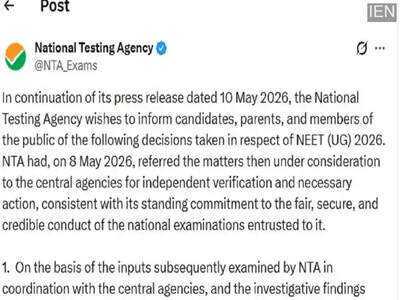
NEET UG 2026 Examination Cancelled Amid Allegations of Paper Leak
-
Sweet Magnolias season 5 trailer drops but beloved character is nowhere to be seen

-
Examination cancelled in interest of transparency, says Gujarat Minister on NEET-UG row